



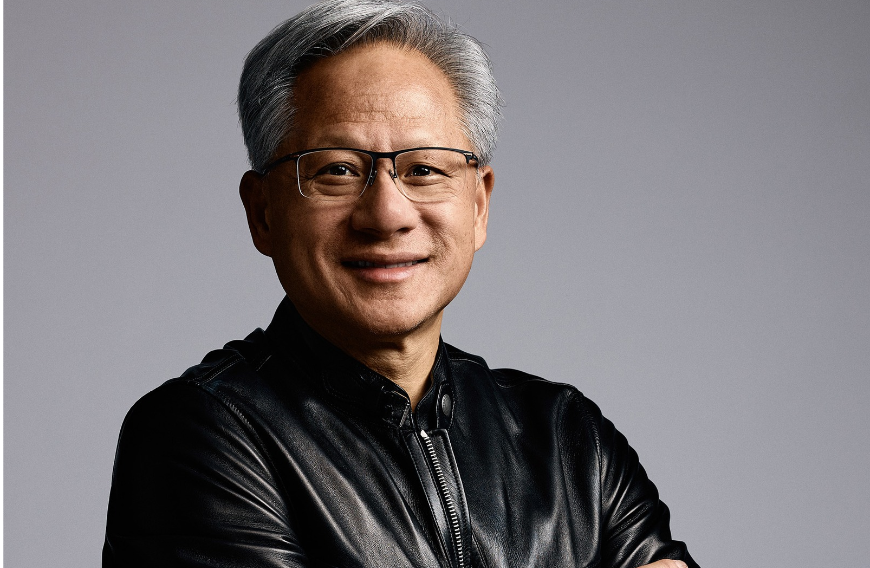
Nvidia CEO Jensen Huang, who has spent much of his career in the spotlight for his views on artificial intelligence, the company’s growing valuation and its competition with other technology giants, is now facing a very different kind of public scrutiny. The 63-year-old billionaire has acknowledged being unfaithful to his wife of 40 years, triggering a controversy that has raised questions about his personal life, corporate leadership and national security.
The controversy has now taken a major turn, with Huang stepping down from all leadership positions and board roles after a 33-year tenure at Nvidia. The company has appointed Colette Kress, its executive vice president and chief financial officer, as interim CEO. Kress will continue handling financial responsibilities while taking charge of the company. The developments come amid allegations involving Alice Huang, an executive at Megaspeed, a company linked to Nvidia’s chip business in China.
U.S. officials reportedly suspect Alice Huang of having connections to China’s Ministry of State Security and passing information to Beijing. The allegations have raised questions about Nvidia’s business interests in China and possible national security risks.
The controversy escalated further on Wednesday, Nov. 11, when The New York Times, citing five people who had worked at Nvidia, reported that Huang had also been involved in an extramarital relationship with Kimberly Powell, the company’s vice president of healthcare. According to reports, Powell reported directly to Huang. Meanwhile, Harvey C. Jones has been appointed as Nvidia’s first-ever independent chairman of the board.
The latest report has brought additional attention to Nvidia’s workplace policies and the power dynamics within the company. Separately, as Nvidia’s board was preparing to consider Huang’s future as CEO, he took the step to resign on Thursday, Nov. 12. The company’s shares also declined in after-hours trading following the reports.
Who is Kimberly Powell, the second woman linked to Jensen Huang?
Kimberly Powell is Nvidia’s vice president of healthcare and has spent 18 years at the technology company.
She joined Nvidia in 2008 and steadily moved up the corporate ladder. She became a senior director in 2016 and was promoted to vice president by the end of 2017.
READ: Nvidia hires top law firm to investigate Jensen Huang’s alleged ties to Chinese businesswoman (November 11, 2026)
At 48, Powell is 15 years younger than Huang, who is 63. Both are married.
Powell is also among Huang’s approximately 60 direct reports, making the reported relationship particularly sensitive from a workplace governance perspective.
According to accounts circulating on social media and details attributed to people familiar with the matter, an incident at Nvidia’s GTC conference in San Jose in March 2026 drew attention to their relationship.
Powell presented on artificial intelligence and healthcare during the conference. Her presentation reportedly included animated images of Huang. Later, executives gathered at a nearby hotel, where Huang and Powell were allegedly seen behaving affectionately.
A witness reportedly recorded the interaction on a phone. Huang’s security team allegedly noticed the recording and escorted the individual away, asking them to sign a confidentiality agreement. The video reportedly still exists.
Five former Nvidia employees told The New York Times that the relationship between the two executives had been discussed internally at the company.
The reports have also raised questions about Nvidia’s code of conduct, which states that personal relationships can create conflicts of interest. The company says it promptly investigates reports of misconduct. Huang himself wrote the introductory letter to the company’s code of conduct. He is now at the center of an investigation initiated by Nvidia’s board.
Jensen Huang controversy: A timeline of events
The controversy surrounding Huang has developed over several months, bringing together questions about his personal relationships, Nvidia’s business dealings in China and national security concerns raised by U.S. officials.
Here is a timeline of the major developments:
October 2025: U.S. and Singapore investigate Megaspeed over possible chip export violations
The controversy surrounding Megaspeed began attracting government attention in October 2025, when the United States and Singapore confirmed investigations into the company over possible violations of export controls.
Megaspeed, a cloud computing provider that used Nvidia chips, was suspected of helping Chinese companies access advanced American technology despite U.S. restrictions on chip exports.
According to The New York Times, Megaspeed had been renting computing capacity to Chinese internet giant Alibaba and other companies in China.
A Commerce Department official who visited Megaspeed’s data center in Malaysia in 2024 reportedly found a large quantity of Nvidia equipment still packed in boxes. This raised concerns that the chips might have been intended for shipment to another destination, potentially China, rather than being installed and offered as cloud computing services.
Late 2025: Trump receives intelligence briefing about Huang’s relationship with Alice Huang
In late 2025, U.S. President Donald Trump was reportedly briefed about intelligence findings concerning a close relationship between Jensen Huang and Alice Huang.
According to a later New York Times report, American intelligence officials had raised concerns about Alice Huang and her possible connections to Chinese intelligence agencies.
Trump did not take action following the briefing.
The development was particularly significant because Jensen Huang had maintained a relationship with the Trump administration and repeatedly argued that Nvidia should be allowed to expand its business in China.
The Nvidia CEO has been among the prominent technology executives advocating for greater access to the Chinese market, arguing that American companies should remain competitive in the global AI industry.
Spring 2026: Secret memo warns Trump administration about alleged Chinese spy
In spring 2026, U.S. officials reportedly circulated a confidential memo among policymakers raising concerns about Alice Huang.
The memo allegedly identified her as an operative linked to China’s Ministry of State Security and warned about her relationship with Jensen Huang.
The document was not publicly known until The New York Times reported its existence in November 2026.
Secretary of State Marco Rubio reportedly supervised the preparation of the memo, adding another layer of attention to the national security concerns surrounding Nvidia’s China business.
October 29, 2026: Jensen Huang’s relationship with suspected Chinese spy becomes public
On Oct. 29, The New York Times reported that U.S. officials had been investigating Alice Huang and Megaspeed for more than a year.
READ: Nvidia CEO Jensen Huang’s alleged affair sparks $7.5 billion China chip controversy: What we know (November 10, 2026)
The report also revealed that Alice Huang had developed a close relationship with Jensen Huang.
The disclosure brought the Nvidia CEO’s personal life into a wider national security discussion, particularly because of Megaspeed’s alleged involvement in the movement of Nvidia chips to Chinese companies.
November 5, 2026: Three Republican lawmakers request a closed-door briefing
The controversy reached Congress when three Republican committee chairmen requested a private briefing with Jensen Huang.
The lawmakers included:
- John Moolenaar, chairman of the House Select Committee on China.
- Brian Mast, chairman of the House Foreign Affairs Committee.
- Rick Crawford, chairman of the House Permanent Select Committee on Intelligence.
The three lawmakers wanted Huang to participate in a joint, closed-door session with their committees to answer questions about the allegations and the national security concerns surrounding his relationship with Alice Huang.
November 8, 2026: Jensen Huang admits to infidelity and Nvidia board launches investigation
On Nov. 8, Huang addressed Nvidia employees through a public letter that was also released as a company statement.
In the message, he acknowledged being unfaithful to his wife and apologized to his family and colleagues.
“I owe my family and all of you an apology,” Huang told his company. “I was unfaithful to my wife. My actions hurt her and our children. There is no excuse for what I did. I am deeply sorry.”
Although Huang did not identify Alice Huang by name, he connected the controversy to the national security questions raised in media reports.
He also confirmed that Nvidia’s board had started an independent investigation.
“Nvidia’s Board of Directors has initiated an independent investigation. I support the investigation and will cooperate fully. I love our country and our company. I am committed to protecting Nvidia and supporting America’s national security. I am proud and grateful to be an American,” Huang wrote.
The investigation is significant because of Huang’s position as the company’s co-founder and chief executive.
November 8, 2026: Trump expresses support for Huang
President Trump also addressed the controversy on Nov. 8, offering words of support for the Nvidia CEO.
“I have not spoken to him about it. I just know he’s a fine person, but you never know what’s going on,” Trump said.
His remarks came as questions continued to emerge about Huang’s relationship with Alice Huang and the potential implications for Nvidia’s business in China.
November 9-10, 2026: Reports reveal more details about Nvidia’s business connections to Alice Huang
Further reports brought attention to the business network allegedly built by Alice Huang and her family in China and Singapore to obtain Nvidia chips.
According to The Information, Alice Huang and her associates established a Chinese company called Shanghai Century Litong in 2023. The company reportedly became an Nvidia-preferred cloud partner, giving it priority access to the company’s chips.
The report also claimed that Shanghai Century Litong facilitated the purchase of approximately $7.5 billion worth of Nvidia chips, including products restricted under U.S. export controls.
Separately, Bloomberg reported that Nvidia’s head lawyer, Tim Teter, intervened in a U.S. government investigation in 2025 concerning suspected chip smuggling involving Megaspeed International.
Teter reportedly contacted Commerce Under Secretary Jeffrey Kessler to ask whether the Trump administration had played a role in detaining Alice Huang.
The Financial Times also reported that Alice Huang and a business partner had approached investors in China in early 2025 for an Asian data center project. They reportedly assured potential investors that they would have no difficulty obtaining graphics processing units (GPUs), the specialized chips used to power AI systems.
November 9, 2026: Huang withdraws from speaking engagements
As the controversy gained attention, Huang pulled out of scheduled appearances at the ElevenLabs Summit and the Anthropic CEO Forum.
His withdrawal from the events came amid growing scrutiny of his personal relationships and Nvidia’s business connections in China.
November 11, 2026: Congress considers subpoenaing Huang
The congressional pressure on Huang increased on Nov. 11.
The Nvidia CEO had not responded to the request from the three Republican lawmakers for a closed-door briefing.
Speaking to Fox Business, House China Committee Chairman John Moolenaar said that Huang could face a subpoena if he continued to decline the request.
The proposed questioning is expected to focus on his relationship with Alice Huang and the national security concerns raised by the allegations.
November 11, 2026: Second alleged affair with Nvidia executive Kimberly Powell emerges
The controversy took another turn when The New York Times reported that Huang had also been involved in a relationship with Kimberly Powell, Nvidia’s vice president of healthcare.
READ: Nvidia probes into Jensen Huang’s affair with Chinese businesswoman amid spy claims (November 9, 2026)
Powell reportedly reports directly to Huang, making the allegations particularly sensitive given their positions within the company.
The report also described an incident at a hotel during Nvidia’s GTC conference in March 2026, where the two were allegedly seen behaving affectionately.
The development has brought Nvidia’s workplace conduct policies and executive accountability under further scrutiny.
November 11, 2026: Nvidia shares fall as reports raise questions about Huang’s future
The latest allegations also put pressure on Nvidia’s corporate leadership.
According to The Wall Street Journal, Nvidia’s board was preparing to discuss Huang’s position as CEO following reports of his second alleged extramarital relationship.
The company’s shares fell approximately 8% in after-hours trading on Wednesday. Nvidia stock was also down around 11% over the previous five trading days.
Huang’s leadership structure could make any potential change particularly complicated. He has previously said that he keeps a relatively large number of direct reports, approximately 60, and delegates very little of his responsibilities.
Nvidia also does not have an obvious successor or a publicly established succession plan.
For a company that has become one of the biggest players in the global artificial intelligence industry, uncertainty surrounding its chief executive could have consequences for investors, employees and its business relationships. With his latest resignation taking effect, Nvidia’s future is now under renewed scrutiny.
As the board’s investigation continues and Congress seeks answers, Huang’s personal controversy is increasingly becoming a corporate governance and national security issue.