



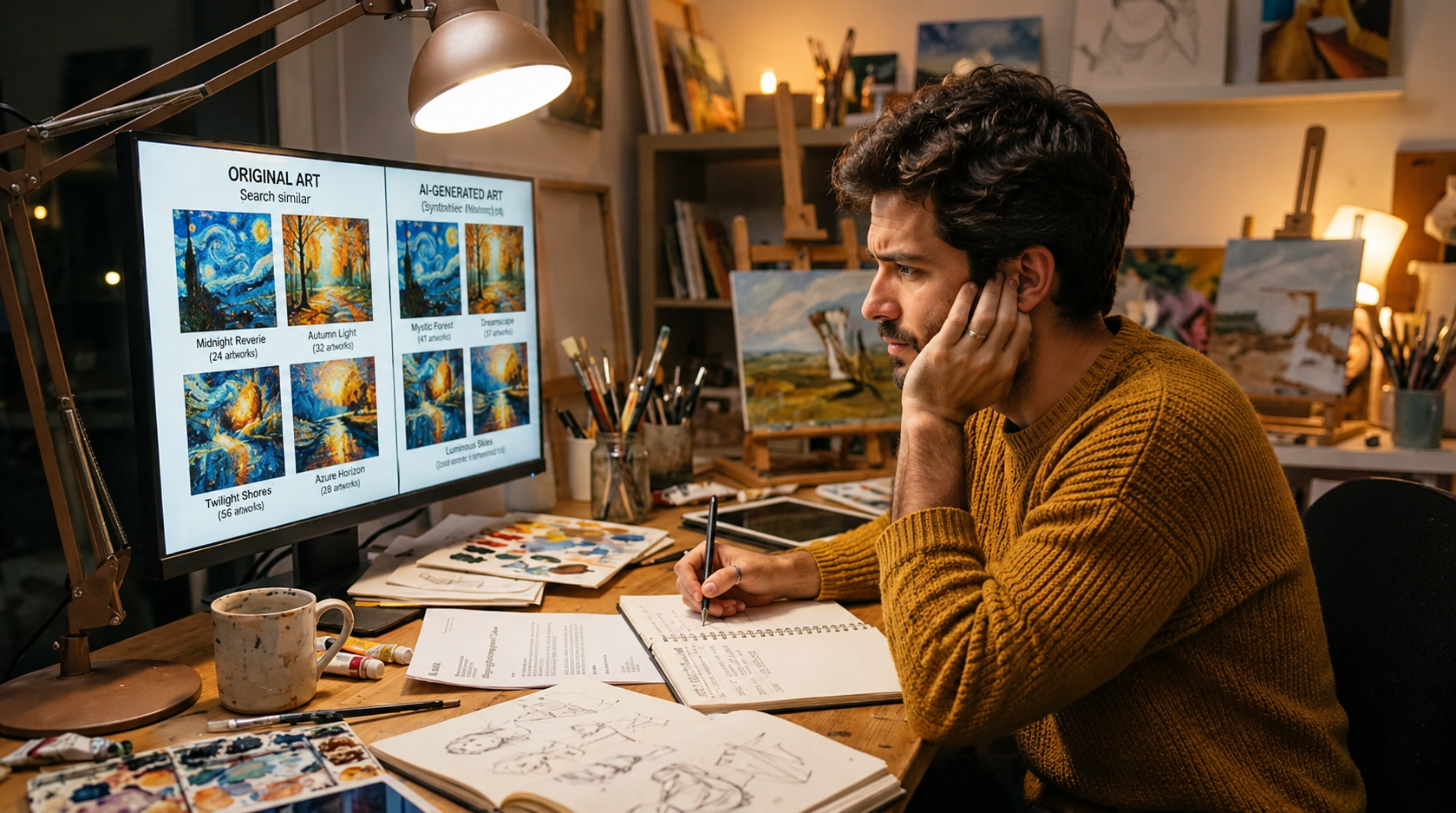
Independent artists are reducing their presence on Instagram and Facebook, with some leaving Meta-owned platforms altogether, amid growing concerns about artificial intelligence-generated content, unauthorized use of creative work and the company’s proposed changes to its terms of service.
In a report, CNN spoke with more than a dozen artists who described how the growing use of generative AI is affecting their businesses, online identities and ability to reach customers.
The concerns extend beyond AI-generated images flooding social media. Artists say their original work is being copied, reproduced through AI tools and circulated through accounts that make it appear as though the imitations were created by the original artists.
READ: Silicon Valley pays 10x more than India for tech talent, Deedy Das argues (November 25, 2026)
The dispute has also intensified following Meta’s proposed changes to its commercial terms, which raised concerns that automated software could collect information from external websites associated with business accounts across its platforms. Meta announced on Nov. 5 that it was indefinitely pausing the proposed changes following criticism from stakeholders. The company said its existing terms would remain in effect while it continued consultations.
“We’re pausing the changes as we continue to engage with stakeholders and take our time to get this right,” a Meta spokesperson told CNN.
Artists concerned about AI impersonation
Matty Burnham, a watercolor artist in the United Kingdom, told CNN that he discovered a Pinterest account impersonating his illustrations in 2024. The account had generated AI versions of his watercolors and used them on fake profiles across Shopify, Facebook and Instagram. Burnham said he traced the Pinterest account to Ho Chi Minh City, Vietnam, but could not identify the person behind it.
He said such accounts monetize Facebook by attracting large audiences who believe the profiles represent genuine artists and directing users to websites containing online shops and advertisements.
Andrew Scott, a contemporary artist based in Rochester, New York, described a similar experience. He told CNN that he contacted an AI art impersonator in September after discovering that the person was using his original work to create AI-generated art videos. According to Scott, the individual acknowledged using his work as a starting point for the videos. One of the AI-generated posts received 50 million views on Instagram, he said.
Although the person stopped following Scott, the AI-generated imitations continued to appear, according to his account.
The growing volume of AI-generated material has raised concerns about the ability of independent artists to compete with accounts that can produce and distribute content at a much faster rate. Nancy Chen, a ceramic artist in Canada, told CNN that she has become cautious about posting polished images of her work on Meta platforms because they could be used to train AI models. She said the technology could put pressure on independent creators to compete on price, even when their work already involves substantial time and labor.
Meta’s proposed terms trigger backlash
The concerns over AI-generated content have coincided with opposition to Meta’s proposed updates to its commercial terms.
The proposed changes would have allowed automated software to scrape external websites associated with business accounts and collect information from those sites. Artists and other creators feared their images, creative styles and intellectual property could be accessed without their knowledge.
READ: ‘Superintelligence is arriving’: Meta AI chief warns of potential loss of human control (November 23, 2026)
The proposed terms were initially scheduled to take effect Oct. 30. Meta subsequently postponed the implementation to Nov. 20 before announcing an indefinite pause on Nov. 5. The company said the existing terms would remain in effect and that it would continue consulting stakeholders.
The proposal prompted some artists to reconsider their reliance on Facebook and Instagram as platforms for promoting and selling their work.
Samantha Waldron, co-owner of Dutcher Photography in Madison, Wisconsin, told CNN that she deleted her personal and business Facebook pages. She also converted her Instagram business accounts into personal accounts, removed most of her posts and deleted external website links from her account biographies.
Megan Wimberley, founder of Cowgirl Artists of America in Tulsa, Oklahoma, said she was in the process of deleting her Meta accounts. Wimberley also organized a campaign called the “Meta blackout,” encouraging users to stop posting on the platforms between Oct. 30 and Nov. 6 in protest against the proposed changes.
Nicole McKay, artists relations director at The Guild of Artists and Artisans, told CNN that many American artists had started removing their accounts in response to concerns about AI model training.
For creators who depend on social media to display their portfolios, connect with customers and generate sales, leaving the platforms presents a difficult choice between protecting their work and maintaining their businesses, she said. Some artists are considering alternatives such as Patreon and Substack to build direct relationships with audiences.
Copyright and AI protection remain unresolved
The debate has also renewed questions about copyright protection, consent and the responsibility of technology companies when AI systems reproduce existing creative work.
Isaiah Steinfeld, an American Institute of Graphic Arts board member who works with AI, told CNN that protecting artists and adopting new technology do not have to be conflicting objectives. He noted that creators can register their work for copyright protection, pursue infringement claims and request the removal of unauthorized copies.
Meta also allows creators to report AI impersonation and submit takedown requests through its Intellectual Property Reporting Center.
Meanwhile, Google has made its SynthID Detector tool publicly available to help users identify AI-generated images, videos and audio carrying its SynthID watermark. Google said its watermarking technology had been applied to more than 180 million images and videos and that the system received more than one million verification requests daily.
However, artists interviewed by CNN said existing measures were insufficient to address the scale of unauthorized AI-generated content.
The debate presents a broader challenge for the creator economy as social media platforms increasingly incorporate generative AI tools into their services. For independent artists, the issue is not simply whether AI can produce artwork. It is whether creators can continue using online platforms to showcase and sell original work without losing control over how their creations are reproduced and commercialized.