



Kudos to India’s Prime Minister Narendra Modi for raising the issue of drug addiction during yesterday’s Mann Ki Baat. By speaking about addiction as a challenge to the aspirations of India’s youth and sharing the story of a young man who fought his way through addiction and recovery, he brought attention to a subject that is often discussed in private, if at all, but rarely acknowledged publicly.
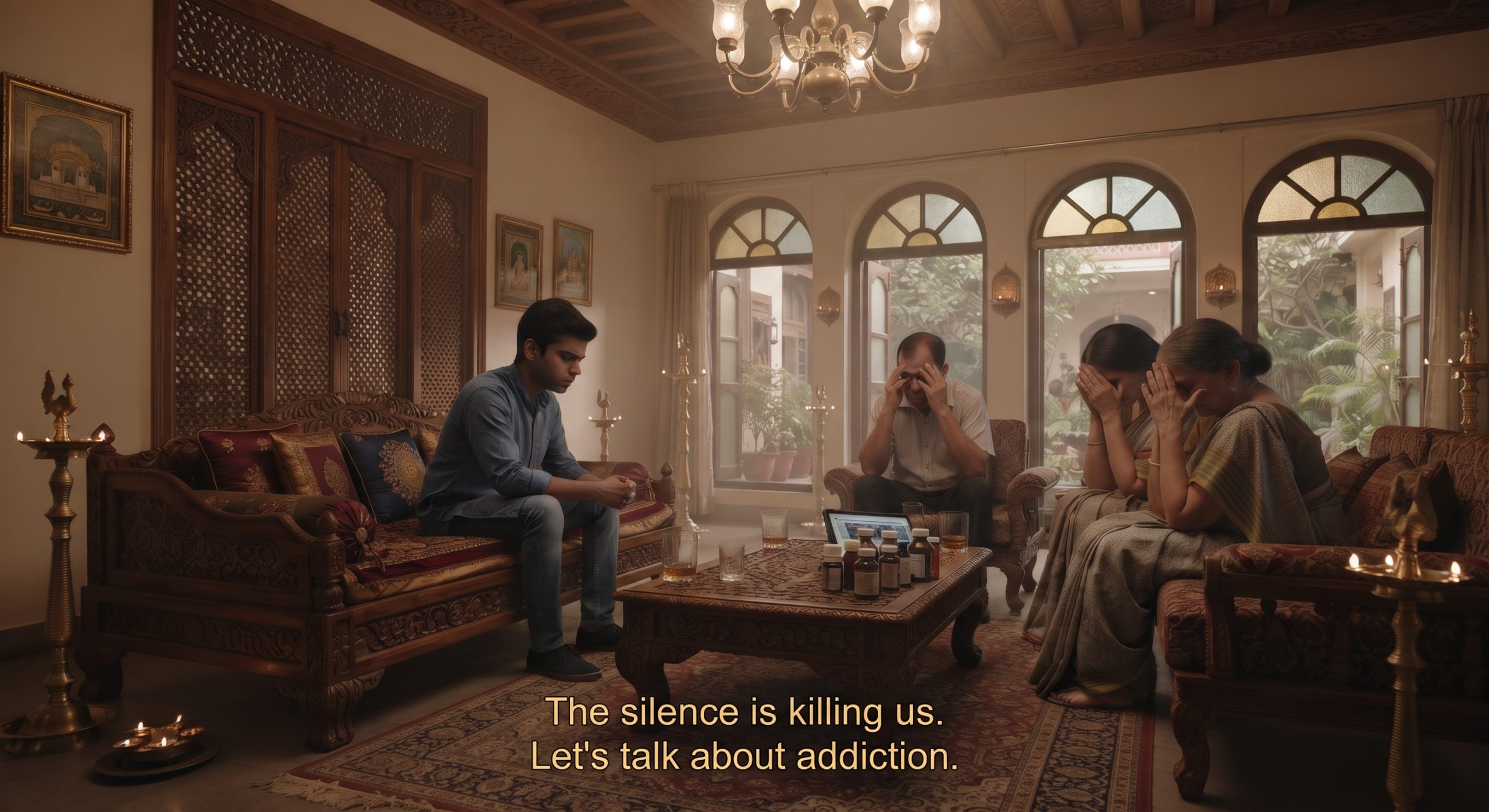
The greatest challenge we face in dealing with addiction as Indians, however, may not be the drugs themselves. It’s our silence.
We have spent generations learning how to protect the family’s reputation, how to avoid uncomfortable conversations, how to keep personal struggles within the household, and how to worry about what an aunt, uncle, neighbor or family friend might say. We have become remarkably skilled at managing appearances, even when the reality inside our homes is far more complicated. When a young person struggles with addiction, the first instinct in many families is not to seek help. It is to conceal the problem, control the narrative and hope that it goes away before anyone finds out. We focus on shame more than we do treatment.
Addiction does not respond to embarrassment, family pressure or the fear of gossip. It responds to appropriate treatment, support, accountability and an understanding of the underlying psychological, social and biological factors that contribute to it. Just as we would would any medical condition. We don’t shame someone for having diabetes Yet seeking help from a mental health professional or substance abuse specialist is still viewed in many Indian families as an admission that something has gone terribly wrong. The fear of being judged can be more powerful than the recognition that a child, sibling or spouse needs help.
We have effectively made the consequences of seeking help more frightening than the consequences of remaining sick.
READ: Sreedhar Potarazu | Employers still can’t Get Off The Dime to beat healthcare costs (August 21, 2026)
The numbers in India tell us why this silence is so dangerous. A national survey conducted by the Ministry of Social Justice and Empowerment and AIIMS estimated that approximately 160 million (16 crore) Indians consume alcohol, 31 million (3.1 crore) use cannabis and 22.6 million (2.26 crore) use opioids. More than 57 million (5.7 crore) people were estimated to have harmful or dependent alcohol use and require help, while approximately 7.7 million (77 lakh) were estimated to need treatment for opioid-related problems. These numbers are not an indictment of India’s youth alone. Approximately 16.5 crore people (165 million) across age groups, based on the 2018 national survey is the estimated number of people affected by substance use disorder (this is almost half the population of the US). But the number facilities available is startling
As of July 2026, the Ministry reported supporting 765 de-addiction and rehabilitation facilities nationally, including:
- 344 Integrated Rehabilitation Centres for Addicts.
- 145 District De-Addiction Centres.
- 155 Addiction Treatment Facilities.
- 76 Outreach and Drop-in Centres.
- 45 Community-based Peer-Led Intervention centres.
And the problem is not confined to India. Indian Americans have often been viewed through the lens of academic achievement, professional success, household income and upward mobility. These measures have created an impression that ours is a community largely insulated from the social problems affecting other populations. But achievement and addiction are not mutually exclusive. A young person can attend an elite university, work in technology or finance, appear to be doing exceptionally well, and still be struggling with alcohol, cannabis, prescription drugs, anxiety, depression or another form of dependency.
In the United States, national data show that Indian Americans have lower reported rates of substance use disorders than the overall population. Indian Americans are also significantly less likely to receive treatment for substance use disorders. In 2024, Indian American adults were approximately 75 percent less likely than U.S. adults overall to receive substance use treatment during the year.
The problem with these statistics is that they can become a convenient source of reassurance. Lower reported prevalence does not mean an absence of suffering. It may also reflect differences in disclosure, access to care, stigma, how questions are asked and whether people are willing to identify a problem in the first place.
The young people growing up today are also navigating a world that is very different from the one their parents experienced. They are earning money earlier, exercising greater independence, living away from home, forming relationships outside traditional expectations and making decisions without the degree of parental oversight that once defined their lives. Their access to drugs, alcohol, online gambling, pornography, gaming and other potentially addictive behaviors is also fundamentally different. Much of this access exists on a smartphone, available at any hour, without the need to leave home or explain where they are going.
READ: Sreedhar Potarazu | Five trends straining the US healthcare system (
And addiction is not confined to drugs.
Alcohol, cannabis, opioids and stimulants are only part of the conversation. Gambling, compulsive sexual behavior, pornography, gaming and other behaviors can become destructive when the individual loses control and continues despite significant consequences. Even money, which is often treated as the ultimate measure of success in our community, can become an obsession. The pursuit of wealth, status, validation and the next financial reward can consume relationships, judgment and personal well-being. We are often willing to celebrate the behavior when it produces financial success, even when the underlying compulsions and consequences are becoming destructive.
There is a contradiction in how we approach these issues. We condemn addiction when it becomes visible and socially embarrassing, but we can be remarkably tolerant of compulsive behavior when it is profitable, socially acceptable or associated with success. Gambling platforms, online betting, financial speculation and other industries increasingly operate in environments designed to sustain engagement and encourage repeated participation. We cannot pretend that addiction is exclusively a failure of individual character while ignoring the commercial ecosystems that capitalize on compulsive behavior.
The question is whether our young people have somewhere to turn when they recognize that they are losing control. Do we have enough mental health professionals, addiction specialists, counselors and treatment programs in India and the United States who understand not only addiction, but the cultural context in which an Indian young adult experiences it? Are professionals equipped to understand the pressure of academic expectations, parental sacrifice, financial obligations, arranged marriage expectations, family reputation, immigration uncertainty, identity and the emotional conflict of trying to satisfy two different cultural worlds?
READ: Sreedhar Potarazu | How Medicare Advantage overpayments are quietly raising seniors’ premiums (March 16, 2026)
Cultural competence is not a peripheral consideration in treatment. It is part of the therapeutic relationship. One of the most important elements of therapy is the ability to speak honestly with someone who understands the pain you are trying to articulate. A person struggling with addiction may already feel ashamed, isolated and misunderstood. If they have to spend their first several sessions explaining the cultural dynamics of their family, the expectations placed upon them or why certain conversations are impossible at home, we risk creating another barrier to treatment.
It is not necessary for every therapist to share a patient’s cultural background. But they must be willing and able to understand it. Treating a culturally complex problem without appreciating the context is like going to an orthopedic surgeon to treat kidney failure. The professional may be highly trained, but the expertise does not match the problem.
We have to change the conversation inside our homes. Parents must be willing to listen without immediately judging, threatening or turning a child’s disclosure into a family crisis. Young people must understand that asking for help is not an act of weakness or betrayal of their parents’ sacrifices. Families must learn that confidentiality, appropriate treatment and recovery matter more than protecting an image of success.
Parents need to become more educated about subjects such as cognitive behavioral therapy, the signs and symptoms of depression and anxiety, and the thinking errors that shape human behavior. Understanding these concepts can help parents recognize when their children are struggling, respond with greater awareness, and guide them with empathy rather than judgment.
We must move beyond parenting simply by repeating what our elders did before us. Tradition deserves respect, but it should not prevent us from questioning inherited patterns of behavior. The responsibility of each generation is not to reproduce the parenting of the previous one, but to learn, adapt, and raise children who are better understood, emotionally supported, and equipped to navigate the complexities of life.
Modi’s decision to bring addiction into a national conversation is a meaningful step. But awareness campaigns cannot replace conversations at the dinner table, in college dormitories, among friends and within families. The young man who spoke about his recovery during Mann Ki Baat may reach someone who has never believed recovery was possible. His story matters because it makes addiction visible.
We need more stories like his, but we also need a society in which people do not have to lose their families, careers, health or dignity before they feel safe enough to tell their story.
For Indians, the real battle against addiction may begin when we stop worrying about what the aunties and uncles will say and start worrying about the person who is suffering.
Silence is not an option.