



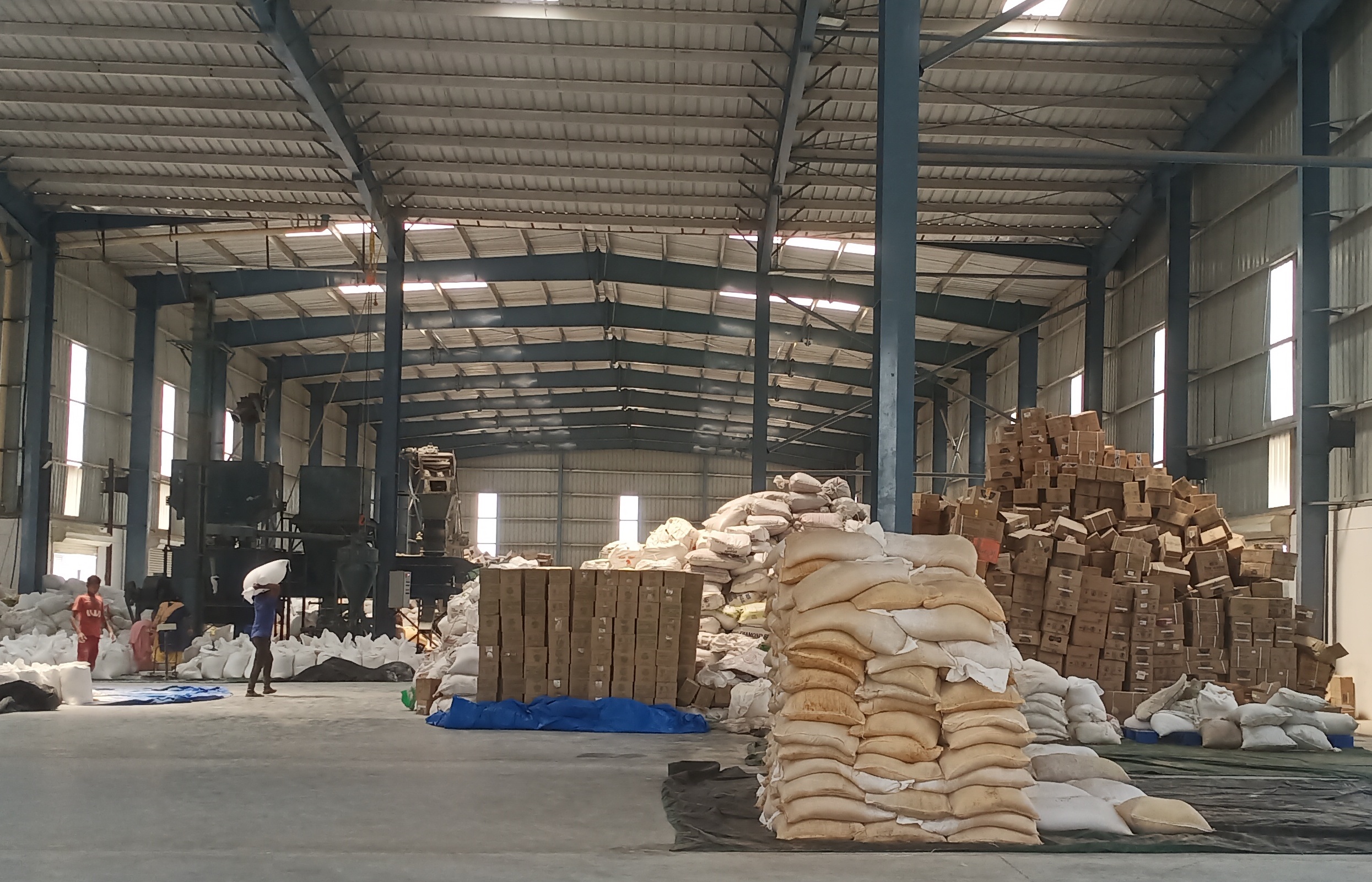
As global food waste fuels climate change and resource depletion, Jagadish Nadig and his team at Wastelink are pioneering solutions to upcycle waste, conserve resources, and feed more people. In a conversation with The American Bazaar, Nadig discusses how his organization is transforming food waste into opportunity, tackling climate change, and promoting sustainability through the power of a circular economy.
By Venky Raghavendra and Raghav Puri
Thanksgiving is that time of the year when food takes centerstage. It is also sadly the time when a lot of food goes to waste. Jagadish Nadig, director of Wastelink, and his team have been on a mission these past few years to tackle India’s growing food waste problem. Currently, 30% of all food produced globally goes to waste. Countless people, be it in the United States, India or other parts of the world, face malnutrition and hunger. In such a scenario, food waste management startup Wastelink is trying to achieve something unique. Wastelink aims to utilize the power of a circular economy, the organization is transforming waste into opportunity—cutting carbon emissions, saving precious freshwater, and feeding more people.
Recently, The American Bazaar sat down with Nadig, fondly known as Jaggi, to talk about his inspiring journey, what drives Wastelink, and his ambitious plans for the future.
The American Bazaar: The ties between food waste and global warming, while now accepted as a troubling truth, are not immediately obvious to most of us. How does this waste, especially from the more populated countries in the world, contribute to increased temperatures and less habitable planet?
Jagadish Nadig: Though increasingly acknowledged, the connection between food waste and global warming remains largely unaddressed. When food waste ends up in landfills, it decomposes anaerobically releasing methane, a greenhouse gas over 25 times more potent than carbon dioxide. Additionally, producing food requires significant resources like water, energy, and land. Wasting food means wasting these inputs, exacerbating resource depletion and environmental strain.
Deforestation for agriculture, often to grow uneaten food, reduces carbon-absorbing forests, further intensifying global warming. Transporting, processing, and refrigerating food also emits greenhouse gases, making waste a compounded environmental burden.
READ: Amid surging energy demands from AI and data centers, Big Tech turns to nuclear power (November 29, 2024)
One-third of food produced for human consumption is lost or wasted globally, amounting to about 1.3 billion tons per year, contributing 8% of greenhouse gas emissions. Addressing food waste in high-population regions is vital. Solutions like waste segregation, upcycling, and stricter regulations can reduce methane emissions, conserve resources, and foster sustainability, mitigating the pressing challenge of a warming planet and ensuring a more habitable future.
Jaggi, we see that you have checked a lot of boxes in life—engineering, then an MBA from Northwestern to helping entrepreneurs grow in Vietnam, and now leading Wastelink. We are curious to know where and how the food waste issue piqued your interest. Also, in terms of food waste, what do you think India and the U.S. can learn from each other and what are these countries doing right?
My family instilled the value of conserving resources from a young age. My father, an industrialist, built his business when resources like electricity and water were scarce. As a family, we consciously practiced resource conservation at home and during travel.
After earning my MBA from the Kellogg School of Management, I relocated to Singapore and joined a family office prioritizing conservation and sustainable resource management. These values resonated deeply with me and shaped my perspective on protecting resources.
When Krishnan, the co-founder of Wastelink, shared the mission of helping food companies achieve Zero Food Waste, the concept immediately resonated with me. It aligned perfectly with my beliefs and experiences.
READ: Fleek raises $20.4 million to transform the global vintage clothing supply chain (November 14, 2024)
In India, conservation is deeply embedded in our culture. With the rise of apartment living, initiatives like waste segregation and upcycling have gained momentum. On the other hand, in the U.S., institutional capital is more readily available to support infrastructure and machinery for automating waste upcycling. Moreover, stricter regulations in the U.S. mandate food producers to ethically upcycle or sustainably dispose of expired or damaged food.
This contrast highlights the potential for collaboration and learning between regions and reinforces my commitment to initiatives like Wastelink that prioritize sustainability and innovation in resource management.
To not waste our food is advice as old as time but the work of Wastelink shows us that food is being wasted way before it reaches our plates. From pre-production to the manufacturing process to the sale of foods, we are wasting at every level. How much does individual accountability towards our daily meals matter then?
The age-old advice to not waste food is something most of us grew up with, yet Wastelink’s work reveals a less visible truth: food waste begins long before it reaches our plates. From pre-production losses during harvesting and storage to inefficiencies in manufacturing and retail, food is squandered at every stage of the supply chain.
There are two major sources of food waste—pre-consumer commercial food waste, which Wastelink focuses on, and post-consumer food waste, where individual accountability is crucial. Remarkably, post-consumer food waste accounts for nearly 50% of the total food waste globally.
So, how can we tackle this issue holistically? The solution lies in collective effort. Addressing systemic inefficiencies requires industry-level changes, such as innovation in supply chain management and upcycling processes. On the individual level, we can make a difference by buying or ordering only what we need, improving food storage at home, limiting waste during cooking, and ensuring clean plates. Additionally, supporting brands that champion sustainable practices and advocating for policies promoting waste reduction can amplify the impact.
True transformation comes by blending systemic reform and personal responsibility, ensuring that every link in the chain—from farm to table—works together to minimize waste and preserve vital resources.
What role does Wastelink specifically play in alleviating this problem? What does the organization do with the food it procures before it goes to waste?
Wastelink plays a pivotal role in addressing the issue of food waste by focusing on pre-consumer commercial food waste, transforming what would otherwise be discarded into value-added products. The organization collaborates with food producers and supply chain partners to intercept surplus or unsellable food before it goes to waste.
Under its brand Ecofeed, Wastelink upcycles this food waste into animal feed ingredients and other sustainable products. By integrating its advanced technology layer, Wastelink ensures complete traceability, tracking food waste from the point of pickup through its transformation into useful outputs. This provides transparency to stakeholders and creates a closed-loop system, contributing to the circular economy.
By turning food waste into productive inputs, Wastelink provides a scalable and impactful solution to one of the most pressing environmental challenges. This prevents food from ending up in landfills, where it would emit greenhouse gases.
A circular economy is now hailed as a solution to our problem of overproduction, overconsumption, and waste generation in industries like fashion. Is there a role for a circular economy model when it comes to perishable food waste?
Absolutely! Perishable food waste, in particular, offers several opportunities for circularity. Edible surplus food can be redistributed to those in need through food banks and charities. Non-edible food waste can be composted to enrich soil health or used in anaerobic digestion to produce biogas, a renewable energy source. Expansion of existing models and creation of new upcycling and processing methods are critical in expanding the scope of the circular economy in perishable food waste.
While it is critical to minimize waste, the complete elimination of food waste in today’s commercial food industry is not yet feasible. This makes circular economy innovations essential for efficiently repurposing the food waste that does occur.
Wastelink is at the forefront of such innovations. Looking ahead, we plan to expand our efforts to tackle the challenge of post-consumer food waste contributing to a comprehensive solution. It is encouraging to see conversations evolving around innovative strategies that integrate sustainability into every stage of the food system.
( Venkatesh Raghavendra is a global social entrepreneur and Contributing Editor to DesiMax. Raghav Puri is pursuing a master’s in international relations and area studies in African Studies from Delhi University.)