



By Soumoshree Mukherjee
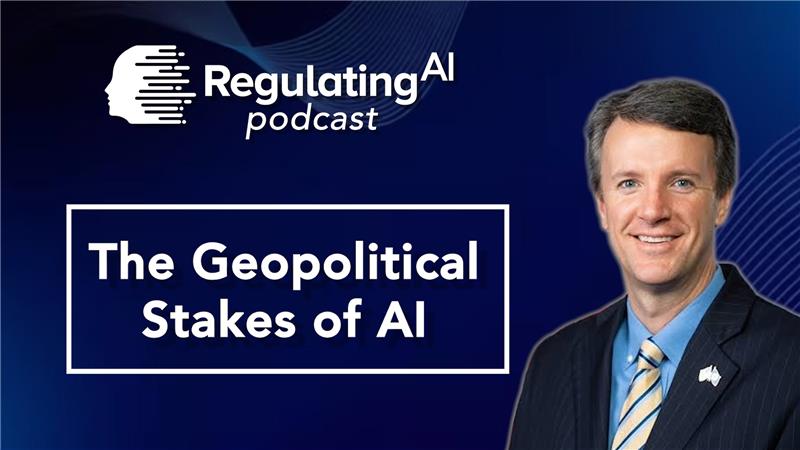
In an era defined by rapid technological transformation, Congressman Ben Cline is sounding the alarm and lighting a path forward. In a recent episode of the “Regulating AI” podcast, the Virginia representative laid out a bold vision for U.S. leadership in artificial intelligence (AI), grounded in innovation, constitutional freedoms, and national security.
Cline emphasized the urgency of countering China’s growing dominance in AI development, warning against the risks of authoritarian influence in global tech governance. His idea was clear: America must not only compete but also define the ethical standards for AI around the world.
READ: You can’t have smart cities without smart transportation: Sanjay Puri (January 19, 2016)
At the heart of Cline’s approach is a call for balance. He champions the private sector’s ingenuity while stressing the importance of congressional oversight. He emphasized that regulation should protect foundational freedoms such as free speech, privacy, and due process, without stifling innovation. Content moderation, he warned, should not become a backdoor for political censorship. Tools like iVerify, which aim to curb disinformation but risk labeling legitimate speech, exemplify the dangers of unchecked power in AI. “The legislation that I’ve introduced has to do with iVerify and the United Nations, which uses U.S. contributions. We are the largest contributor to the UN,” he said.
Cline also took aim at the Biden administration’s AI policy, calling it insufficiently aggressive in tackling the geopolitical stakes. Cline stressed that the U.S. is facing a pivotal moment. He underscored how chip manufacturing, energy infrastructure, and national security are deeply interconnected and must be prioritized to maintain a competitive edge in AI development. He pointed to actions taken during the Trump administration to reset trade dynamics, particularly in semiconductor imports, as steps in the right direction.
Rebuilding domestic chip manufacturing remains a top priority. Cline argued that reducing reliance on foreign tech, especially from China, is vital. He linked this directly to national security, emphasizing how AI systems depend on robust, secure supply chains. In tandem, he highlighted the need for energy diversification, as AI-powered data centers increasingly strain the nation’s electrical grid. Virginia, he noted, is well-positioned to lead in this arena, but permitting reform is essential to accelerate infrastructure development.
READ: Regulating AI: Sanjay Puri on policy, challenges, and ethical innovation (November 1, 2024)
Beyond economic and security concerns, Cline spotlighted the human impact of AI. From aiding rural farmers to supporting local colleges, AI has the potential to uplift communities if deployed ethically. However, he cautioned against allowing AI to replace human judgment in critical areas like the judicial system. “I think that AI long term is my vision, is one where the technology continues to drive innovation,” he said, “but also ensures that it’s developed and deployed responsibly, ethically and in line with our core constitutional values.”
Cline concluded by urging bipartisanship in AI policymaking. Building relationships across party lines, he believes, is crucial to crafting laws that reflect the diverse needs of Americans. As the world races toward an AI-driven future, Congressman Cline’s vision offers a compelling reminder: leadership in innovation must be matched by leadership in ethics, freedom, and democracy.