



By Pragya Raj Singh
When we speak about the new generation of Indian changemakers who are rewriting the script on education, creativity and empowerment, Jigyasa Labroo’s name inevitably comes up. Both a dreamer and a doer, she is the co-founder and CEO of Slam Out Loud (SOL), a breakthrough social enterprise that brings the power of the arts to children who have rarely been handed a microphone, a stage, or even the assurance that their voice matters.
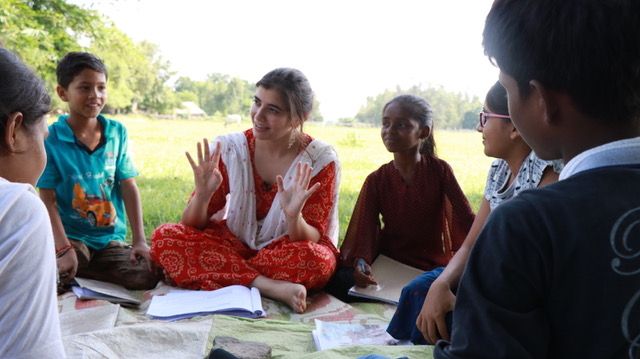
A graduate of Harvard’s Graduate School of Education, K.C. Mahindra Scholar, Forbes Asia 30 Under 30 honoree, HundrED Innovator of the Year, and Echoing Green Global Fellow, Labroo’s journey sparkles with accolades. Yet her most important work is being written every day in classrooms and communities across India and beyond. Under her leadership, Slam Out Loud has directly reached more than 300,000 children, trained over 1,600 teachers, and inspired more than 10 million young people globally through open-source creativity resources.
READ: Building the future of learning: In conversation with EdTech pioneer Saurabh Saxena (September 5, 2025)
But Labroo is quick to point out that the real story lies beyond the numbers. Her mission is clear: to make self-expression, creative confidence, and the healing power of the arts not privileges for the few, but fundamental rights for every child—especially those whose voices are too often unheard. Whether she’s launching poetry programs in rural schools or speaking at global forums on arts and social justice, she embodies a profound belief that a single spark of creativity can ignite hope, empathy, and transformation.
Whether she’s piloting poetry programs in rural schools or speaking at global forums on arts and social justice, she embodies a deep belief that a single spark of creativity can ignite hope, empathy, and lasting change.
In an exclusive conversation with Pragya Raj Singh for The American Bazaar, Labroo reflects on the risks, roadblocks and quiet victories that continue to shape her journey.
Pragya Raj Singh: You’ve turned creative expression into a powerful tool for change. Can you take us back to the first moment you saw the arts ignite something in a child who had never experienced that chance before?
Jigyasa Labroo: When I was a teacher in a low-income classroom, I began bringing music, theatre and poetry into my lessons. Children who had never raised their hands before suddenly wanted to speak. When children come to school, we often ask them to leave their culture and identity at the gate and blend into sameness, but through the arts I saw them bring themselves back in.
I remember Pooja, who had just moved from a small village in West Bengal and felt lost in a class full of confident kids. When we began writing poetry, she started writing every day in Hindi and soon became known as the class poet. Her classmates began going to her for feedback. I saw how she built belonging, dignity and a sense of identity through her art. That’s when I truly understood the transformative power of expression.
You walked away from a conventional path to champion creative confidence. What were the defining leaps of faith, or moments of doubt, that marked your early journey?
I studied engineering and computer science and was among the first to get placed from my batch, not because I was the most technical, but because I could communicate, collaborate and listen. Choosing Teach For India over a corporate job was my first big leap of faith. It paid modestly, but enough for me to live in Delhi without asking for help from home, and that mattered.
My family wanted me to go to the United States for a master’s, but something in me knew I needed to follow what felt authentic, even if it looked unconventional. The next leap was joining Slam Out Loud full-time at 22. It was a mix of naivety and conviction. We had a few incubators backing us but no guarantees. I think youth saved me from overthinking. There wasn’t much doubt then, just a quiet knowing that this was the work I was meant to do.
Slam Out Loud now reaches millions, but scaling a movement is rarely straightforward. Can you share a behind-the-scenes success, or even a setback, that taught you more than any award?
There was a time when ambition ran faster than our capacity. We had just received a green light for a dream project in Kashmir, but at the same time, our team of four was running programs in Delhi, scaling another from 1,500 to 50,000 children, and onboarding our first batch of Jijivisha Fellows. We wanted to do everything and nearly broke ourselves trying.
READ: Indian American Naureen Hassan named President of UBS Americas, CEO of UBS Americas Holding (July 12, 2022)
Between travel, compliance and new relationships in the Valley, burnout crept in. We ended up losing that project. It was painful, but it taught us one of the most important lessons of leadership, that saying yes to everything means doing justice to nothing. Today, we scale differently, by building systems, trusting local partners and leaving space for reflection. Sometimes the best teacher is a failure that forces you to choose sustainability over speed.
We know numbers are only one part of the story. Can you share a memory or message from a student or teacher that captured Slam Out Loud’s true impact for you?
I think of Abbas, who joined us as a 13-year-old drawn to rap. Over time, he found his voice through poetry and community. After finishing school, he received a full scholarship to Azeem Premji University to study liberal arts. There, he became deeply involved in activism and mentorship for marginalized students, while continuing to perform and write. This year, he came back to us as a Jijivisha Fellow. Out of 800 applicants, he was among the top percentile selected. Watching his journey from a child exploring rhyme to an adult shaping spaces of care for others feels like the truest marker of impact. His poems on identity, gender and mental health remind me that creative confidence doesn’t just change children’s lives — it builds thoughtful citizens.
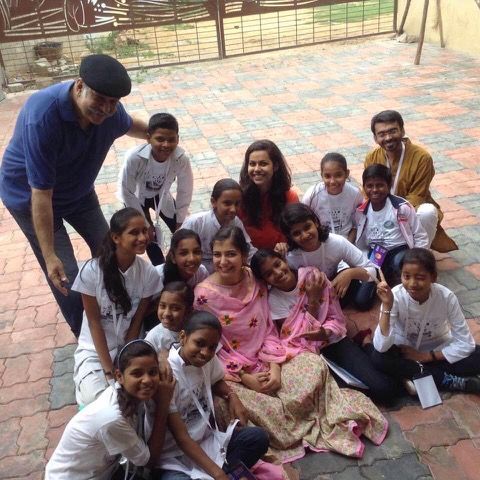
If you could wave a magic wand and give India’s education system one new superpower, what would it be, and why do you believe the future belongs to creative changemakers?
If I could give India’s education system one superpower, it would be for every child to feel seen, safe and cared for in their classroom, to have a space where they can express themselves freely. Once that happens, art, poetry, music and culture will find their natural place in schools.
I believe the future belongs to those who create with empathy and inclusivity. To me, creativity that excludes the poor and powerless isn’t revolutionary, it’s decorative. True creative changemakers build bridges, not walls. I dream of a world where creativity is seen as essential as literacy, where our classrooms nurture imagination as much as intellect. The future belongs to those who can reimagine systems and make that imagination accessible to everyone.
(Pragya Raj Singh is a next-generation global social entrepreneur dedicated to innovation and grassroots impact.)