



By Sreedhar Potarazu and Carin-Isabel Knoop
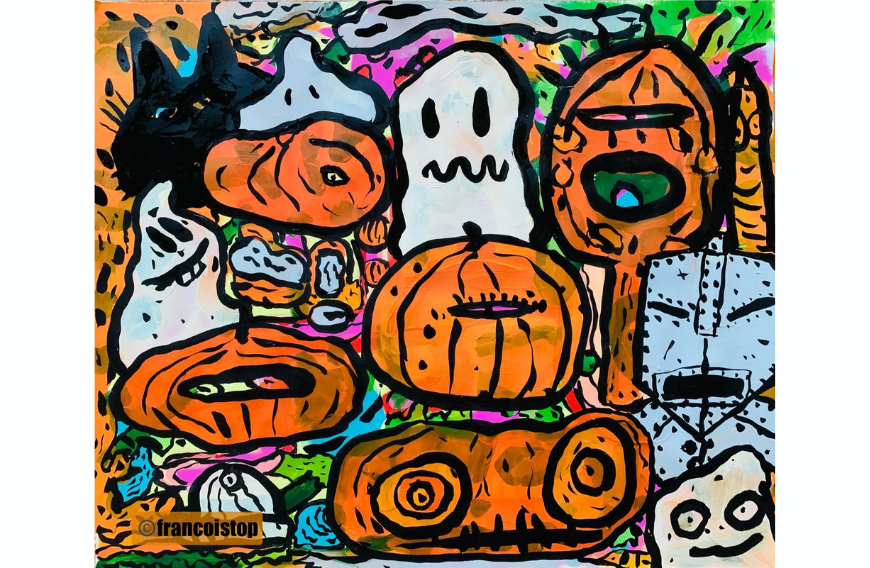
It’s Halloween — the time of year when we don masks and costumes to become someone else: a superhero, a villain, or a mythical figure we imagine ourselves to be. For a moment, we live as symbolic avatars—alternative versions of ourselves. Others, in turn, reveal new facets of who they are through their chosen disguises.
Once the parties and trick-or-treating end, however, the masks and costumes are boxed up.
That is not the case in real life, where we adopt psychological avatars with personas, roles, and images, because maybe we feel something is missing in our own worth, or because we believe others expect more from us than we can emotionally offer.
We take on these avatars to fill the gap between how we see ourselves and the image we have in our heads. That gap may shift depending on context at home and at work. The problem is that when we lose connection to our authentic self at the expense of adopting armor, it shields us from connecting to our inner self.
As managers, coaches, leaders, parents, partners, and teachers, the avatars we assume carry even greater weight because they do not just shape how we want to be seen, but also how others feel they are allowed to be around us.
When we adopt avatars of perfection, invincibility, or control, people around us may try to mirror the act, Robin does to Batman, suppressing their own fears or vulnerabilities. Do our chosen avatars unintentionally make authenticity feel unsafe and mute self-expression? The challenge, then, is not just to wear the right avatar or mask for the moment, but to ensure that it permits others to unmask themselves to model adaptability.
From mask to avatar
The word “avatar” goes beyond the idea of a mask or disguise. Its original definition is first described in ancient texts such as the “Gita,” where it represents a complete transformation of personality — a temporary embodiment of another self that reflects who we wish to be.
Masks can be shed, but avatars are inhabited. A mask conceals; an avatar embodies. We put on a mask for a moment of protection or play, and it can be removed without consequence. An avatar, by contrast, is lived in. It shapes posture, voice, and belief. If we keep it on too long, the distinction between disguise and identity begins to blur.
READ: Tesseral raises $3.3 million to simplify B2B authentication for software developers (
What started as a form of adaptation becomes a form of amnesia, a forgetting of the self behind the projection.
In that sense, the mask and the avatar are points along the same continuum: one hides what we fear, the other performs what we aspire to be. Both, if worn too long, risk replacing authenticity with habit.
In Sanskrit, avatāra describes a celestial being taking on human forms, bridging the spiritual and material worlds. Over millennia, the term avatar has evolved. The modern digital use of the term “avatar” was popularized in 2003 with the launch of Second Life, an online virtual world created by Philip Rosedale and his company Linden Lab, where users could design and inhabit digital representations of themselves to explore, socialize, and build entire virtual lives.
Since then, social media and artificial intelligence have added more complexity to the utility of avatars as extensions of our identity in virtual form, from Zoom to LinkedIn, Instagram, or TikTok. The Mercedes, McMansion, country club membership, a perfect complexion, and Hermès Birkin bag — the relentless reels each becomes part of a curated commercial in our mind, constructed to project success, confidence, and status.
In the digital masquerade, we live as our avatars, identifying with characters that represent something more desirable, safer, or stronger than our true selves, compromising our mental well-being.
From avatar to armor
The avatars can be coping mechanisms from outside forces, a way to conceal the internal storms we struggle to name. In a culture that prizes composure and productivity, we wear digital or emotional armor to project the illusion that everything is fine, even when it isn’t.
Emotional armor shields us from outside judgment and allows us to function despite anxiety, depression, or burnout. They also set up a masquerade party where nobody knows who anyone is.
In “Promoting Mental Health and Work,” Knoop argues that “to improve mental health at work, we need to take off our emotional masks.” Much of our professional existence is performative: We show up as versions of ourselves designed to withstand scrutiny, but rarely to connect. Authentic connection and well-being depend not on better masks, but on the courage to lower them. We all wear masks — not just to hide who we are, but to survive what we feel.
Avatars at work
Every profession and personal role invites our avatars—and often they serve a purpose. A doctor or parent may project confidence while tethering fear. An entrepreneur may radiate certainty while staying up at night, worried about the hockey stick projects she just shared in a funding round. An athlete may appear invincible while struggling to silence the voices in their head.
Each facade is a protective image, and behind it lie emotions we fear showing — anxiety, shame, guilt, insecurity. Our avatar shields allow us to portray strength, courage, and perfection to the outside while feeling vulnerable inside.
Public figures have spoken about this dissonance more than business leaders, who have so far lacked the courage to do so as frequently and openly. Actress Deepika Padukone, India’s new and first Mental Health Ambassador, for instance, has disclosed her battle with depression since a formal diagnosis in 2015, even as she has consistently embodied celebrity poise. Her public persona — the avatar of an actress who had it all — masked a deep inner struggle.
Olympic legend Michael Phelps has reflected that his medals sometimes felt like armor, hiding emotional pain beneath layers of expectation. Tennis prodigy Carlos Alcaraz admitted that, despite achieving incredible success, he sometimes felt lost off the court, pressured by the avatar of a superhuman that fans and media expect, to the point of feeling like “a slave to tennis.”
READ: Building the future of learning: In conversation with EdTech pioneer Saurabh Saxena (
And in the musical arena, rockstar Bruce Springsteen has spoken of the stage persona that concealed years of depression, and the need to disguise himself before consulting with his psychiatrist. These stories illustrate how our avatars are not harmless illusions but psychological scaffolding. They may support us and provide escape from parts of ourselves we wish to keep hidden, but they also distance us from our true identity.
The anchor of authenticity
In those moments, assuming a temporary persona can be both necessary and adaptive, much like an actor embodying a character to fulfill a story before returning to their true self when the scene ends. Taking on that role becomes the medium for effective communication. We do not need to live behind the mask, nor must we carry the weight of that performance beyond its purpose.
Authenticity lies in knowing that while we may need to adapt to new roles, our core values and integrity remain constant. Ironically, in mythology, avatars were first used to describe a spiritual form that takes on new roles necessary for a given situation, but at the core never loses touch with its true identity.
When we lose that distinction, we risk confusing our costumes for our character and our image for our identity.
The strain of maintaining that confusion shows up as chronic stress — the fatigue of toggling between roles without a place to rest. Over time, the mind learns performance but forgets recovery. The very adaptability that helps us lead, teach, or parent becomes the source of depletion. It becomes harder to manage the stressors of daily life — and the stress of performing and hiding.
So, the essential question is, do our avatars serve us, or do we serve them? When the situation calls for it, we can shift masks instantaneously. If we never drop them, we lose access to the core self beneath. If we never wear them, we might deprive ourselves of the structure, boundaries, and credibility they provide. But they become problematic when we suppress vulnerability, deny emotions, and have our identity fused with the avatar.
The sweetest treat is to be seen
And so, we return to Halloween — the one night of the year when we admit to wearing masks. It reminds us that disguise can be playful, even freeing, but only when we remember to take it off.
On this Halloween, let’s wonder: Have my masks become the avatars through which I am now living? Which mask am I afraid to take off? And what would it feel like to let people see the unmasked parts, the imperfections, the shadows of my authentic self, and see people as they are?
We can take on many avatars to adapt to life’s shifting stages, but true strength lies in remaining authentic — grounded in who we are — no matter the role we play so that we can stay connected to others. One way to do this is to seek to understand the facets that make us one actively.
Much like Halloween might reveal things about us, so can we be more proactive at not reducing others to what we see or immediately conclude from limited, often surface-level, data. (See a game idea to support such connections with Nalini Kaushal.)
(Sreedhar Potarazu, MD, MBA, is an ophthalmologist, healthcare entrepreneur, and author with more than two decades of experience at the intersection of medicine, business, and technology.
Carin Isabel Knoop founded and leads the Case Research & Writing Group at Harvard Business School, helping faculty members craft world-class curricular and pedagogical experiences on work and leadership. She co-authored “Compassionate Management of Mental Health in the Modern Workplace (Springer),” which informs her articles on Medium.)