



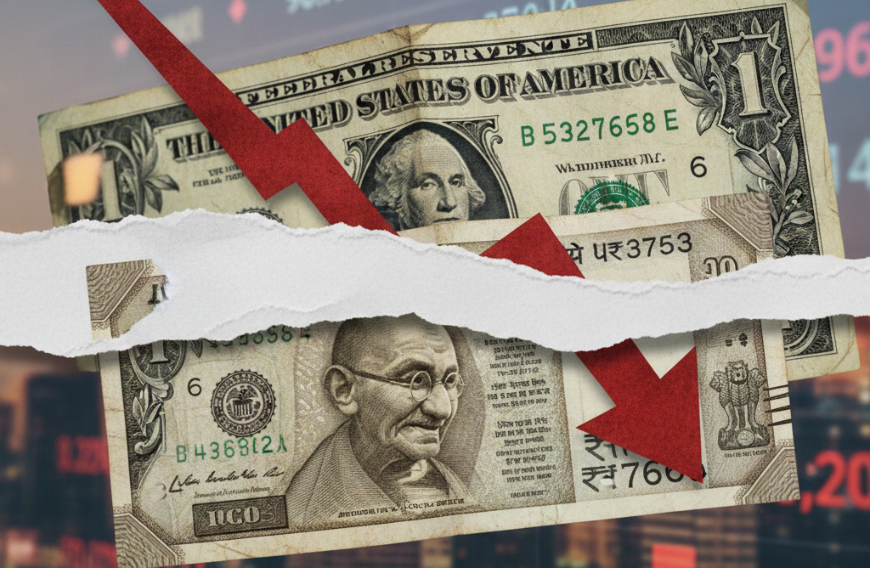
The Indian Rupee is not doing good. Reuters reported that the currency on Monday fell to an all-time low of 90.64 against the United States dollar amid uncertainty over a potential trade deal between New Delhi and Washington.
Reuters reported that it had fallen 5.5% in 2025, which makes the rupee the worst-performing Asian currency of 2025.
The rupee is used in all domestic transactions and is the standard of account in India’s financial, commercial, and governmental operations. As of December 2025, the rupee trades at approximately ₹90 per U.S. dollar. The currency is an integral part of India’s economy, facilitating domestic trade and international transactions.
On Dec. 4, Congress chief Mallikarjun Kharge alleged that the rupee was weakening because of the policies of the Narendra Modi government. “If the government’s policy were good, the value of the rupee would increase,” he had told reporters outside Parliament.
READ: House Committee targets illegal immigration with new remittance tax proposal
India’s currency system is based on a floating exchange rate, meaning the value of the rupee is largely determined by the foreign exchange market, with the RBI intervening occasionally to reduce volatility.
The recent depreciation of the Indian Rupee highlights the challenges faced by India’s currency in the context of global economic pressures and domestic policy considerations. A combination of market forces, including foreign investment flows, trade uncertainty, and broader macroeconomic factors, has contributed to the rupee’s decline. The currency’s performance as the worst-performing Asian currency in 2025 underscores the volatility of emerging market currencies in an interconnected global economy.
Despite this, the rupee remains central to India’s financial system, serving as the standard medium of exchange, unit of account, and store of value for domestic transactions, government operations, and international trade. The Reserve Bank of India continues to manage monetary policy and intervene in foreign exchange markets as needed to reduce volatility and maintain stability.
READ: US Treasury mocks Indian rupee value, highlights dollar’s global dominance (
Currency fluctuations are a normal feature of market-driven economies and can reflect both short-term pressures and long-term structural dynamics. While the rupee’s current weakness has drawn attention, it is also a reminder of the importance of sound fiscal and monetary management, careful monitoring of global economic trends, and the resilience of India’s financial institutions in supporting economic growth and stability.
Short-term movements can be influenced by factors such as trade negotiations, investor sentiment, and capital inflows or outflows, while longer-term trends depend on economic growth, fiscal discipline, and structural reforms. Despite temporary declines, the rupee remains a central component of India’s economy, supporting commerce, government operations, and international trade.
Effective management by the Reserve Bank of India, combined with broader economic planning, helps maintain overall stability and confidence in the currency. Observing these patterns can provide insight into broader market conditions, emphasizing the interconnectedness of domestic financial policies with global economic trends.