



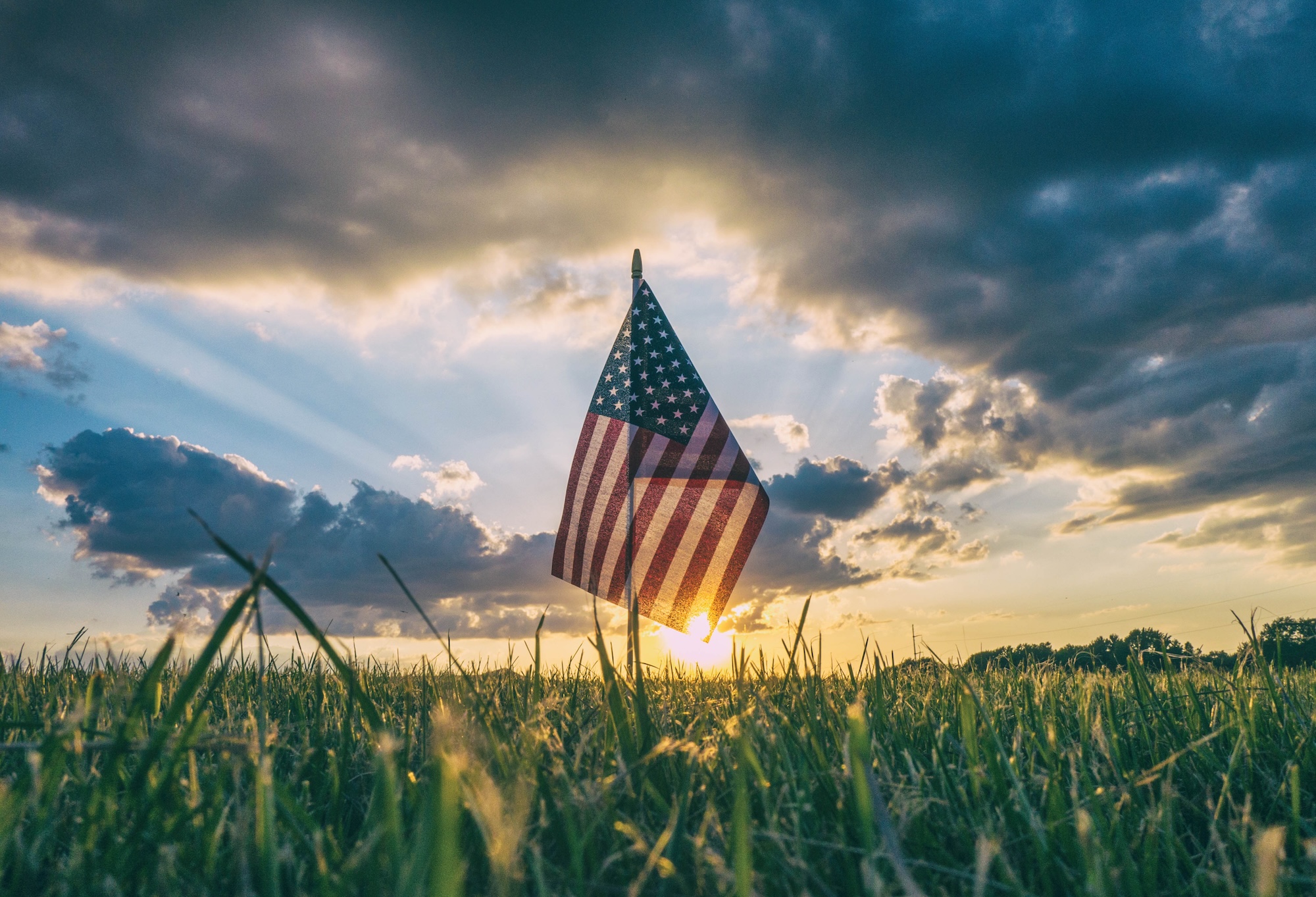
America today feels less like a nation than a probability field, a place where anything can happen and too much already has.
The constitutional machinery that once gave this country its improbable stability now grinds and sputters. Congress, both parties alike, has drifted into irrelevance. The Supreme Court debates abstractions while the legal order that held for two and a half centuries strains under the weight of its own contradictions. And the world watches, baffled.
Nobody can quite say what America is anymore — not its citizens, not its allies, not its adversaries.
I feel that disorientation in my bones. Stephen Marche captured a piece of it in his recent writing, but the truth is larger: the world’s exasperation with the United States is no longer a mood. It’s a diagnosis. And at the center of this long unraveling stands Donald J. Trump — not as the sole cause, but as the accelerant.
For more than a decade, he has embodied the very forces the American experiment was designed to resist: the lure of strongmen, the corrosion of institutions, the substitution of spectacle for governance.
To understand the scale of the rupture, you have to go back to the beginning. The Declaration of Independence was written by flawed men who owned slaves and denied rights to half the population, but they articulated an idea that changed the world: that power must be constrained, that rulers must answer to the governed, that equality — however imperfectly practiced — was a national aspiration.
America has never lived up to that promise. Its history is scarred by genocide, slavery, exclusion, and empire. But the aspiration mattered. It drew millions across oceans. It inspired revolutions. It made the United States, for all its sins, a beacon.
Trump’s rise marked a reversal of that trajectory. From the moment he descended that golden escalator, he treated politics as a loyalty test and the presidency as a personal franchise. The founders feared concentrated power; he demanded it. They built checks and balances; he treated them as obstacles.
READ: Satish Jha | India’s technology illusion: Why capability, not rhetoric, determines power (February 7, 2026)
January 6 was not an aberration but the logical outcome of a worldview that places one man above the republic. The damage did not end with his term. It metastasized — into a Congress that confuses paralysis with principle, into a judiciary increasingly comfortable wielding power without accountability, into a political culture that treats truth as optional.
The consequences are everywhere. Legislative gridlock has become a governing philosophy. The Court, reshaped in his image, has upended decades of precedent on reproductive rights, affirmative action, and environmental protections.
States have rushed to fill the vacuum with their own experiments in restriction and control. Abroad, allies hedge their bets while adversaries exploit the chaos. The United States, once the anchor of the international order, now looks unmoored.
But the deeper crisis is cultural. Trump did not invent America’s divisions; he weaponized them. He mainstreamed grievances that had long simmered at the margins. He elevated conspiracy over evidence, resentment over pluralism, performative cruelty over civic responsibility.
READ: Satish Jha | The pendulum of American ideals: From beacon to backlash (
The result is a country that feels smaller — meaner, more brittle, more willing to turn on itself. The beacon that once flickered with possibility now flickers with exhaustion.
And yet, the American story has always been a story of reinvention. The nation survived civil war, depression, and constitutional crises because enough people refused to surrender the idea that self‑government was worth the struggle.
That idea is battered today, but not extinguished. The path forward is neither mysterious nor easy: strengthen voting rights, reform the institutions that have calcified, reject the cult of personality in all its forms, and reclaim the founding opposition to unchecked power.
Trump’s decade has left scars, but scars are not destiny. They are reminders — of what was broken, and of what must not be repeated. America’s crisis is not that it has forgotten its founding ideals. It is that it has forgotten why those ideals mattered.
The work now is to remember, and to rebuild, before randomness becomes the only thing this country stands for.