



America turns 250- the oldest constitutional democracy in the world. Never led by a woman.
Why?
What if, at this moment in history, every head of state, every chief executive officer, every military commander, and every religious authority were a woman? Would we be in the same situation?
What if the rooms where decisions about war, trade, climate, and justice are made were filled not with the familiar tenor of male bravado but with voices shaped by a different set of lived experiences? Would the global landscape look the same, or would the tone of leadership itself feel altered—less performative, less adversarial, more collaborative?
As America turns 250, the question is no longer whether women can lead but whether we have the institution to let them. A democracy that reveres women in story, scripture, and ceremony but hesitates to entrust them with power remains incomplete.
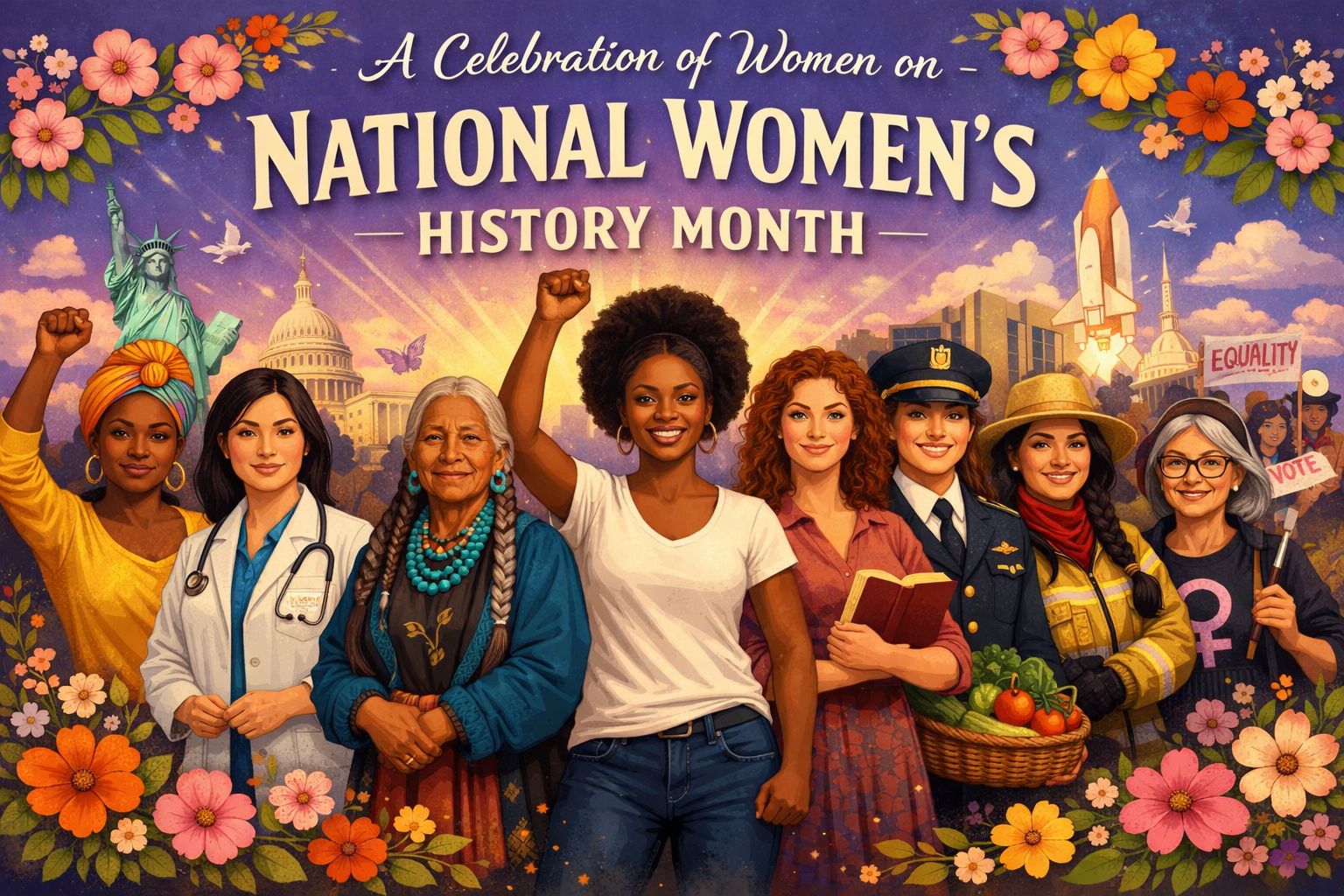
We cannot know with certainty, yet the question itself reveals how accustomed we are to one dominant model of power. National Women’s History Month invites us to pause, delve unto causes, and imagine alternative futures. The month celebrates the contributions of women to history, culture, and society, with the theme “Leading the Change: Women Shaping a Sustainable Future,” recognizing those who are designing blueprints for environmental stewardship, economic resilience, and societal transformation.
In U.S. history, women have shaped the nation’s moral and political trajectory even when the highest offices remained beyond their reach. Harriet Tubman embodied extraordinary courage by leading enslaved people to freedom and serving the Union .Rosa Parks transformed quiet resistance into a movement that reshaped civil rights law, Alongside them, Eleanor Roosevelt redefined public leadership through her advocacy for human rights and social justice, demonstrating that influence grounded in moral conviction can alter the course of democracy itself. These examples and many others in history have shown the resilience of women to lead despite circumstances and barriers.
READ: Sreedhar Potarazu and Carin Isabel Knoop | Our fatal attraction to AI: Basic (or Python) instinct (February 25, 2026)
Across civilizations and across centuries, the feminine figure has held a sacred place in culture, and religion. In Christianity, the image of Mary, mother of Jesus embodies obedience, humility, endurance, and unconditional love. In Hindu tradition, the Divine Mother appears as Devi, the cosmic force who creates, sustains, and destroys, representing both nurturing compassion and fierce protection. In Judaism, the matriarchs such as Sarah are revered not merely as spouses but as moral anchors In Islam, Khadijah bint Khuwaylid stands as a model of strength, business acumen, and unwavering faith, while Maryam is honored as one of the most righteous women in history. In every tradition, the feminine is intertwined with mercy, wisdom, and sacrifice.
The act of motherhood itself is the most profound testament to sacrifice. To carry life within one’s body is to accept vulnerability and pain for the promise of continuity. To give birth is to endure physical suffering that cannot be outsourced or shared. To nurture a child through sleepless nights, illness, uncertainty, and the long arc of moral formation is to stand as a pillar of invisible labor. The mother becomes architect, healer, teacher, and guardian, often without applause and frequently without rest.
Philosophers and poets have long tried to capture this quiet heroism.
Khalil Gibran wrote of mothers as the silent source from which strength flows.
Rabindranath Tagore spoke of woman as both river and shore, holding and shaping the currents of life.
These reflections, varied in origin and ideology, converge on one truth:
There is something singular about the feminine capacity to sustain life while enduring inequity.
Women have contributed to every walk of life. They have led nations, advanced science, shaped literature, commanded movements for civil rights, built corporations, healed the sick, and educated generations. Yet history has not always recorded their names with the same prominence afforded to men.
There was a time in the United States when women were not even considered eligible to vote, when their voices were deemed secondary to those of their fathers and husbands. The passage of the Nineteenth Amendment in 1920 corrected a grave injustice, but it did not instantly erase the cultural assumptions that had preceded it.
READ: Sreedhar Potarazu and Carin Isabel Knoop | Getting our needs met: Learning to speak ‘human’ from GenAI (February 11, 2026)
Nearly two and a half centuries after the founding of this republic, the nation that proclaims equality as a self-evident truth has yet to elect a woman as President.That reality invites sober reflection. It forces us to ask whether structural barriers remain or whether societal expectations about leadership still unconsciously favor traits traditionally coded as masculine.
If the United States, Israel, and Iran were led by women, would the tone of leadership shift toward diplomacy, restraint, and long-term stability, though no nation is immune from the pressures of power and geopolitics?
Yet such speculation must be tempered by realism. Women, like men, are fully human and therefore capable of both virtue and vice. Leadership is shaped by systems, incentives, andpressures that transcend gender. Still, one cannot ignore that many global conflicts appear fueled by ego, competition, and the performance of strength. Would a different socialization of power alter that trajectory? The question lingers because history has not yet provided enough examples to answer it conclusively.
Women’s leadership archetypes describe how the “queen bee” and “worker bee” framing shaped perceptions of women during the COVID era, reflecting broader organizational stereotypes about leadership roles and visibility of contribution. While women leaders are often associated with qualities such as empathy, resilience, and adaptability, it argues that performance outcomes for companies led by women are influenced heavily by structural and cultural constraints rather than inherent differences in leadership ability. Women’s ambition isn’t the problem — broken promotion systems, burnout, and shrinking workplace support are. The path to equity still has major barriers. Even within religious institutions that revere feminine archetypes, leadership often remains male-dominated.
At the same time, the modern world confronts horrors that starkly contradict its reverence for the feminine. Revelations surrounding exploitation in the Epstein files have exposed the commodification of young women by powerful men. The brutal rape of a young women in Delhi ignited global outrage, yet similar violence persists.
In some African countries and Afghanistan, girls are denied education, forced into early marriage, or subjected to practices that rob them of dignity and autonomy. These are not isolated incidents; they are manifestations of deeply rooted inequities. When will the world awaken to the contradiction between symbolic worship and lived reality? When will reverence translate into protection, opportunity, and equality?
National Women’s History Month is not merely an occasion for congratulatory messages or ceremonial praise. It is a call to introspection. If we truly believe that women are epitomes of grace, resilience, and moral insight, then our institutions must reflect that belief. If we celebrate the sanctity of motherhood, then policies must support maternal health, childcare, and workplace equity. If we honor the intellectual and spiritual capacities of women, then leadership pathways must be genuinely accessible.
As we reflect this month, the deeper question is not whether women can lead. History has already answered that. The question is whether societies are willing to examine the subtle biases that still constrain them. If compassion and empathy are indeed strengths rather than liabilities, then elevating the feminine dimension of leadership may be less about gender and more about redefining power itself.