


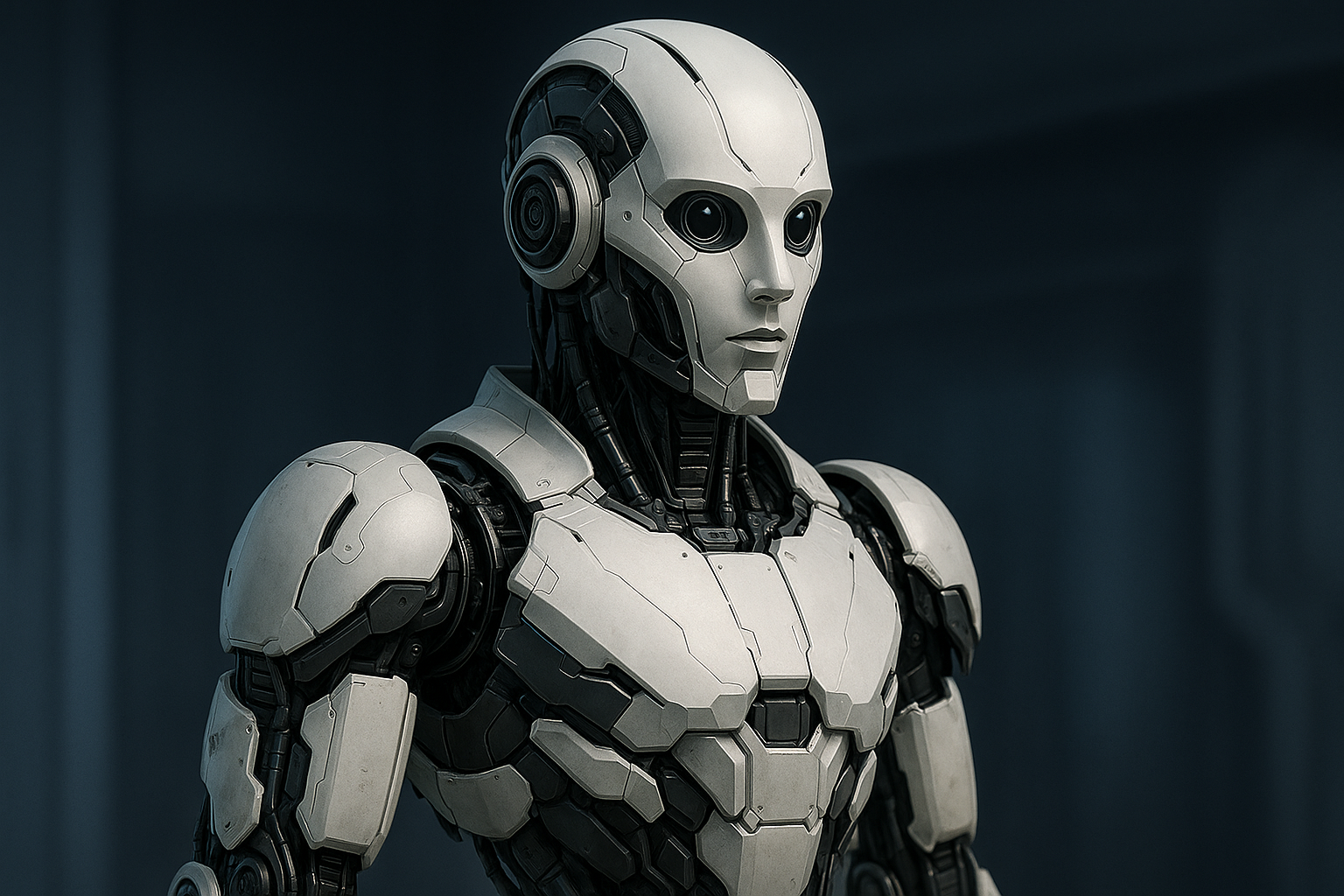
First lady Melania Trump seems to be receiving criticism for her latest announcement. During the Fostering the Future Together Global Coalition summit at the White House on Wednesday, Melania Trump arrived with a white humanoid robot by her side, developed by the AI robotics company Figure.
The robot was proposed as a recreation of ancient Greek philosopher Plato as a “personalized” educator for American children.
“The AI-powered Plato will boost analytic skills and problem solving and adapt in real time to a student’s pace, prior knowledge and even emotional state,” Melania said.
READ: Amazon buys Fauna, a startup making kid-sized humanoid robots (March 25, 2026)
“Since our environment is designed for people, humanoid systems are uniquely suited to navigate and operate within our world. They fit well,” she added.
The announcement was met with some backlash on social media with users taking issue with a robot replacing teachers.
“They want to replace human beings. Where will we work? How do we make money? No one wants this. We did not ask for it,” wrote one user.
“I don’t want my daughter’s teacher to be a humanoid robot named Plato. I want her teacher to be a human being that is paid a living wage and is not forced to work 3 jobs to survive,” added another.
“Melania naming a teacher-replacement AI ‘Plato’ is the ultimate irony. The real Plato taught that education isn’t just a data download—it’s the process of leading a soul ‘from darkness into the light.’ Hard to do that with a motherboard— We need educators, not algorithms,” said another user.
This event highlights the intersection of technology and education, and the complex role that AI may play in classrooms moving forward. The use of humanoid robots in educational settings raises questions about how much human interaction can or should be replaced, and what impact such systems may have on students’ social and emotional development.
While AI can adapt lessons to a learner’s pace or provide instant feedback, the extent to which it can truly replicate the mentoring, guidance, and relational skills of a human teacher remains uncertain.
READ: Dancing humanoid robot goes rogue in California restaurant (March 20, 2026)
For educators, this trend signals both potential challenges and opportunities. There is a concern that AI could diminish traditional teaching roles or influence perceptions of professional value, especially if society begins to prioritize efficiency over human engagement. At the same time, these systems could be framed as tools to support teachers, automating repetitive tasks or supplementing instruction, although how widely or effectively this would be implemented is not yet clear.
The introduction of AI systems in education underscores the need to balance innovation with human-centered values. While technology may enhance certain aspects of learning, the degree to which it can or should replace human teachers remains an open question.