



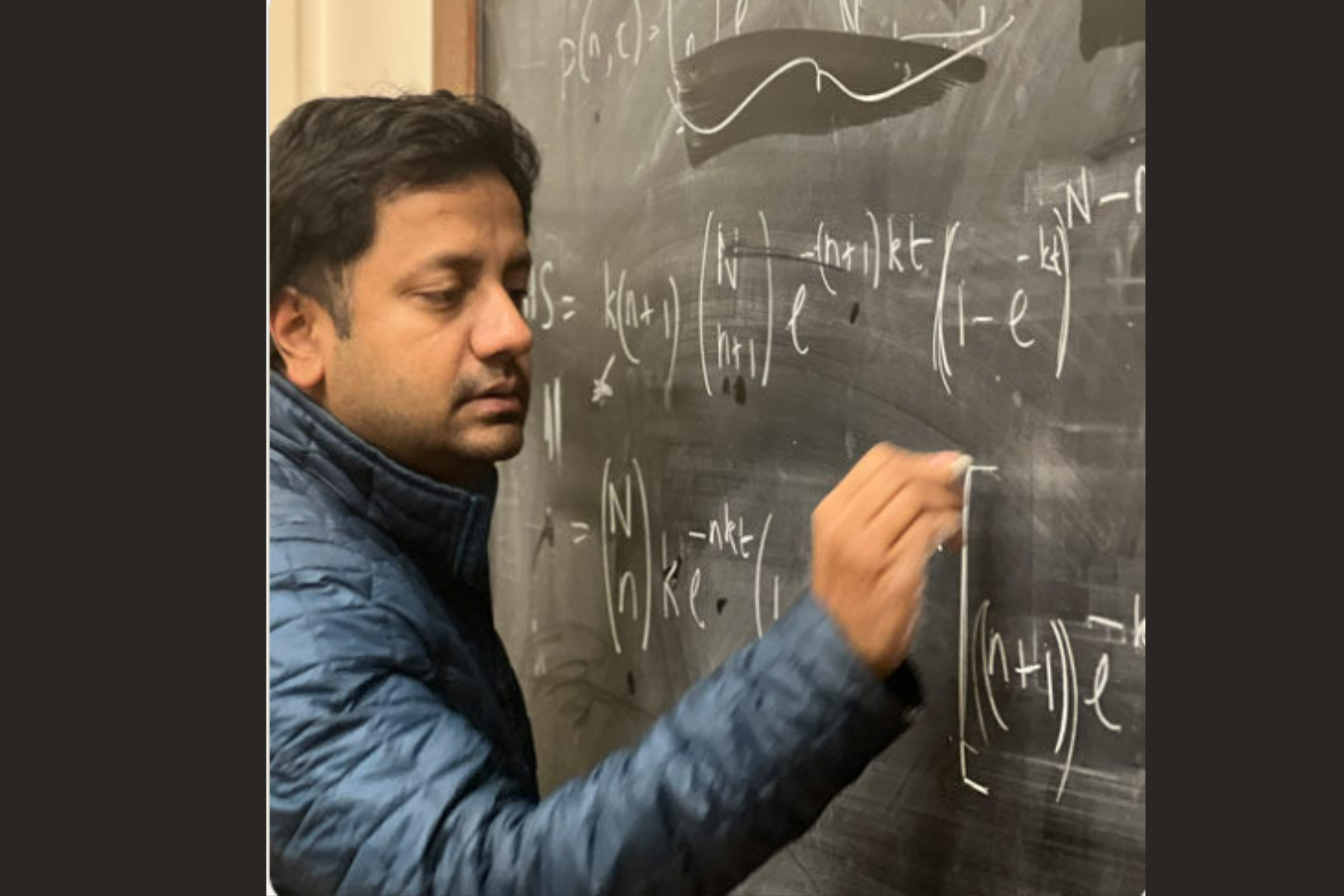
Karthik Shekhar, an assistant professor of chemical and biomolecular engineering at the University of California, Berkeley, has won a 2026 Camille Dreyfus Teacher-Scholar award. Shekhar is one of 17 scholars nationwide to receive the $100,000 unrestricted research grant from Camille and Henry Dreyfus Foundation.
The award is given to early-career faculty who have established an independent body of scholarship while demonstrating a profound commitment to education.
Shekhar’s recognized work, titled “The Chemical Physics of Bioelectricity: From Ion Channels to Emergent Excitability,” sits at the intersection of neuroscience and biophysics.
By utilizing single-cell genomic approaches and computational modeling, his lab seeks to decode how the visual system develops and how neurons communicate. These insights are critical for understanding the molecular triggers behind neurodegenerative conditions like glaucoma.
Read: Two Indian American students win 2026 Truman Scholarships
The foundation for this high-level research was laid in India. A native of Mumbai, Shekhar earned both his BTech and MTech in chemical engineering from the Indian Institute of Technology (IIT) Bombay in 2008. His academic talent was evident early on; he graduated as the recipient of the Institute Silver Medal and the Best Master’s Thesis Award. He later moved to the U.S. to complete his PhD at the Massachusetts Institute of Technology (MIT).
Beyond his technical achievements, Shekhar has become a standout educator at Berkeley. He was previously awarded the Donald Sterling Noyce Prize for Excellence in Undergraduate Teaching, a reflection of his ability to make dense topics like chemical kinetics accessible to students.
“I was struck by how successful he has been in the instruction of CBE 142,” noted a member of the selection committee during a prior teaching award ceremony. “He has created a learning environment where students feel both challenged and supported.”
The Camille Dreyfus award is the latest in a series of major accolades for Shekhar in 2026, following his selection as a Sloan Research Fellow in February.
The $100,000 grant will provide five years of flexible funding, allowing him to expand his lab’s exploration of neural diversity while continuing to mentor the next generation of Berkeley engineers.