



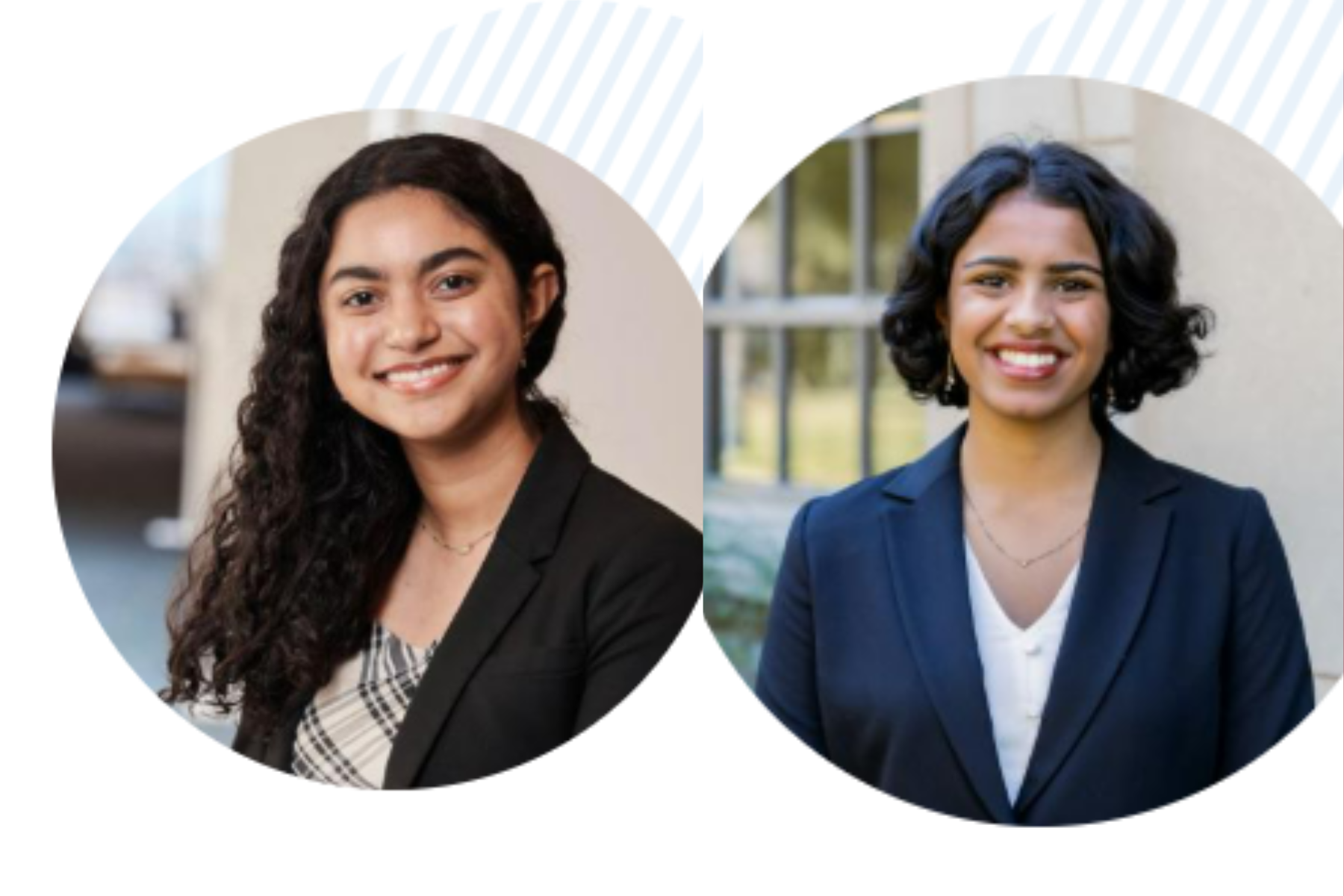
Two Indian American students, Ananya Bhatia and Muskan Taori, have been named 2026 Truman Scholars, joining a select group of 55 leaders recognized for their commitment to public service.
The Harry S. Truman Scholarship Foundation announced the cohort Friday, selecting the winners from a competitive pool of 781 candidates across 305 institutions.
At Columbia University, Ananya Bhatia has distinguished herself through a rigorous focus on international justice. A political science and urban studies major, Bhatia’s academic and professional journey is rooted in an interest in human rights, a drive she links to a global perspective on equity and systemic reform.
Her background, which bridges the legal traditions of the U.S. and her Indian heritage, has fueled her work with the Orleans Public Defenders and the international organization Reprieve.
There, she investigated cases of civilian harm and unlawful detention in conflict zones. Bhatia plans to use the scholarship to pursue a JD in technology policy, aiming to refine how international law addresses war crimes and incarceration.
Read: Two Indian American Penn students receive Goldwater Scholarships
At the University of Arkansas, Muskan Taori is tackling the intersection of science and sustainability. A biophysical chemistry major with a passion for art history, Taori is a first-generation American whose work is deeply influenced by the environmental challenges facing both the United States and India.
Her leadership was instrumental in the “Keep AR Natural” initiative, and she founded the Democracy Fellows to increase civic participation on campus. Taori, a Sturgis Fellow, intends to pursue a PhD focused on energy research and environmental policy.
She views her scholarship as a bridge to developing sustainable energy solutions that could one day benefit global communities, including those in the Indian subcontinent.
The Truman Scholarship provides $30,000 for graduate school, but for Bhatia and Taori, the award represents more than financial support. It is a validation of a “service-first” mindset often cultivated in Indian American households, where education is viewed as a tool for broader social contribution.
As they join a network of over 3,600 scholars, these two women are poised to lead at the highest levels of law and environmental science, ensuring their heritage remains a central pillar of their public service careers.