



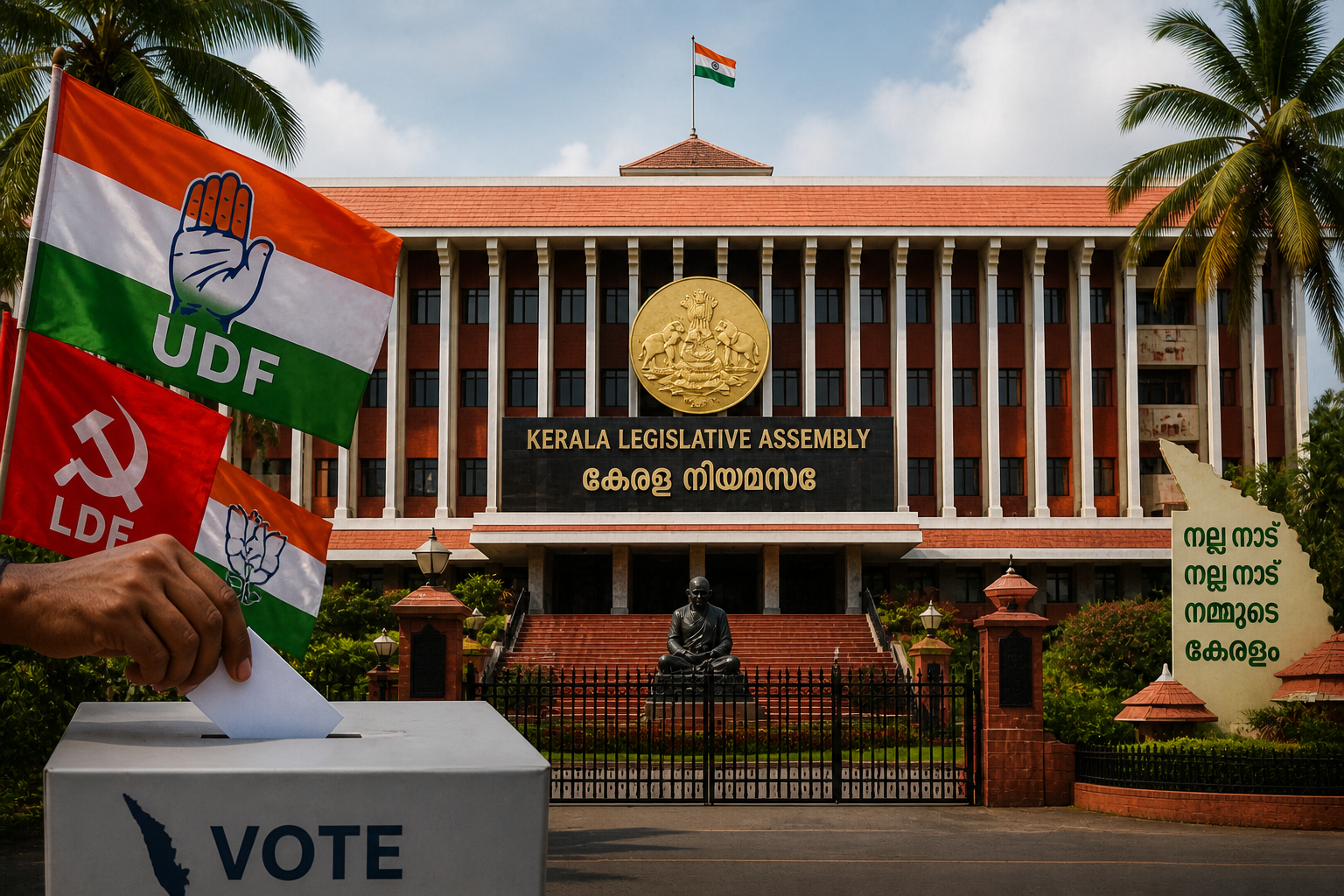
A State That Changes Governments, Not Direction
Kerala has delivered a clear mandate. The UDF has won decisively. That settles the question of power. What it does not settle is the question that truly matters — direction.
For decades, power has alternated, but direction has not changed. Governments have come and gone, but the underlying economic thinking has remained largely the same. The result is a state that has achieved strong social outcomes, yet continues to struggle to create enough opportunity for its own people.
We educate our young, and then we watch them leave. That is not a coincidence. That is the result of a system that has not kept pace with changing economic realities.
I have known VD Satheeshan since our college days at Sacred Heart College, Thevara, where we were debate teammates. I have always seen him as a capable and intelligent leader. That is why this moment matters. A mandate of this scale is not just an endorsement. It is an opportunity to break from familiar patterns and set a new direction.
The Limits of an Unchanged Economic Model
Kerala’s development story is often told through its social achievements. Those are real and deserve recognition. But they do not tell the full story.
There is also limited industrial growth, persistent unemployment among educated youth, and a steady movement of talent out of the state. These are not isolated issues. They come from the same place.
Both major political fronts have operated within similar economic frameworks for a long time. The emphasis has been on control, regulation, and a system where the government plays the central role in economic activity. That approach has reached its limits.
People are not thinking in terms of left and right. They are thinking about jobs, income, and the ability to build a life in Kerala.
Read more columns by Vinson Xavier Palathingal
What Works Elsewhere
Look at regions that have created sustained prosperity. They allow people to build. They reduce friction. They trust enterprise.
Government still plays a role, but it does not try to manage every step. It sets direction and lets people move.
Kerala has the talent, the education, and the global exposure through its diaspora. What it has not consistently offered is an environment where that potential can translate into opportunity within the state.
That gap is where policy needs to change.
Where Reform Must Begin
This discussion has to move beyond general ideas.
Real estate is one place to start. High registration costs and rigid pricing systems continue to distort transactions. Moving closer to market realities and lowering transaction costs can bring in investment and improve transparency.
Doing business in Kerala still takes time and patience that many investors do not have. Approvals need to be faster. Systems need to be simpler. Rules should not overlap and contradict each other.
Small and medium businesses need space to grow. They create jobs. Reducing compliance burden and making local processes predictable can make a real difference.
State-level charges and local levies still influence decisions. Rationalizing these will help Kerala compete better with other states.
Labor frameworks need balance. Protection matters, but so does flexibility. Without that balance, the industry looks elsewhere.
Focused infrastructure, built around logistics and sector strengths, can help Kerala turn its human capital into economic output.
A Shift Toward a Smaller, Enabling Government
Kerala does not need more layers of control. It needs space for people to act.
Registration costs for property must come down to realistic levels. Artificial price systems should be removed so transactions reflect actual market value. When people are forced to cheat and work around the system, the system has already failed.
Approvals for starting and expanding businesses should be time-bound. If the government does not respond within a fixed period, approval should be treated as granted. This alone can change the investment climate.
The number of clearances required for small and medium businesses must be reduced. Most businesses should be able to start with simple self-certification and be audited later, instead of waiting endlessly to begin.
State and local levies need rationalization. Taxes and fees should not punish activity. They should encourage it. A wider base with lower rates creates more growth than a narrow base with high taxes and fees.
Labor systems must protect workers without making it difficult to run an enterprise. Jobs do not come from regulation. They come from businesses that are willing to expand.
The government should step back from areas where it is not needed. Its focus should be on infrastructure, law and order, and essential services, while allowing private enterprise to drive growth.
Kerala will not control its way to prosperity. It will have to enable its way there.
READ: When the papacy turns political: The collapse of moral authority (April 17, 2026)
Leadership and the Need to Look Outward
This is where leadership has to step up.
Satheeshan belongs to a generation that can rethink how Kerala approaches its economy. The question is whether that will happen.
Staying within familiar lines and competing over who represents the same thinking better will not take the state forward. It will only repeat what has already been done.
Kerala needs leadership that is willing to look beyond its own experience and learn from systems that have worked elsewhere. That requires openness and the confidence to change direction.
The Political Landscape Is Changing
Kerala’s politics has long been shaped by two fronts. That has given stability, but it has also limited policy contrast.
Across India, there is a visible shift toward growth and enterprise. That conversation is slowly finding space in Kerala as well.
The recent election shows early signs of that shift. Traditional parties remain strong, but there is more openness to different economic ideas.
Figures like Rajeev Chandrasekhar have brought a sharper focus on economic direction and enterprise-driven growth into Kerala’s political conversation. His role now becomes even more important. Even with a limited presence, he can help ensure that the debate stays centered on economic policy, investment, and opportunity, and that the government is consistently pushed to focus on these priorities.
The 20-20 initiative led by Sabu Jacob created attention but could not convert that into seats. That outcome reflects how difficult it is to move from local influence to statewide politics. Building a business and building a political movement require very different approaches.
The Role of Opposition and the Need for Balance
Even a small opposition can shape the debate if it stays focused on ideas. That is not something citizens can expect from the Marxist Communist led LDF, and it places the burden squarely on the Rajeev Chandrasekhar-led three-member BJP presence in the Assembly.
A system works better when there is a balance of ideas. Different approaches challenge each other and improve outcomes over time.
Kerala has not had that kind of balance in economic thinking. That is one reason why change has been slow.
A stronger articulation of alternative economic ideas can help bring that balance.
READ: Kerala at a crossroads: Time to move beyond two versions of the left (April 4, 2026)
How Voters May Begin to Rethink
Political choices in Kerala have often followed tradition. Families and communities have stayed with the same alignments for years.
That may begin to change as economic questions become more important.
People may start to think about what they believe regarding opportunity, growth, and the role of government, rather than just party labels.
Over time, that shift can create a clearer distinction in how policies are shaped.
The Real Question Before Kerala
Kerala does not lack talent or ambition.
What it has lacked is a consistent move toward an economic system that allows people to build their future within the state.
The next phase will depend on whether Kerala can create that environment.
Kerala cannot keep doing the same things and expect a different result.
Closing Thought
Kerala has everything it needs. What it needs now is the willingness to think differently and act on it.
Satheeshan, as someone who has known you from our early days, I say this with respect and hope. This is your moment to lead not just politically, but directionally. Kerala needs a shift in direction, and you have the opportunity to make that happen.
That is what will decide the state’s future.