



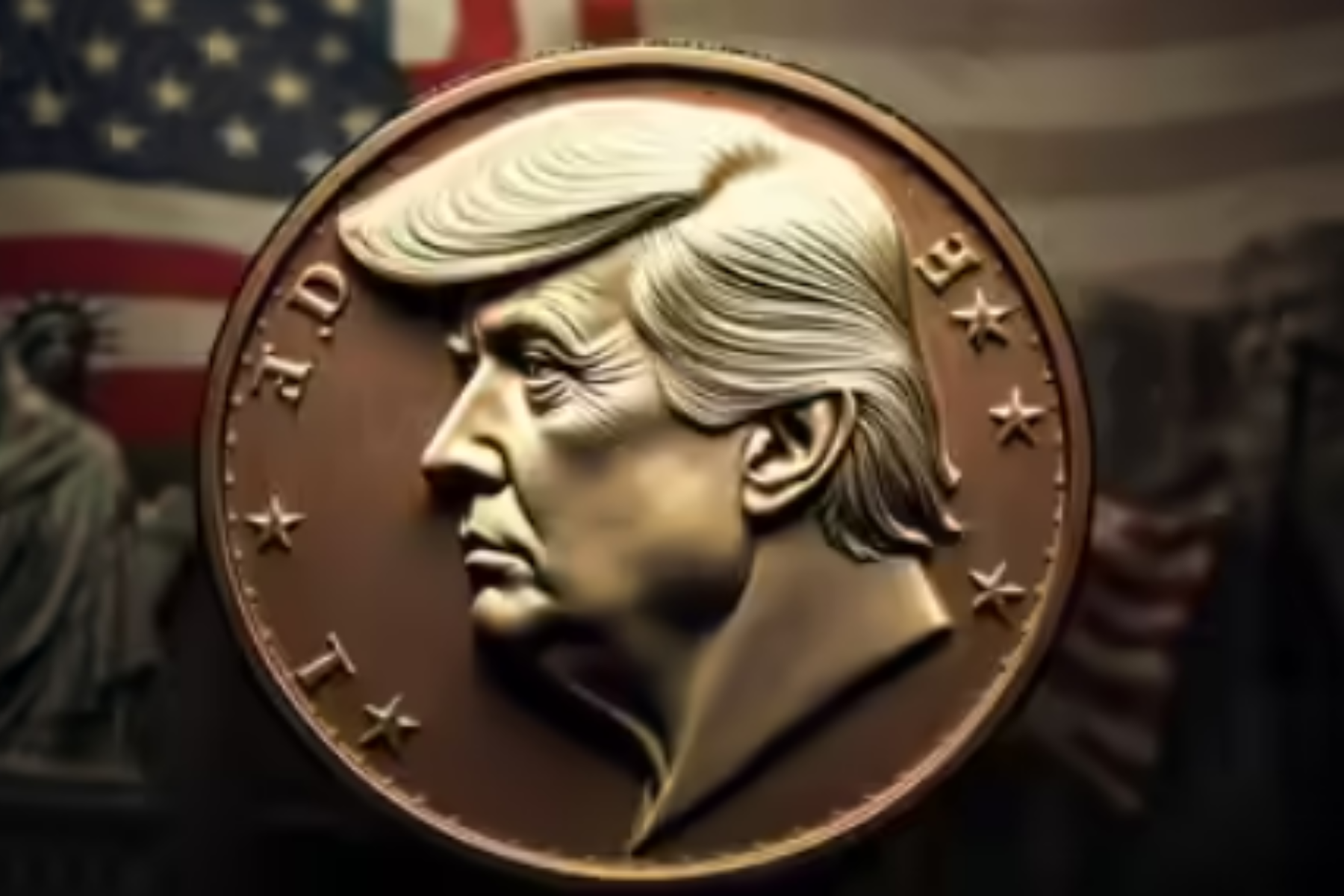
A federal push to place President Donald Trump’s likeness on a new $1 circulating coin has triggered intense debate across the nation’s capital, forcing a clash between modern political branding and a century-old legal tradition designed to prevent American leaders from acting like monarchs.
The controversy sparked after the U.S. Treasurer Brandon Beach shared early drafts of the commemorative currency on fox news, a move quickly amplified by Treasury Secretary Scott Bessent.
The proposed design features a standard profile of the president on the “heads” side, but the reverse side features a deeply political image of Trump raising his fist in front of the American flag beneath the words “Fight, Fight, Fight”, a direct reference to the immediate aftermath of the July 2024 assassination attempt in Butler, Pennsylvania.
Read: Arts commission approves gold coin featuring Trump’s image
(March 20, 2026)
The announcement immediately drew fire from legal scholars and congressional Democrats, who point to an 1866 federal law explicitly stating that only the portraits of deceased individuals of power may appear on U.S. currency and securities.
This post-Civil War statute was enacted after the head of the Bureau of Engraving and Printing unilaterally printed his own face on a five-cent note, prompting Congress to establish strict guardrails to prevent living leaders from using public money for self-aggrandizement.
Critics argue the new coin violates both the letter and the spirit of this long-standing democratic norm.
Read: Nearly 1 million Trump memecoin buyers lost $3.8 billion, analysis finds
(July 6, 2026)
However, the Treasury Department is aggressively defending the project, claiming statutory authority under the Circulating Collectible Coin Redesign Act of 2020.
Signed during Trump’s first term, the act grants the Treasury Secretary wide latitude to issue special one-dollar coins with designs emblematic of the United States semi quincentennial, the nation’s upcoming 250th anniversary in 2026. Treasury officials assert that nothing represents the current spirit of the country more than its serving chief executive.
Legal experts note that while the 2020 act allows for anniversary themes, it also includes specific language prohibiting any portrait of a living person on the reverse side of specified coins.
With both sides dug in, the fate of the currency will likely be decided by federal courts before the coins are scheduled to enter public circulation next year.