



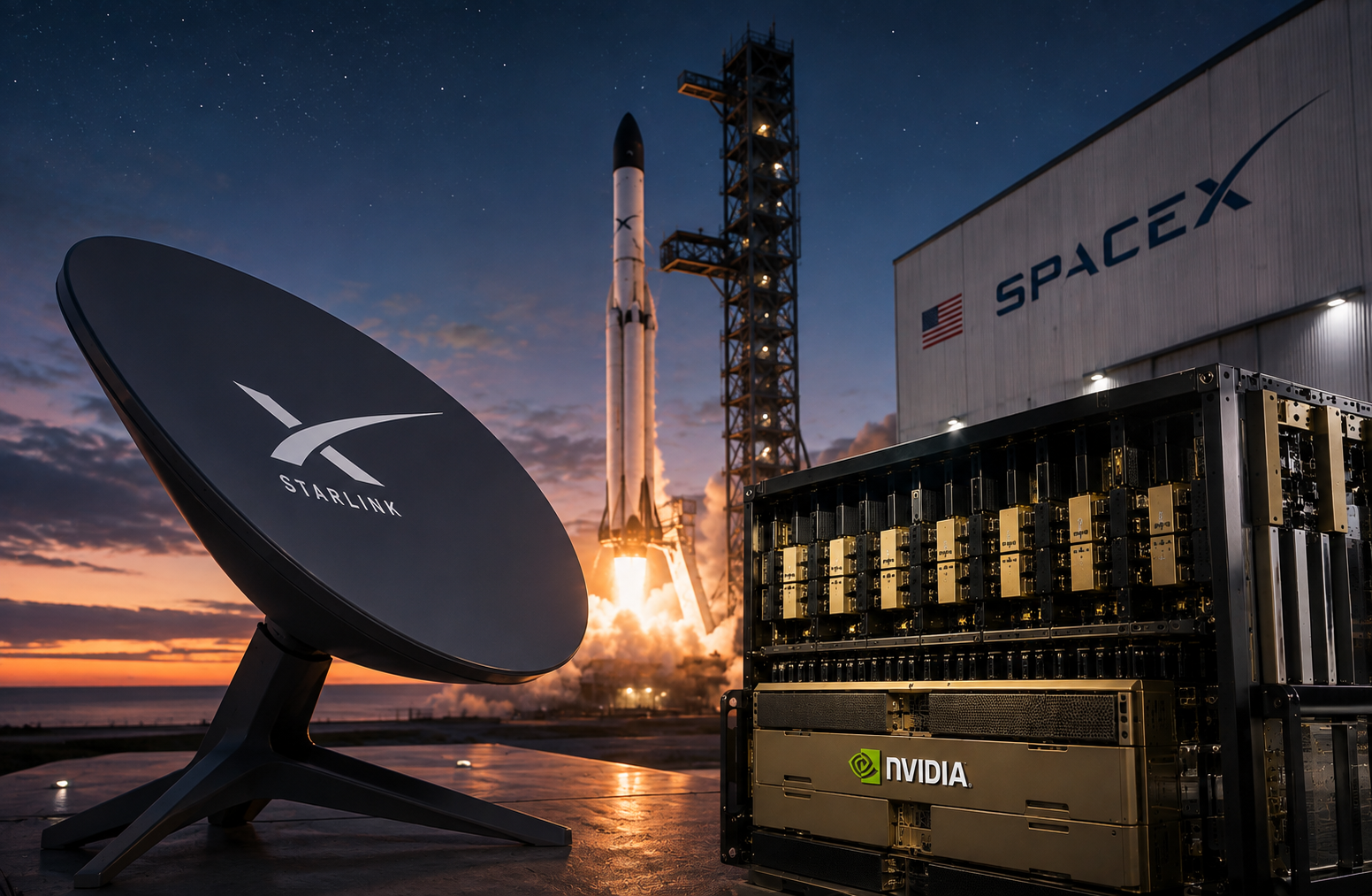
Elon Musk said SpaceX will exclusively use Nvidia graphics processing units for its artificial intelligence infrastructure, calling the chipmaker’s upcoming Vera Rubin architecture “the best” available and signaling a deeper partnership between the two companies.
Speaking during SpaceX’s earnings call, Musk said the company had decided to build its future AI systems entirely on Nvidia hardware, praising the design of Nvidia’s Vera Rubin NVL72 rack-scale platform over competing AI computing architectures.
READ: Anthropic to develop custom AI chips for Claude (August 5, 2026)
“Going forward, we have decided to build exclusively on Nvidia, because we think the Vera Rubin architecture is the best architecture,” Musk said. He added that SpaceX greatly values its partnership with Nvidia and described the company as “exclusive to Nvidia.”
The announcement formalizes a relationship that already existed in practice. Musk’s AI company xAI has relied on Nvidia’s Hopper and Blackwell GPUs to train successive versions of its Grok chatbot. There has been no public evidence that it has deployed rival AI accelerators from companies such as AMD in production. Musk also revealed that SpaceX plans to deploy Nvidia’s Vera Rubin technology beyond terrestrial data centers. He said the company expects to begin launching the first Starmind AI satellite next year, describing it as an optimized version of the Vera Rubin NVL72 computing system.
According to Musk, the same AI architecture will be used both on Earth and in orbit. He argued that the rack-scale design simplifies deployment by reducing the extensive cabling typically required in conventional AI server racks, potentially improving reliability and maintenance.
READ: SpaceX shares fall as heavy capital spending weighs on investors (August 5, 2026)
If realized, the project would represent one of the most ambitious attempts to place high-performance AI computing infrastructure in space. The proposed orbital systems would use dozens of Vera CPUs and Rubin AI GPUs, although significant engineering challenges remain, including cooling and long-term reliability in the space environment.
The exclusive commitment strengthens Nvidia’s position in the rapidly expanding AI infrastructure market while sidelining competing accelerator makers. Investors responded positively to the announcement, with Nvidia shares gaining after Musk endorsed the company’s next-generation AI platform.