



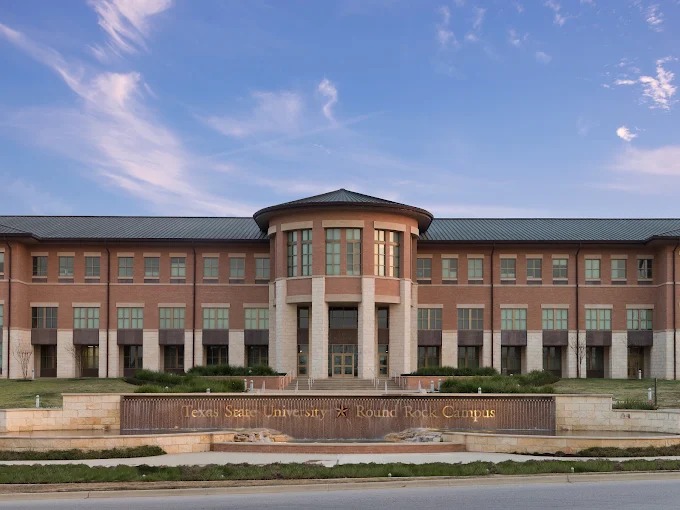
Texas State University has filed a notice of intent to employ an H-1B nonimmigrant worker for a public relations specialist position paying nearly $73,000 a year, according to a labor condition application notice posted by the university.
The notice identifies the position as Public Relations Specialist, under occupational classification 27-3031.00, with an annual wage of $72,999. The proposed employment period runs from August 7, 2026, through August 6, 2029, at Texas State University’s campus at 601 University Drive in San Marcos. The notice states that the university intends to employ one H-1B nonimmigrant worker for the position.
The filing has drawn attention because Texas State University offers academic programs related to public relations and communications. The university’s programs prepare students for careers in communications and public relations, while university materials also identify public relations specialist as a career path.
READ: Ajay Bhutoria condemns DHS plan to end H-1B grace period (August 10, 2026)
However, the H-1B filing itself does not establish that no qualified U.S. worker was available in Texas. A Labor Condition Application is part of the H-1B process and specifies information including the occupation, wage, worksite and employment period. The Department of Labor says employers must attest that the H-1B worker will receive at least the applicable actual or prevailing wage and that working conditions will not adversely affect similarly employed U.S. workers.
The federal rules impose additional recruitment and non-displacement requirements on certain H-1B-dependent employers and employers with certain prior violations. Those requirements do not apply universally to every H-1B filing.
Texas State’s own academic materials indicate that public relations is an established field of study at the university. The Texas State University System has cited public relations specialists among occupations associated with mass communication programs and noted projected employment growth for public relations positions in Texas.
The university’s H-1B notice therefore raises questions about how the position was recruited and why the university determined that sponsorship was appropriate. The publicly posted notice, however, does not identify the prospective employee, explain the recruitment process or state how many U.S. workers applied.
The $72,999 salary listed in the notice is also subject to federal H-1B wage requirements. The Department of Labor says an H-1B employer generally must pay the higher of the actual wage paid to similarly qualified workers or the prevailing wage for the occupation in the area of employment.
READ: H-1B workers could lose 60-day grace period under proposed DHS rule (August 8, 2026)
Texas State’s filing is for a three-year employment period and is separate from the question of whether the prospective worker ultimately receives H-1B approval. The LCA is one component of the broader H-1B petition process.
The filing also illustrates how universities and other employers use H-1B sponsorship for positions that fall within specialized occupational classifications. Publicly available LCA notices provide information about the position, wage and worksite, but they do not by themselves provide enough information to conclude that an employer rejected qualified U.S. applicants or that no American worker could perform the job.
As of the filing shown in the university’s notice, Texas State is seeking authorization to employ one H-1B worker as a public relations specialist in San Marcos at an annual salary of $72,999.