



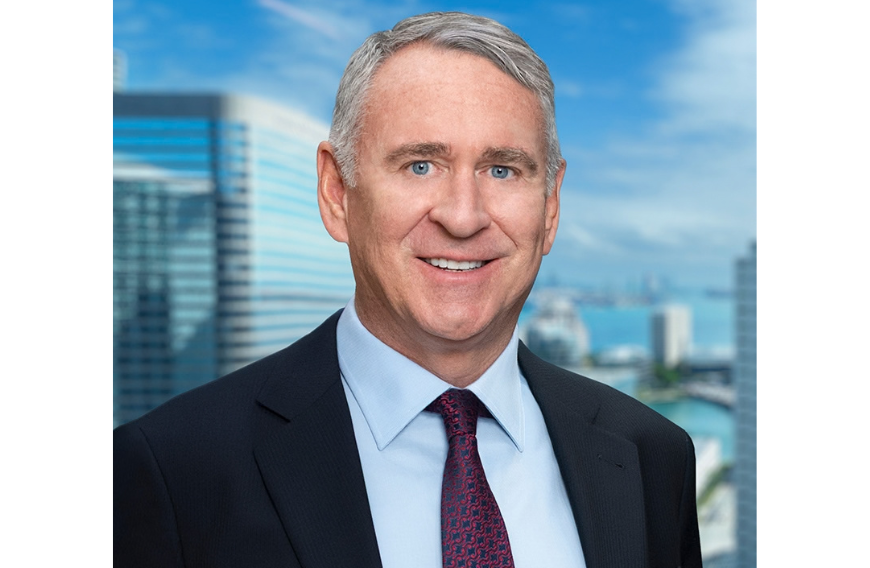
Michael and Susan Dell, John and Ann Doerr, and other billionaire philanthropists have made some of the largest donations to American universities, funding everything from medical research to climate science. Now, Citadel founder Ken Griffin has set a new benchmark with a $3 billion pledge to Carnegie Mellon University, surpassing previous landmark gifts and setting a record for an individual donation to a higher education institution.
Griffin’s commitment will support the development of a new campus in Miami, strengthen Carnegie Mellon’s School of Computer Science in Pittsburgh and fund other university-wide initiatives. Under the plan, $2 billion will go toward building a 35-acre interdisciplinary campus in Miami, while the remaining $1 billion will support the computer science school and other strategic priorities.
The pledge also exceeds Griffin’s estimated $2.5 billion in lifetime charitable giving before the announcement. His previous philanthropy has largely focused on education and medical research.
Griffin’s contribution is notable because he is not a Carnegie Mellon alumnus. He graduated from Harvard University in 1989 with a degree in economics. His latest commitment, however, establishes a major financial connection with an institution known for its strengths in computer science, artificial intelligence, engineering and quantitative research.
The donation surpasses several other landmark gifts to American universities, including a $1.8 billion contribution from Michael Bloomberg to Johns Hopkins University in 2018. Bloomberg’s gift allowed the university to make need-blind undergraduate admissions permanent and replace student loans with scholarships and other forms of financial aid.
READ: Citadel CEO Ken Griffin pledges record $3 billion to Carnegie Mellon University (September 30, 2026)
In 2022, venture capitalist John Doerr and his wife, Ann Doerr, pledged $1.1 billion to Stanford University to establish the Stanford Doerr School of Sustainability. The school brings together research on climate change, environmental challenges, technology and public policy.
Phil and Penny Knight, the co-founders of Nike, pledged $1 billion to the University of Oregon to establish a new college of engineering, supporting the institution’s efforts to expand its science and technology programs.
In 2024, educator Ruth Gottesman donated $1 billion to Albert Einstein College of Medicine in the Bronx, New York. The gift made tuition free for medical students at the institution, easing the financial burden on future physicians.
McPherson College in Kansas also received a $1 billion donation in 2022 from an anonymous donor. The contribution provided a substantial boost to the small liberal arts college’s long-term financial resources. The donor’s identity has been the subject of speculation, but it should not be presented as confirmed without authoritative evidence.
Michael and Susan Dell have also made major contributions to higher education. Their $750 million gift to the University of Texas at Austin was directed toward advancing health care education and medical research. The couple’s philanthropy reflects the broader role of wealthy business leaders in supporting university programs and research initiatives.
Other major gifts have supported scientific research, environmental sustainability and medical care. Stewart and Lynda Resnick have directed substantial philanthropic funding toward environmental and sustainability initiatives, while Florence Irving made a major contribution to Columbia University for medical research and clinical care. Intel co-founder Gordon Moore and his wife, Betty Moore, also supported scientific research and engineering through their philanthropy at the California Institute of Technology.
Griffin’s pledge carries significance beyond the university itself, particularly for Miami, where his financial firm has established a major presence. In 2022, he moved Citadel’s corporate headquarters from Chicago to Miami, helping strengthen the city’s reputation as an emerging destination for financial firms, investors and technology professionals.
READ: Citadel’s Ken Griffin says US is on a gold-buying spree (October 7, 2025)
The planned Carnegie Mellon campus would extend the university’s presence beyond Pittsburgh and bring its academic programs closer to South Florida’s growing business and technology sectors. The development could also strengthen the relationship between the university and financial firms that depend on software engineers, data scientists and quantitative analysts.
Carnegie Mellon has long been a recruiting destination for Citadel, which relies on technical expertise to support its financial operations. The new campus could deepen those connections while creating opportunities for collaboration among students, researchers and businesses.
Miami has increasingly sought to attract companies and talent traditionally associated with established financial centers such as New York and Chicago. Griffin’s relocation of Citadel was one of the prominent developments in that shift, and the proposed university campus could further strengthen the region’s ambitions in finance, technology and innovation.
For Carnegie Mellon, the $3 billion commitment offers an opportunity to expand its academic reach while investing in its established strengths in computer science and interdisciplinary research. For Miami, the project could bring new educational resources and reinforce its efforts to become a larger player in the technology and financial services industries.
The pledge also reflects the growing role of wealthy business leaders in shaping American higher education through private philanthropy. Such donations can finance research, establish new academic institutions and reduce education costs for students. Their lasting impact, however, will depend on how universities deploy the money and translate these investments into tangible benefits for students and researchers.