



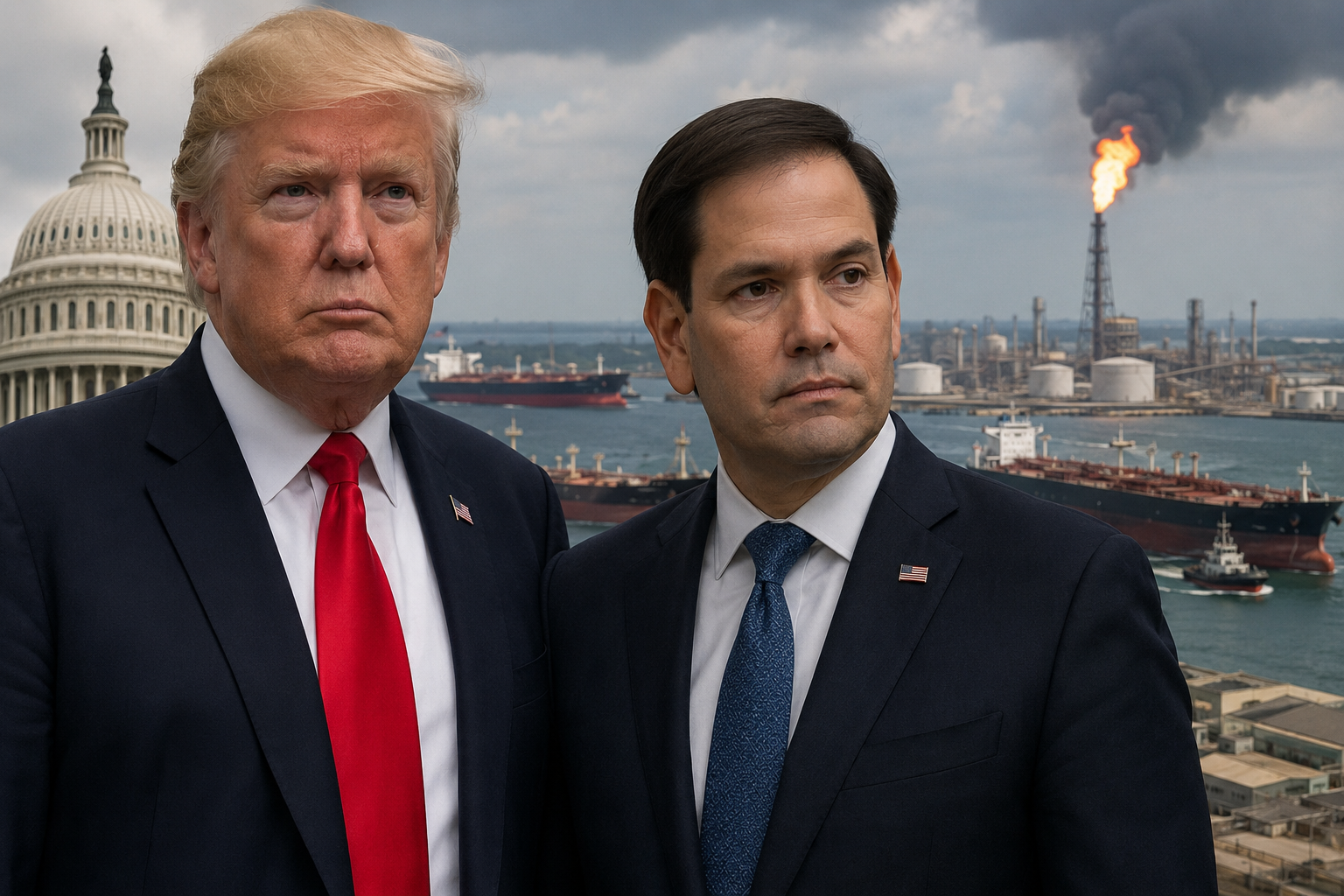
President Donald Trump has announced an agreement with Venezuela that he says gives the United States majority control of more than 65 billion barrels of the South American country’s proven oil reserves, as his administration seeks to expand access to crude and revive Venezuela’s battered energy industry.
Secretary of State Marco Rubio described the agreement as a major foreign policy and economic win for both countries, saying it could attract nearly $100 billion in private investment to Venezuela.
“This deal is a huge win for both the American and Venezuelan people. It demonstrates how President Trump’s bold foreign policy is driving America First wins: securing stable reserves and low-cost oil in our Hemisphere and lowering gas prices here at home. For the Venezuelan people, this deal will bring nearly $100 billion in private investment, support thousands of high-paying jobs, and drive the reconstruction of Venezuela’s economy,” Rubio said.
READ: US-Venezuela tensions add volatility to India’s energy and climate strategy (January 24, 2026)
Trump announced the agreement on Truth Social on Friday, saying the United States had secured majority control of more than 65 billion barrels of proven Venezuelan oil reserves through a partnership with private businesses. He called it the “biggest oil deal in world history” and said it would increase U.S. oil supplies and help lower gasoline prices.
The agreement marks a major expansion of the U.S. role in Venezuela’s oil industry. Venezuela has the world’s largest proven oil reserves, but its production has fallen significantly after years of underinvestment, mismanagement, sanctions and deteriorating infrastructure. The country currently produces about 1.25 million barrels of crude a day, according to Reuters.
Venezuela’s interim President Delcy Rodríguez has backed the agreement, saying it will help rebuild the country’s economy and increase government revenues. The agreement covers the development of 17 strategic oil fields and could generate more than $209 billion in tax revenue for the Venezuelan government, according to Venezuelan officials.
READ: The peace that could cost November — And why Venezuela was always the key (June 16, 2026)
Rodríguez has also sought to address concerns over Venezuela’s control of its natural resources. She said the country would retain ownership and sovereignty over its oil reserves despite the expanded role for U.S. companies.
“One thing must be absolutely clear: Venezuela retains ownership and sovereignty over its resources,” Rodríguez said in a televised speech.
The deal could nevertheless face legal and financial hurdles. Reuters reported that the precise structure of the arrangement, including how U.S. control would be exercised, remained unclear. Potential legal and constitutional challenges could also complicate the implementation of long-term oil agreements.
Venezuela’s aging infrastructure presents another challenge. Analysts have warned that significant investment and years of work could be required before production rises substantially, meaning any impact on U.S. gasoline prices may not be immediate.
The agreement comes after months of heightened U.S. involvement in Venezuela and Trump’s push to secure reliable oil supplies for American consumers. Washington is also seeking to replenish the Strategic Petroleum Reserve, which has fallen to historically low levels. Trump said Venezuelan oil from the new arrangement would be used to help refill the reserve.
For Trump, the deal represents an attempt to combine energy security, foreign policy and domestic economic priorities. For Venezuela, the agreement offers a potential route to revive an industry that has struggled for years to attract investment.
Whether the deal delivers lower U.S. fuel prices and the promised economic revival in Venezuela will depend on how quickly investment reaches the country’s oil fields and whether the legal and political framework surrounding the agreement holds.