



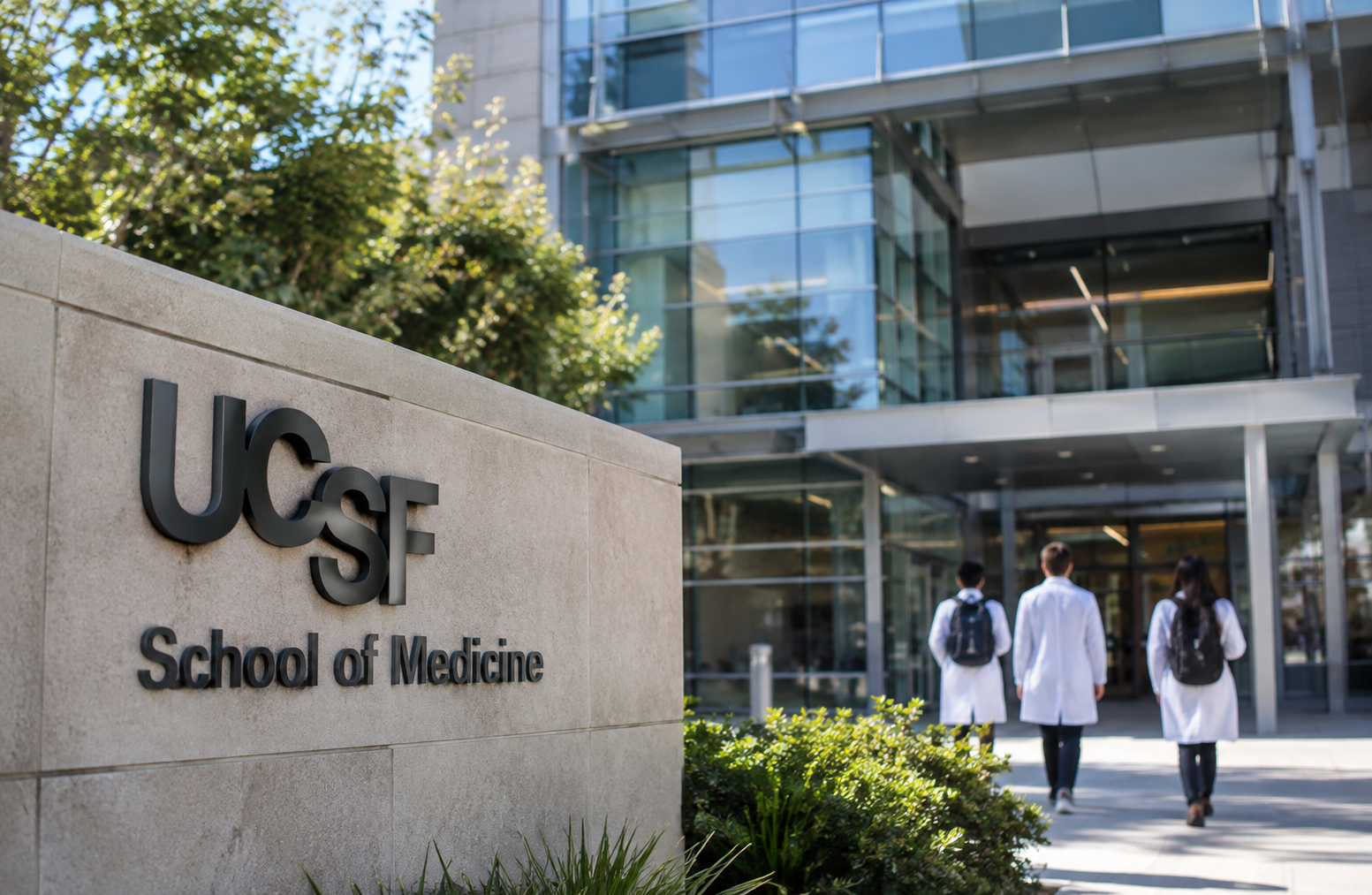
The U.S. Department of Justice has found that the University of California, San Francisco School of Medicine discriminated based on race in admissions for its 2023 through 2025 incoming classes.
The DOJ’s Civil Rights Division said UCSF was 4.6 times more likely to admit Hispanic applicants and 12.6 times more likely to admit Black applicants than comparable white applicants with the same MCAT scores, undergraduate GPA and socioeconomic characteristics.
The findings, announced Sept. 22, come as the Trump administration continues its scrutiny of race-conscious admissions at federally funded universities. This follows the U.S. Supreme Court’s 2023 decision in Students for Fair Admissions v. Harvard and Students for Fair Admissions v. University of North Carolina.
DOJ says race influenced admissions
According to the Justice Department, UCSF’s admissions process used race at multiple stages, including the selection of applicants for interviews and final admission decisions.
The department said Black and Hispanic applicants were invited to interviews at substantially higher rates than white and Asian applicants, even though their average MCAT scores and undergraduate GPAs were lower.
The DOJ’s analysis of the 2023 to 2025 incoming classes also found that admitted Black and Hispanic students had lower average academic credentials than admitted white and Asian students.
For the 2025 incoming class, for example, the DOJ reported average MCAT scores of 519 for admitted white students and 518 for Asian students. The corresponding averages were 514 for Black students and 513 for Hispanic students. Average undergraduate GPAs were 3.95 for white students, 3.93 for Asian students, 3.86 for Black students and 3.88 for Hispanic students.
The department said the disparity remained after accounting for academic and socioeconomic characteristics.
“Unfortunately, at UCSF Medical School, MCAT scores and undergraduate GPAs have taken a backseat to race,” Assistant Attorney General Harmeet K. Dhillon of the Justice Department’s Civil Rights Division said.
READ: Rajesh Shah advances quality and safety at UCSF Radiology (September 18, 2026)
The department said the practices violated Title VI of the Civil Rights Act of 1964, which prohibits racial discrimination by institutions receiving federal financial assistance.
Admission rates varied sharply
The DOJ findings letter showed significant differences in admission rates across racial groups during the three-year period.
For the 2023 incoming class, the department reported admission rates of 1.50% for white applicants, 2.55% for Asian applicants, 6.69% for Hispanic applicants and 11.43% for Black applicants. For 2024, the respective rates were 1.65%, 2.44%, 5.86% and 7.65%. For 2025, they were 1.70% for white applicants, 1.98% for Asian applicants, 4.83% for Hispanic applicants and 6.96% for Black applicants.
The DOJ said its analysis showed that the average admitted Black and Hispanic student academically underperformed the average rejected white and Asian student during the period examined.
UCSF disputes the finding
UCSF has disagreed with the Justice Department’s conclusions.
A UCSF spokesperson said the university would continue engaging with the department and described academic performance as central to its admissions process. The school said grades, prior coursework and MCAT scores are considered alongside clinical experience, research, service, leadership and other experiences.
READ: 11 Indian Americans win Soros Fellowships for New Americans (May 4, 2026)
The Justice Department’s analysis has also drawn attention because the department said its statistical comparison focused on MCAT scores, undergraduate GPA and socioeconomic characteristics, while UCSF’s admissions process considers a broader range of factors. The Los Angeles Times reported that UCSF maintains that academics are evaluated together with other experiences and qualifications.
DOJ seeks changes at UCSF
The department said medical schools receive substantial federal financial assistance and therefore must comply with federal nondiscrimination requirements.
The DOJ is seeking a voluntary resolution with UCSF to bring its admissions practices into compliance with Title VI and the Supreme Court’s 2023 ruling. The department said that if settlement efforts fail, it may file a lawsuit.
The UCSF finding is part of a broader Justice Department examination of admissions practices at medical schools and other higher education institutions.
In 2026, the department has announced similar findings or legal actions involving institutions including Yale School of Medicine, UCLA’s medical school and UC Berkeley School of Law. For prospective medical students, the UCSF case adds another major development to the continuing legal debate over how race and ethnicity may be considered in higher education admissions following the Supreme Court’s 2023 ruling.