




Netra Chavan turned her experience as an H-4 visa holder into a support network of more than 160,000 immigrants, pursued legal education and became a community advocate.
When Netra Chavan moved from Mumbai to the United States in 2006, she expected to continue building on a successful career in business development and management. Instead, arriving on an H-4 dependent visa meant putting her professional life on hold.
“I came to the United States from Mumbai in 2006, as my husband got a work opportunity here. I had a successful career in business development and management in India.”
At first, Chavan viewed the interruption as temporary. But as she confronted the limitations of her visa status and the long wait for permanent residency faced by many Indian immigrants, she began to realize that returning to work might not be straightforward.
“I knew that being on an H-4 dependent visa meant I would not be authorized to work, but I thought it would be a temporary phase. Eventually I realized that the green card backlog, particularly for Indian families, meant there was no clear timeline for when I could return to my professional life. I was watching my valuable working years pass by, and the thought of having a blank résume after years of professional experience was frightening.”
The experience also brought a personal challenge: adjusting to financial dependence after years of professional independence. Chavan initially believed her circumstances were unique. A closer look at the experiences of other immigrant families, however, revealed a much larger community facing similar challenges.
“It was also difficult to become financially dependent on one person after having been professionally independent. I thought this was just my personal struggle. But in 2009, I started looking around and realized that I could not possibly be the only educated and professionally qualified woman going through this experience. There were thousands of women in similar situations, many of whom had left successful careers in India and other countries to support their families in America.”
That realization led Chavan to create a Facebook group in 2009 to connect H-4 visa holders and offer a space for mutual support.
“I remember sitting at home one day and thinking that I could still do something meaningful. I decided to create a Facebook group in 2009 to bring H-4 visa holders together to provide emotional support.”
From a Facebook group to a community of 160,000
What began as a small online support network gradually developed into a large community. Chavan says she had no initial plans to become an advocate or lead a movement. She simply wanted to create the support system she had been missing.
“’H4 Visa Holders’ started as a small effort but gradually became a large support community. I never started the group with the intention of building a movement or becoming an advocate. I started it because I needed a support system myself.”
At the time, reliable information and dedicated platforms for H-4 visa holders were limited. As the group attracted more members, Chavan also began hearing from H-1B workers and their families. Their questions helped her recognize how closely the challenges facing dependent spouses were tied to the broader immigration system.
“Back in the 2000s there was very little reliable information or a platform for H-4 visa holders. I also began receiving questions from H-1B workers and their families. I realized that the challenges faced by H-4 spouses were closely connected to the challenges faced by the primary visa holders. Immigration uncertainty affects the entire family, not just one individual.”
The conversations also showed her that members were looking for more than procedural guidance. Many wanted a place where they could discuss their concerns and feel heard.
“What really touched me was that people were not just looking for immigration answers. They wanted someone who would listen, without judging them. Soon, I started receiving messages from different states and even different countries, thanking me for creating a platform.”
As the group expanded, Chavan’s involvement moved beyond online discussions. She began attending community events, participating in immigration discussions and meeting with lawmakers to explain how immigration policies affect families.
“As the group grew, I started participating in community events, immigration discussions, advocacy activities, and meetings with lawmakers. I wanted decision-makers to understand the emotional complexities of immigration for families.”
The community’s focus also broadened in 2015, when the H-4 employment authorization document (EAD) rule was introduced for certain eligible spouses of H-1B workers.
“In 2015, when the H-4 EAD rule was introduced for certain eligible spouses of H-1B workers, we also expanded the group’s focus to include H-1B visa holders. The community continued to grow. By 2019 the group had crossed 135,000 members.”
Today, the group has more than 160,000 members. Over the years, Chavan says, her work has extended to helping people understand visa requirements, employment-based immigration and green card processes, while connecting members with resources and one another.
“Today, that community has grown to more than 160,000 members. Over the years, I have helped people understand visa formalities, employment-related immigration matters, green card processes, and changing immigration policies. I have also supported spouses facing difficult personal situations, including domestic violence, helped connect people through business opportunities, and created a platform where people can openly share their concerns and support one another.”
Read: New US court ruling protects 1.14 million international students from DHS rule (November 17, 2026)
Turning personal experience into immigration advocacy
For Chavan, the group’s growth also brought a deeper understanding of how immigration rules shape the lives of entire families. She became increasingly concerned about issues ranging from green card backlogs and visa stamping delays to employment authorization disruptions and requests for evidence in specialty occupation cases.
She sees these as more than administrative or technical problems, particularly for families who have spent years waiting for permanent residency.
“Issues such as green card wastage, H-1B and H-4 policy changes, visa stamping delays, 221(g) cases, employment authorization disruptions, and specialty occupation RFEs are not just technical immigration subjects. Every one of them has a human story behind it. My biggest concern is about the next generation. Many children of these families have grown up in America. This is the only home they know, yet their parents are still waiting for permanent residency. We need to think about the emotional and financial impact this uncertainty has on entire families.”
Her community work also prompted her to look more closely at the legal framework behind the immigration processes she was helping people navigate. Reading about visa categories and employment-based immigration policies was no longer enough; she wanted a deeper understanding of the laws and regulations governing them.
“As this work grew, I became increasingly interested in understanding the legal side of immigration. I was regularly reading about H-1B, L-1, F-1, B-1/B-2 visas, dependent statuses, employment authorization, and employment-based green cards. I realized that sharing information and explaining procedures was important, but I wanted to understand the actual laws, regulations, and legal reasoning behind immigration decisions.”
That interest led her to pursue formal legal education. Before enrolling in a Juris Doctor program, Chavan completed a Paralegal Certificate course through CLS by BARBRI at UCSC Silicon Valley Extension and earned an Immigration Law Specialist Certification from Washington Learning Institute.
She says the programs strengthened her understanding of immigration procedures and documentation, but she wanted to go further and develop a broader understanding of the U.S. legal system. Balancing law school with her professional responsibilities, immigration consulting practice and community commitments presented its own challenges.
“I am now a California Bonded and Registered Immigration Consultant, focusing on employment-based immigration.
Studying law has changed how I approach immigration documentation. Now, I also examine the applicable statutes, regulations, legal interpretations, administrative procedures, and the broader legal framework.”
Read: ‘The way you think travels’: Expert says international students have an AI-era advantage (October 6, 2026)
A personal journey and a call for policy reform
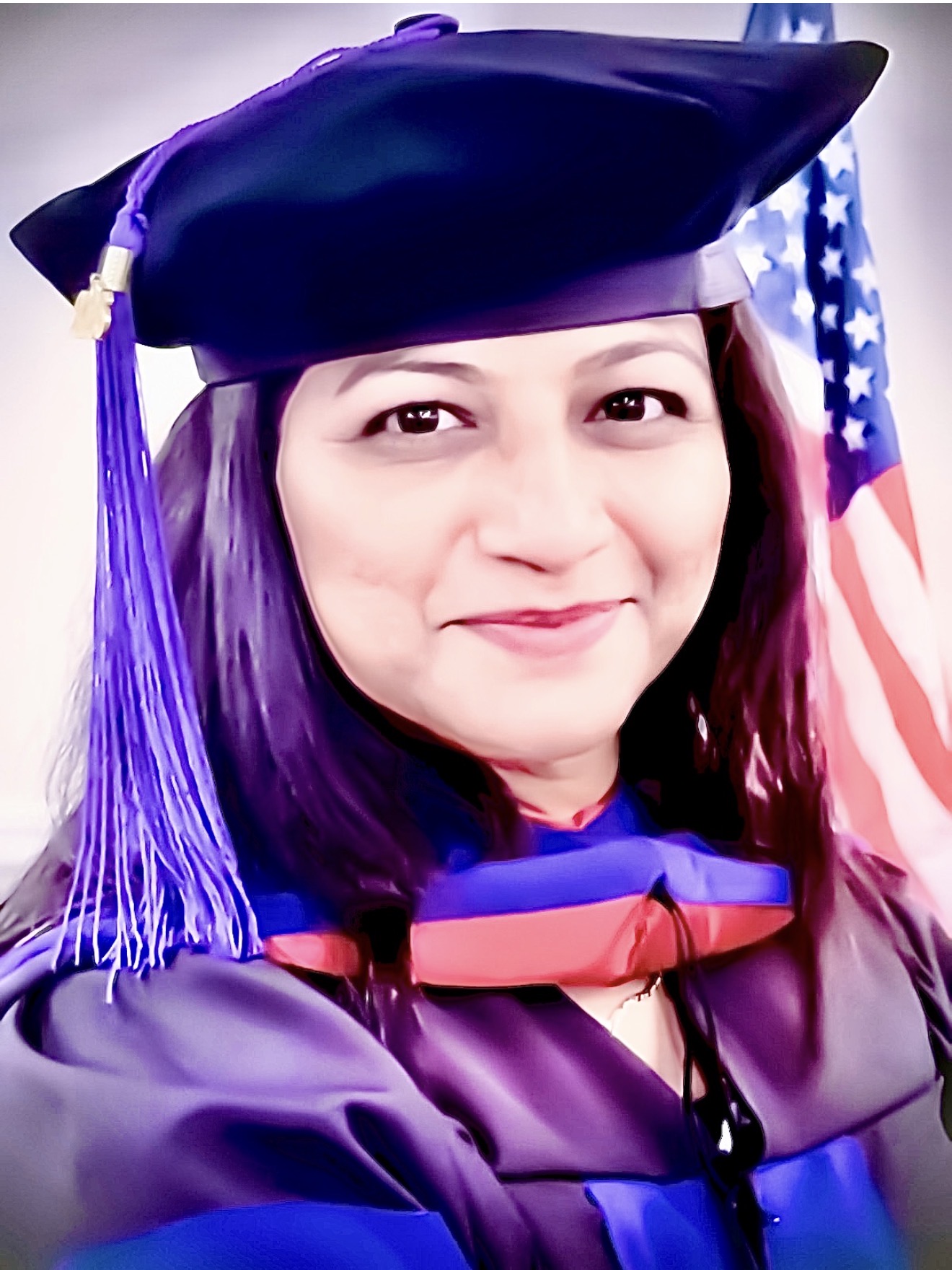
Chavan’s path has taken her from a professional career in India to building a large immigrant support community in the United States, pursuing legal education and working as an immigration consultant. She is now a U.S. citizen and a mother of two. Her Juris Doctor degree, she says, represents another stage in a journey shaped by unexpected turns.
“I am now a U.S. citizen, a mother of two, an immigration consultant, a community advocate, and a Juris Doctor graduate. My journey has taught me that life can take unexpected turns, but those turns can also open new doors. I often think about the spouse who arrived in America on an H-4 visa in 2006, unsure of how she would continue her professional journey. Today, I would tell them one thing: never think that a temporary situation has to define your entire life.”
Her experience has also shaped her views on immigration policy. Chavan wants policymakers to address the long-standing employment-based green card backlog and reconsider how the system prioritizes applicants who have already spent years waiting.
“I have a few suggestions that I would like policymakers to seriously consider. Revisit the annual H-1B cap and prioritize the existing workforce, addressing the decades-old green card backlog. I would like policymakers to explore a legislative solution that prioritizes long-waiting applicants, including those whose I-140 petitions have been approved for more than five years.”
Beyond specific policy changes, she wants an immigration system that offers greater certainty to skilled workers and their families.
“My vision is to see an immigration system that is fair, transparent, predictable, and humane. After experiencing the H-4 journey myself, building a community of more than 160,000 members, and now completing my Juris Doctor, I feel a responsibility to continue raising these issues and working toward meaningful change. I want the next generation of dependents to have better opportunities than the generation before them. I want skilled immigrants to feel welcomed and valued.”
Chavan says she intends to continue expanding her immigration knowledge and using her education to support the community. Her bar admission is still pending, and she describes her Juris Doctor degree as the beginning of another chapter rather than a final destination.
“I hope to continue expanding my immigration knowledge and using my legal education to strengthen my contribution to the community. My Juris Doctor is a new chapter, not the finish line. My bar admission is still pending, but I look forward to building on the experience and education I have gained.”
She also believes that individuals affected by immigration policies have a role to play in seeking change. That can include documenting the impact of policies, raising concerns through public discussions and seeking appropriate legal guidance when necessary.
“When a policy or regulation causes harm, people need to document that impact, raise their concerns, participate in public discussions, and seek appropriate legal guidance. When there is a genuine legal issue, courts can review whether government action is lawful and provide remedies where appropriate. Court decisions can also influence how laws and policies are interpreted or applied. And when a law is outdated or no longer addresses the realities of society, people’s experiences and collective advocacy can help build the case for legislative reform.”