



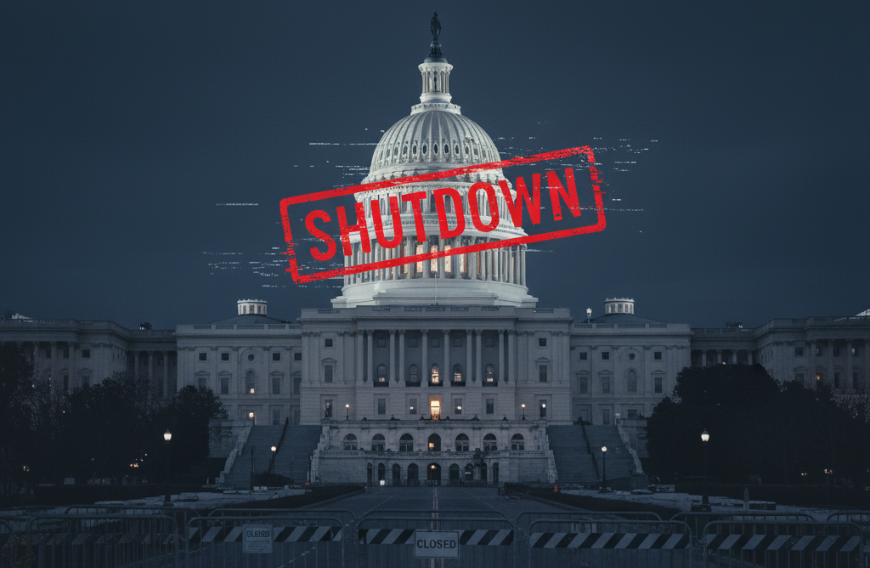
House Democrats are reluctant to risk a government shutdown in December over continued U.S. funding for the war in Iran. Several lawmakers argue that the party would have greater leverage to challenge President Donald Trump’s policies after taking control of Congress in January 2027.
The Democratic Party is weighing whether to use the upcoming government funding deadline to pressure the administration into ending the war or avoid a shutdown during the holiday season. Several Democrats have already expressed reservations about withholding support for a temporary funding measure, even if it continues to provide money for the war in Iran.
The federal government’s current funding is due to expire on Dec. 11, while the Democrats’ newly secured congressional majority will officially begin on Jan. 3, 2027.
Democrats made Trump’s handling of the war in Iran and its economic consequences key political issues during the midterm elections. Progressive lawmakers believe the election results gave the party a mandate to challenge the administration’s policies.
READ: Democrats eye 2028 presidential race as midterm victories fuel early positioning (November 5, 2026)
“The American people were loud and clear on November 3rd: they want an immediate end to Donald Trump’s reckless war in Iran,” Reps. Yassamin Ansari (D-Ariz.) and Ro Khanna (D-Calif.) said in a joint statement. “[We will] oppose any funding package that does not explicitly prohibit funds from being used for offensive operations in Iran” because it would “defy the demands of Americans who want this war to end – now.”
However, several lawmakers have cautioned against triggering another shutdown. Rep. Brad Schneider (D-Ill.) said, “Whatever they have to do to get it through they should do it, but I hope there’s not a shutdown.”
“Everyone should do whatever they can to avoid a shutdown. The impact it has on the economy, but workers in particular, it’s just not fair,” Rep. Greg Landsman (D-Ohio) said.
Incoming House Foreign Affairs Committee Chairman Gregory Meeks said Democrats had limited influence while Republicans remained in control and suggested that the party wait until it had greater authority in January.
Progressive lawmakers have also begun considering the advantages of postponing the confrontation. Some who favor restricting funding for the war in December may be willing to wait and pursue the same restrictions in the next Congress.
READ: Democrats poised to take control of both chambers of Congress (November 3, 2026)
Meanwhile, divisions remain within the Senate. Some Democrats are pushing for stronger conditions on government funding. Sens. Chris Van Hollen, Tammy Duckworth and Michael Bennet, along with independent Sen. Bernie Sanders, have called for any temporary spending agreement to include restrictions preventing the administration from using appropriated funds to continue the war.
On Nov. 19, the Republican-controlled Senate rejected another war powers resolution seeking to limit Trump’s authority to continue the conflict. The resolution was defeated in a 51-48 vote. Republican Sens. Susan Collins (R-Maine), Lisa Murkowski (R-Alaska) and Rand Paul (R-Ky.) voted with Democrats in favor of the resolution, while Sen. John Fetterman (D-Pa.) voted with Republicans against it.
Democratic leaders, including House Minority Leader Hakeem Jeffries and Senate Minority Leader Chuck Schumer, have supported bringing the war to an end but have not yet announced a definitive strategy. Their immediate challenge is to prevent a Dec. 11 funding lapse while preserving the party’s ability to challenge Trump’s policies in the coming year.