



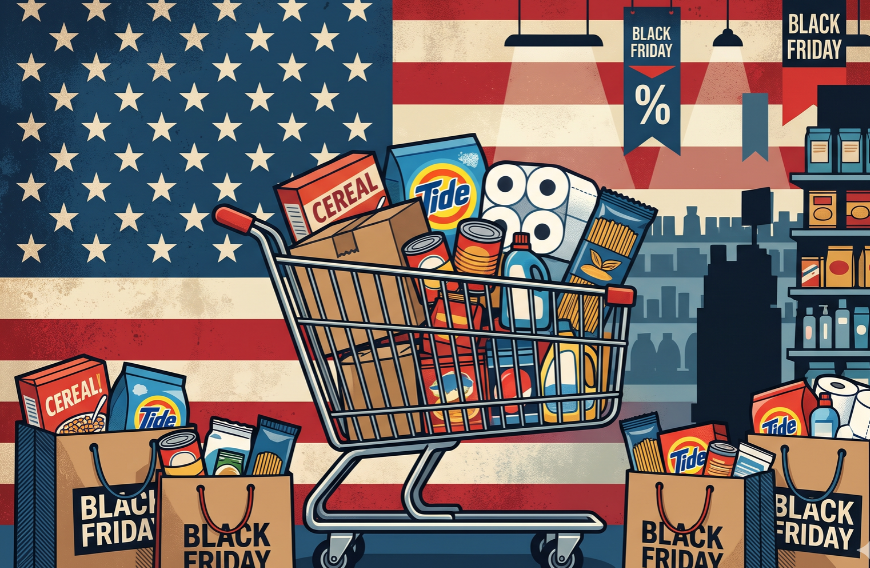
U.S. shoppers are using Black Friday promotions to purchase more than just traditional holiday gifts, adding toiletries, cleaning supplies and clothing basics to their shopping carts as retailers compete for consumers facing higher household costs.
The changing purchasing patterns are emerging during a holiday season marked by weeks of promotional offers, increased online spending and growing use of artificial intelligence shopping tools.
The developments have brought retailers such as Walmart and Amazon into focus as consumers look for discounts on both essential and discretionary products.
According to Adobe Digital Insights, U.S. consumers spent $82.5 billion online between Nov. 1 and Nov. 22, an increase of 9.1% from the same period last year.
The spending figures also show stronger demand for everyday merchandise. Online sales of personal hygiene products increased 40% compared with October’s average, while household cleaning products rose 33%. Sales of basic clothing increased 27% over the same comparison period.
READ: Thanksgiving and Black Friday 2026: What’s open and closed? Walmart, Target, Costco store hours (November 26, 2026)
Discounts have also become more substantial this year. Salesforce reported that November discounts were 8% deeper than in the previous year, while average selling prices for physical merchandise declined 1%.
The deeper promotions have encouraged shoppers to purchase more items. Caila Schwartz, a retail and consumer insights leader at Salesforce, said consumers added 2% more items to their online shopping carts between Oct. 1 and Nov. 18 compared with the same period last year.
Artificial intelligence is also becoming part of the holiday shopping process, helping consumers compare products, evaluate prices and identify available deals, considering traffic to online retail websites originating from links in AI-powered tools more than doubled in November compared with November 2025.
Major retailers have also reported differences in spending among customers who use their AI shopping assistants.
Walmart CEO John Furner told analysts during an earnings call this month that customers using Sparky, the company’s AI shopping assistant, spent an average of 40% more per order than customers who did not use the tool.
Amazon CEO Andy Jassy similarly told analysts that U.S. customers using Alexa spent 50% more than those who did not.
READ: Apple Black Friday 2026: Discounts on AirPods, MacBooks, iPads and Apple watch (November 26, 2026)
The figures reflect spending differences between users and nonusers. They do not establish that the AI assistants directly caused customers to spend more.
Adobe expects U.S. online holiday sales to reach $275.1 billion between Nov. 1 and Dec. 31, representing a 6.7% increase from the previous year.
The company forecasts Black Friday online sales of $12.9 billion, up 9.2% year over year. Cyber Monday spending is projected to reach $15.1 billion, making it the largest online shopping day of the holiday season.
For Walmart and Amazon, the figures showcase the importance of everyday merchandise and digital shopping experiences during the holiday period.
However, the available data do not establish whether the changing product mix or increased use of AI tools will translate into higher profits for either company.
Retailers’ upcoming financial results will provide further information about sales performance and the effect of holiday promotions on their businesses.