



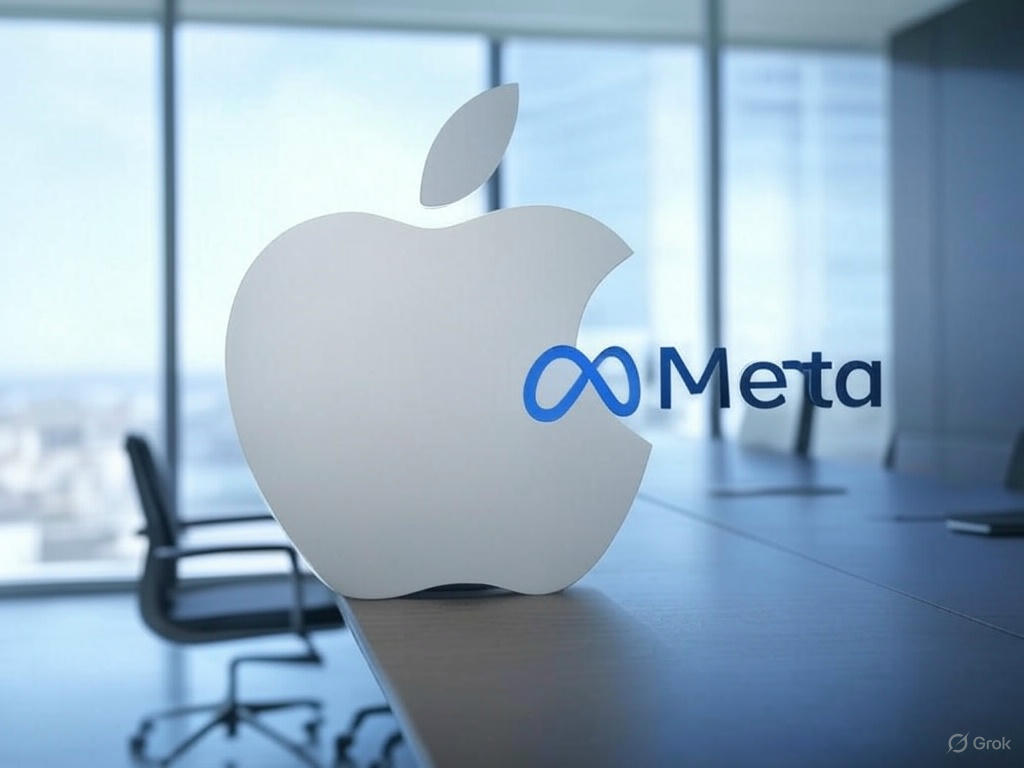
Tech giants Apple and Meta may have a tough future navigating European Union (EU) laws, after being hit with a fine under the Union’s new Digital Competition Law. EU regulators on Wednesday said Apple and Meta were the first companies to be penalized for violating a new law intended to increase competition in the digital economy, the latest in a string of regulatory setbacks for the tech giants.
According to media reports, Apple was fined 500 million euros ($570 million) and Meta was fined 200 million euros ($230 million) for breaking the law, the Digital Markets Act, which was adopted in 2022.
READ: Takeaways from Mark Zuckerberg’s Meta-FTC antitrust trial (April 17, 2025)
The EU claims that Apple broke the law by violating the Digital Markets Act (DMA) for its practices with the App Store, through which the company imposes high fees on developers and restricts alternative payment methods, harming competition. The European Commission charged Apple in 2021 for unfairly handicapping services like Spotify, violating competition laws under the DMA.
Meta has also faced accusations of violating the EU Digital Competition Law, particularly the Digital Markets Act (DMA). Key violations include favoring its own services over competitors, such as prioritizing Facebook Marketplace and Instagram Shopping; unfair data practices, using user data to gain a competitive edge; and restricting third-party access to platform features.
Additionally, Meta’s dominance in online advertising has raised concerns about lack of transparency and high fees for advertisers. These actions have led to investigations and legal actions, with potential penalties if Meta does not adjust its practices to comply with EU regulations on fair competition.
Meta said it was likely to appeal the ruling, calling it an attack on American companies akin to imposing steep tariffs on their services. “The European Commission is attempting to handicap successful American businesses while allowing Chinese and European companies to operate under different standards,” Joel Kaplan, Meta’s chief global affairs officer, said in a statement.
What is the EU Digital Competition Law?
The EU Digital Competition Law is a set of regulations designed to ensure fair competition in the digital economy, with two key components: the Digital Markets Act (DMA) and the Digital Services Act (DSA). The DMA, introduced in 2023, targets large online platforms that act as “gatekeepers” in the digital market, such as Google, Apple, and Meta. It aims to prevent these companies from engaging in anti-competitive behaviors, such as unfairly favoring their own services, limiting access for smaller competitors, or manipulating market conditions.
READ: Former Meta executives receive $15 million in funding for AI assistant startup (March 28, 2025)
The DSA, which came into effect in 2022, regulates the responsibilities of digital platforms in moderating content, protecting users from illegal activities, and ensuring transparency in online operations. Together, these regulations aim to create a fairer, safer, and more transparent digital marketplace in the EU, protecting consumers, promoting innovation, and addressing monopolistic practices by large tech companies that dominate the digital space.