



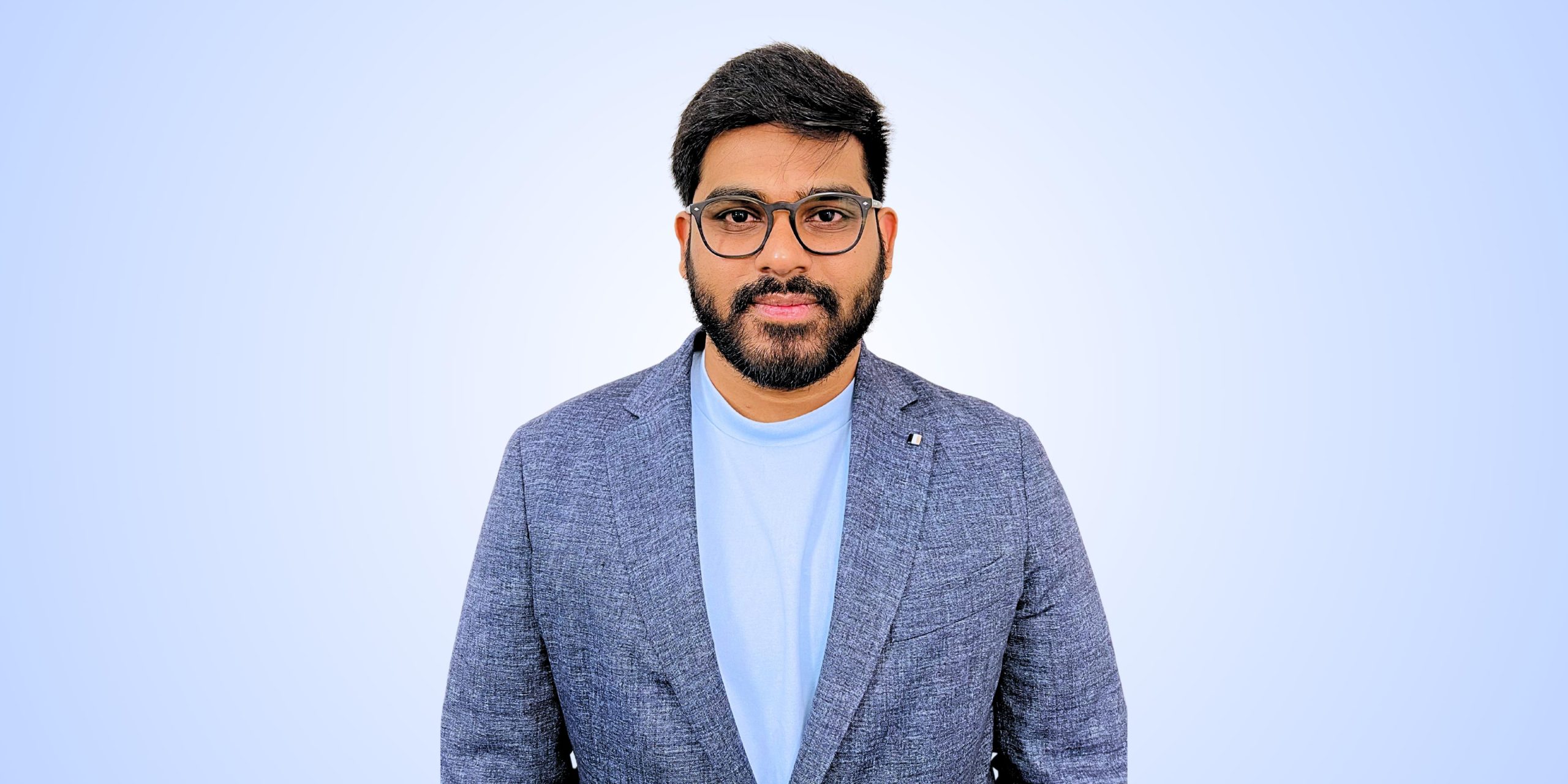
MokSa.ai, an AI-powered surveillance audit platform, has recently signed a memorandum of understanding (MoU) with Global Security Solutions, which will serve as the primary channel for introducing MokSa’s technology to major big-box retailers.
In March 2024, MokSa.ai raised $1.6 million in pre-seed funding led by Array Ventures, with participation from notable investor Jay Farner. The company, founded by Nikhil Teja Kolli, is on a mission to revolutionize retail loss prevention and operational efficiency through innovative AI tools. With features like customer count tracking, heat mapping, and real-time theft detection, MokSa.ai is poised to make a significant impact in the retail industry.
Kolli’s journey to entrepreneurship began in a small town near Vijayawada, India. “We moved to Hyderabad when I was in fifth grade,” Kolli recalls. “My dad ran a milk supply business, and I used to wake up at 3 a.m. to help deliver milk and newspapers. Even my flight ticket to the U.S. was financed through borrowed money.”
READ: Human-centered AI and global regulation: Insights from Antonio Krüger
After earning a degree in aeronautical engineering from Sri Indu University, Kolli pursued two master’s degrees in the United States. His career took off at an Italian high-speed train manufacturing startup, where he learned invaluable lessons in process optimization and team building and management — skills that later proved essential in building MokSa.ai.
“The idea for MokSa.ai came from my experience working in a liquor store,” says Kolli. “Liquor stores are often targeted by shoplifters, and I saw firsthand how challenging it was to prevent losses. I was personally held at gunpoint twice and saw firsthand how challenging it was to prevent losses. Businesses were at the bottom of the food chain when it came to adopting innovative solutions — I wanted to change that.”
Kolli spent three years collecting data and training AI models before officially registering MokSa.ai in 2021. Since then, the company has grown rapidly. “Today, we have 88 paying customers, generating an annual recurring revenue (ARR) of $468,000,” he notes. “We also have over 200 customers on our waitlist and are planning to raise $3-5 million in a funding round next February to scale further.”
MokSa.ai’s platform integrates with existing camera infrastructure, eliminating the need for additional investment. “The oldest camera we’ve onboarded dates back to 2011,” says Kolli. The platform offers a range of features, including:
Real-Time Theft Detection: Notifications are sent directly to clients’ mobile devices, enabling immediate action.
Customer Count Tracking: Provides accurate foot traffic data and projections to optimize staffing and inventory.
Heat Mapping: Visualizes customer concentration in-store to improve layout and product placement.
Employee Efficiency Monitoring: Tracks time management and adherence to food safety protocols.
“Our AI is constantly learning,” explains Kolli. “Initially, clients might receive a higher number of notifications, but over time, the system becomes more accurate, reducing false positives.”
Affordable technology for small businesses
MokSa.ai aims to democratize access to advanced surveillance technology. “A small business typically pays between $350 and $550 per month,” says Kolli. “But we’ve built a platform so accessible, it costs about as much as a few bottles of premium liquor—making it an easy investment in peace of mind and business efficiency.”
Despite pressure from investors to increase prices, Kolli remains committed to affordability. “For us, it’s about making a difference,” he emphasizes. “If we can help small businesses thrive, that’s a win.”
READ: Tackling code security with AI: In conversation with Corridor’s founder Ashwin Ramaswami
MokSa.ai is headquartered in Troy, Michigan, with a tech team based in Hyderabad, India. “We have 68 employees in India, 32 of whom are in tech, and 6-8 sales partners in the U.S.,” says Kolli. The company is also exploring edge-based solutions to give clients greater control over their data while reducing costs.
Future plans include diversifying the platform’s capabilities. “We’re working on millimeter wave technology for advanced detection,” says Kolli. “This could be a game-changer in scenarios like school safety.”
MokSa.ai’s success is driven by collaboration. Kolli credits his co-founder Kranthi for the company’s technical achievements. “Kranthi has over 15 years of experience in AI and computer vision,” says Kolli. “He was working on AI projects at Carrefour in Europe before joining MokSa.ai.”
The company’s name reflects its mission. “Moksha means liberation,” explains Kolli. “We’re liberating businesses from the challenges of loss prevention and inefficiency.”
With a growing customer base and a clear vision for the future, MokSa.ai is set to transform the retail industry. “Our goal is to become a trusted partner for businesses facing operational challenges,” says Kolli. “We want to be the first name that comes to mind when they think of solutions.”
As the company prepares for its next phase of growth, MokSa.ai’s commitment to innovation and affordability positions it as a leader in the AI-driven surveillance space. For Kolli, the journey from a small town in India to the forefront of retail technology is just the beginning.