



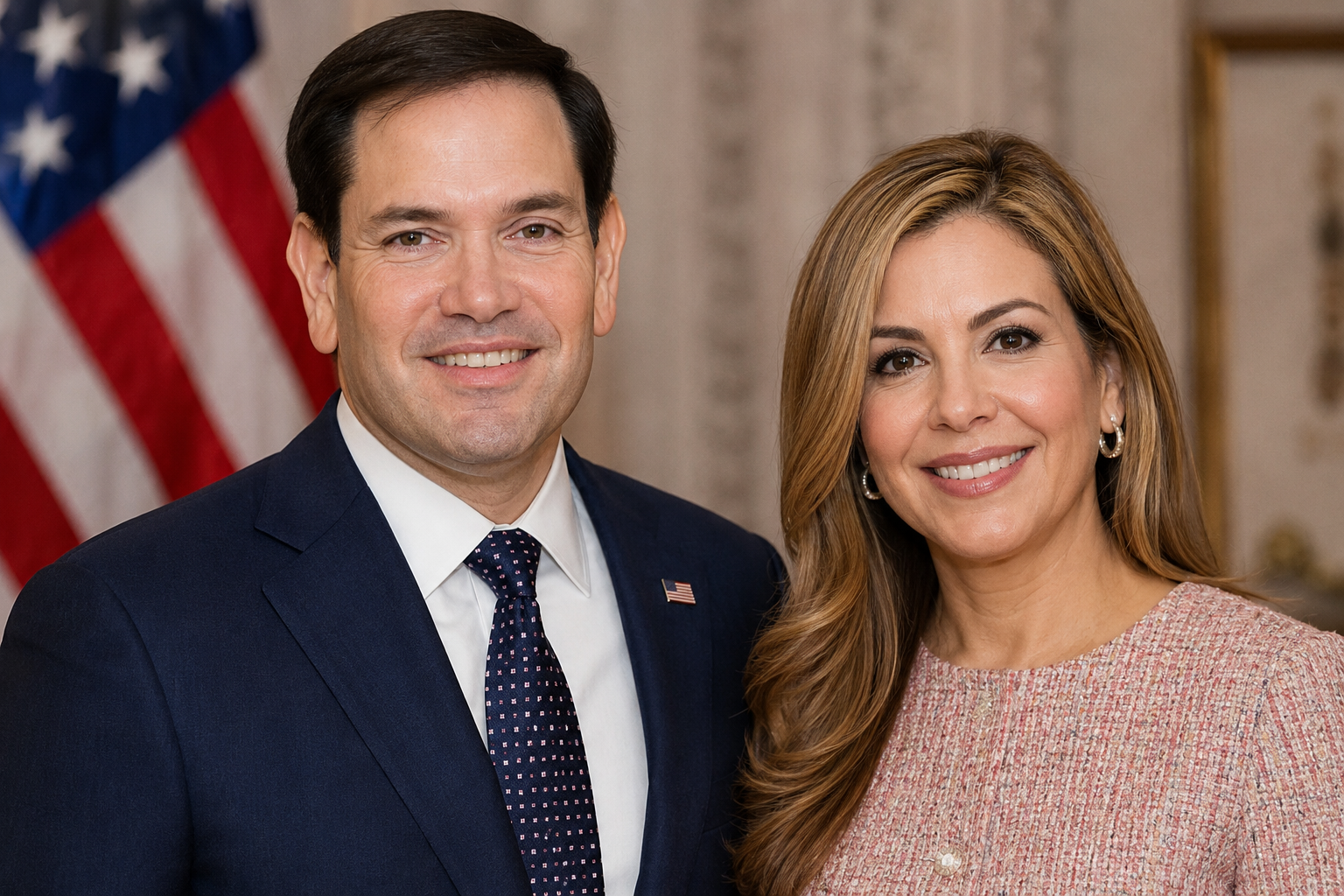
There was something almost disarming about watching Marco Rubio sit down with Katie Miller and his wife Jeanette for “The Katie Miller Podcast.” For once, there was no stage, no carefully constructed political theater and no succession of rehearsed talking points designed to survive the next news cycle. There was no politician straining to sound presidential and no obvious attempt to turn every answer into a campaign message. Instead, there was something we rarely get to see anymore: people simply being themselves. This is the podcast that could take Marco Rubio to the White House.
Rubio talked about his love of college football, his affection for Pop Tarts, his struggles with diets and his music preferences, while Jeanette offered her own perspective, teased him and revealed the kinds of small details about a husband that only a spouse can reveal. What made the conversation so compelling was not what they said, but how comfortably they said it. There was an ease between them that made the conversation feel less like a political interview and more like an ordinary conversation between two people who have spent decades building a life together.
READ: Sreedhar Potarazu | Fitness for your eyes and brain: A new approach to reducing dementia risk (August 10, 2026)
That may sound insignificant, but I believe it could ultimately prove to be far more consequential than it appears. We have become accustomed to politicians who seem professionally trained out of having personalities. Every word is calibrated, every anecdote has a purpose and every moment of vulnerability seems to have been tested by consultants before it reaches the public. Even interviews supposedly designed to reveal the person behind the politician often feel like another campaign event, but this conversation felt different because the political performance seemed to disappear.
For a while, we were not watching the Secretary of State. We were watching a husband, a father and a man who apparently really likes Pop Tarts and college football. That is a remarkably powerful thing in today’s America because Americans already know that politicians are human beings, yet they rarely get to see the ordinary human being behind the public persona.
Consider the Pop Tart conversation. There was nothing politically significant about it, and no voter is going to decide the future of the Republic based on Rubio’s breakfast preferences, but those may be precisely the moments people remember because they are human. Americans know that politicians have favorite foods, annoying habits, family disagreements, guilty pleasures, favorite sports teams and weekends when they would rather sit on a couch watching football than attend another political fundraiser, but we almost never get to see any of it.
Instead, we are given the manufactured version of humanity. Politicians go to diners, order pancakes, drink coffee, visit football games and pose with babies, all in an effort to demonstrate that they are “just like us.” The problem is that everyone knows when it is calculated, and there is a profound difference between trying to appear relatable and simply being relatable. That difference came through in this interview.
Jeanette Rubio deserves enormous credit for that because she did not appear to be there simply to reinforce her husband’s political brand. She was willing to tell stories, offer a different perspective and expose some of the ordinary imperfections that make a marriage real, and Rubio seemed comfortable enough to let her do it. There is an ease between two people who have been married for decades that cannot easily be manufactured, and you can tell when a couple is performing the idea of a happy marriage and when you are watching two people who have actually lived a life together.
That authenticity matters because we are living through a period of extraordinary political exhaustion. Americans are inundated with political content through cable television, podcasts, social media, commentators and political influencers, yet trust seems increasingly difficult to find. People distrust institutions, political parties, the media and politicians who seem to change personalities depending on the audience in front of them. What they may be searching for is something much simpler: a reason to believe that the person they are watching is real.
That is why Rubio’s candor matters. Whether someone agrees with his politics is almost beside the point because authenticity crosses ideological boundaries. You can disagree profoundly with someone’s political views and still believe that person is genuine, and that is a quality that has become increasingly rare in public life.
This is also why the interview could have consequences far beyond the podcast itself. Rubio has long been discussed as a potential future presidential contender, and if he eventually becomes a serious candidate for president, his greatest advantage may not be another policy proposal or another carefully constructed speech. It may be that millions of Americans have already had an opportunity to see the man behind the résumé.
That could be an enormous advantage in an era of political distrust because presidential elections are not ultimately decided by policy papers alone. They are also decided by something much more visceral: whether people believe they know the person asking for their vote. Can I imagine sitting across the table from this person? Does this person seem to understand ordinary life? Would I believe this person if the cameras were turned off? Those questions are rarely answered by a 30-second campaign advertisement, but they can be answered by watching someone interact naturally with the people closest to them.
READ: Sreedhar Potarazu | If AI gives professional advice, does it need a license? (August 9, 2026)
That is why the Katie Miller interview may be more consequential than it initially appears. The political establishment tends to assume that the important moments are the ones in which candidates discuss the economy, China, Russia, immigration or national security, while the public often remembers something entirely different. They remember the laugh, the awkward story, the spouse correcting the politician, the favorite food, the football team and the moment when someone stopped sounding like a politician and started sounding like themselves.
Perhaps that is the real political lesson hiding inside this remarkably ordinary conversation. America may be tired of politicians who are trying desperately to appear perfect, and it may be increasingly receptive to someone who is comfortable enough in his own skin to admit that he likes Pop Tarts, watches college football and has the same ordinary family dynamics as everyone else.