



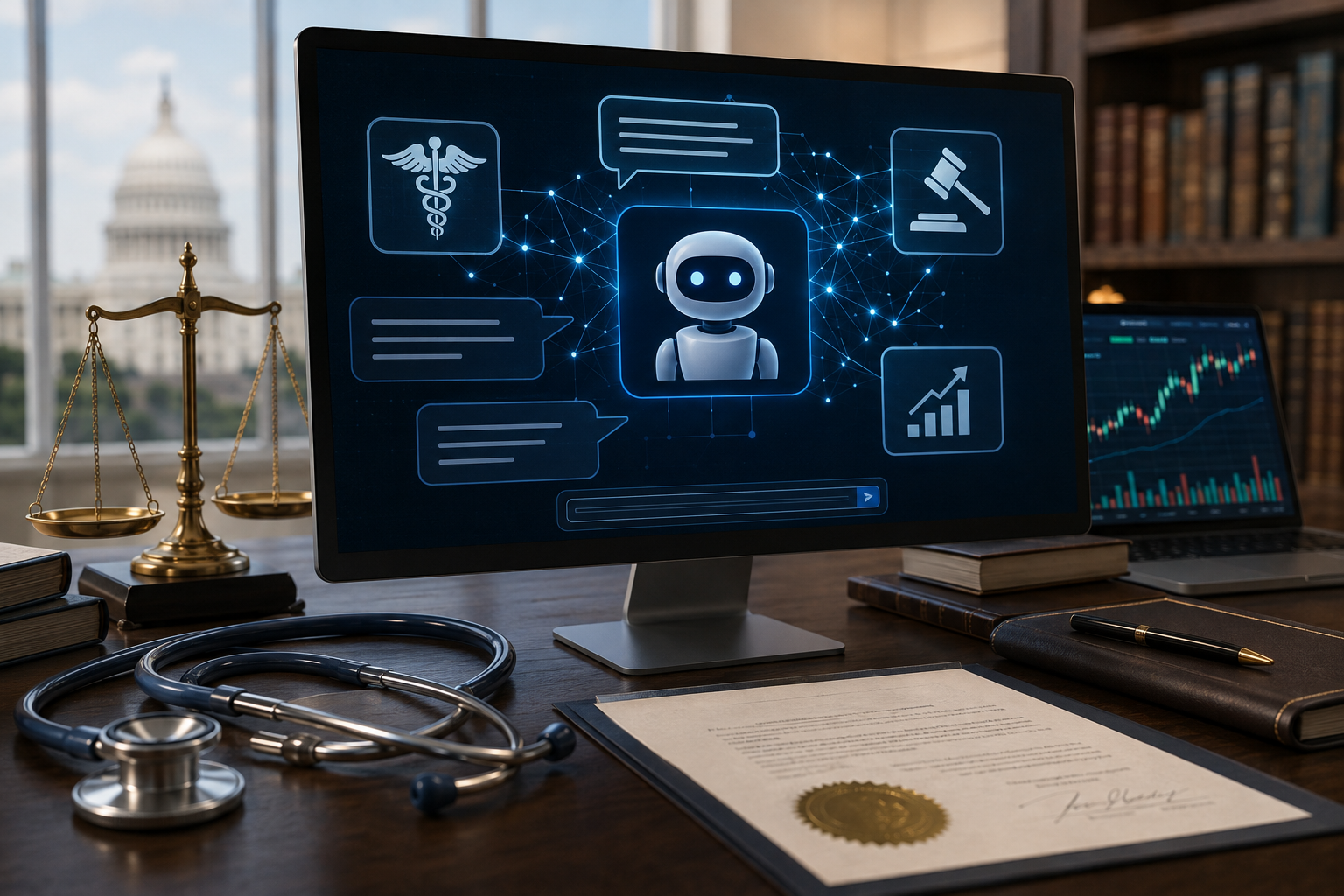
Artificial intelligence has evolved far beyond its original role as a tool for retrieving information. Millions of people now turn to chatbots for guidance on matters that have traditionally required the expertise of licensed professionals. They ask whether they should contest a legal decision, establish a trust, invest in a particular company, appeal an insurance denial, or interpret medical symptoms. The answers are often delivered with a level of confidence and personalization that resembles the advice provided by a lawyer, financial adviser, or physician during a professional consultation. This evolution raises a fundamental question that regulators have yet to fully address: if artificial intelligence systems are increasingly providing advice that influences major life decisions, should they be subject to the same legal and ethical responsibilities imposed on licensed professionals?
Professional licensing exists because society recognizes that certain forms of expertise carry significant consequences. Physicians, attorneys, accountants, and financial advisers are not licensed merely to protect their professions; they are licensed because the public relies on their judgment in situations where mistakes can result in financial loss, physical harm, or the loss of fundamental rights.
Licensing creates accountability through education requirements, examinations, ethical obligations, continuing education, and disciplinary mechanisms. A physician who provides negligent care may lose a medical license. An attorney who violates professional duties may be sanctioned or disbarred. A financial adviser who places personal interests ahead of clients may face regulatory action. These systems exist because expertise without accountability creates unacceptable risks.
READ: Sreedhar Potarazu | AI is burning through free cash flow (July 25, 2026)
Artificial intelligence is increasingly entering these same domains without comparable obligations. Technology companies often argue that chatbots provide information rather than professional advice. However, that distinction becomes increasingly difficult to maintain as AI systems analyze individual circumstances and recommend specific courses of action.
Importantly describing symptoms of a medical condition and advising an individual whether they should seek emergency care is dangerous territory .. When AI evaluates facts, weighs alternatives, and recommends a decision tailored to an individual, it is performing a function traditionally associated with professional judgment.
As AI systems become more capable of performing these same functions, the question becomes whether society should permit them to provide professional-level guidance without professional-level accountability.
Recent lawsuits demonstrate that this issue is no longer theoretical. In one case involving medical advice, a Florida man sued OpenAI alleging that ChatGPT repeatedly discouraged him from seeking medical care despite symptoms that ultimately proved to be a life-threatening pulmonary embolism. The lawsuit alleges that the chatbot’s responses contributed to a dangerous delay in obtaining treatment and argues that AI systems providing individualized medical guidance can create responsibilities similar to those associated with traditional medical advice. Regardless of the eventual outcome, the case highlights the central legal question: when a person relies on AI for health decisions, does the company providing that system owe a duty of care?
The legal profession has already confronted a related issue involving attorneys who relied on AI-generated information. In Mata v. Avianca, two attorneys used ChatGPT to prepare a legal filing that included fabricated case citations generated by the system. The attorneys submitted those citations to the court without verifying their accuracy, and the judge imposed sanctions, emphasizing that lawyers remain responsible for the work product they submit regardless of whether artificial intelligence assisted in creating it. The case established an important principle: AI cannot replace professional judgment. However, it also raises a broader question. If a lawyer remains responsible when using AI, should an AI company bear responsibility when an ordinary consumer relies directly on AI-generated legal guidance?
The missing element in the current AI landscape is fiduciary responsibility. A fiduciary relationship exists when one party places trust and reliance on another who has specialized knowledge or authority. Physicians, attorneys, trustees, and many financial advisers have legal obligations to act in the best interests of those they serve. They must avoid conflicts of interest, maintain confidentiality, and prioritize the welfare of their clients or patients.
READ: Sreedhar Potarazu | Chatbots can Auto-Tune our minds and voice: The Maya of AI (July 21, 2026)
This raises the fundamental question of where fiduciary responsibility should reside. It is unlikely that the AI system itself can hold a fiduciary duty in the traditional legal sense because an algorithm does not possess intent, judgment, or accountability in the way a human professional does. The more logical approach is to place responsibility on the organizations that create and deploy these systems. This responsibility should include validating accuracy, monitoring performance, disclosing limitations, identifying conflicts of interest, maintaining audit records, and accepting liability when foreseeable harm results from negligent deployment.
The practical approach may be to license the organizations that deploy AI systems in professional settings rather than attempting to license the algorithms themselves. Companies offering AI-based medical, legal, or financial services should be required to demonstrate that their systems have been appropriately tested, that limitations are clearly disclosed, that human oversight exists where necessary, and that mechanisms are available to address harm caused by inaccurate recommendations.
Society has spent generations developing safeguards around professions that influence people’s lives. If AI systems are going to assume roles traditionally performed by licensed professionals, they must also assume corresponding responsibilities. The future of artificial intelligence should not be defined only by what these systems are capable of doing, but also by the standards of responsibility we require when we trust them with decisions that matter.