



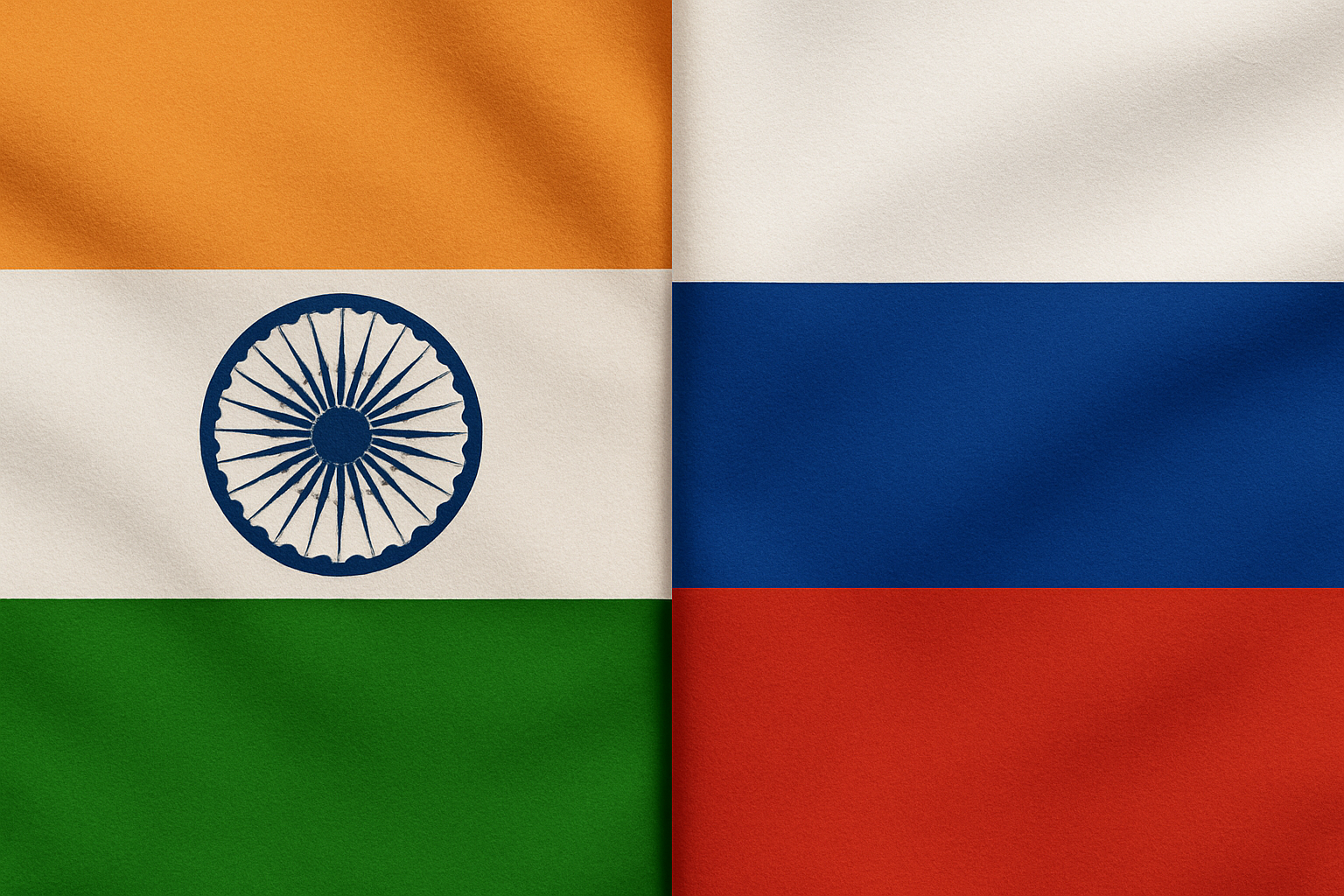
India has a delicate balancing act to carry out between two giant trade partners, the United States and Russia. President Donald Trump recently threatened India with a penalty if they dared trade Russian oil, and it looks like the threat may not have had the desired effect.
Reuters reported that there are no immediate changes planned to India’s long-term contracts with Russian suppliers, citing two anonymous Indian government sources that did not wish to be identified due to the sensitivity of the matter.
“The Indians must be having some confusion” following Trump’s threat — a reversal from the more tolerant approach taken under the Biden administration, Bob McNally, president of consulting firm Rapidan Energy Group, told CNBC’s “Squawk Box Asia.”
READ: US government sanctions six Indian companies over Iran oil (August 1, 2025)
“Now we’re flipping around and saying, ‘What are you doing taking all this Russian oil?’” McNally said.
The United States is pressuring India to reduce or halt its oil imports from Russia, citing concerns that the trade helps fund Russia’s ongoing war in Ukraine. India currently sources approximately 35–40% of its crude oil from Russia, taking advantage of discounted prices that have been available since 2022. The U.S., under President Trump, has threatened to impose significant tariffs, potentially as high as 25%, on Indian exports if the purchases continue. Senior U.S. officials argue that by continuing this trade, India is indirectly financing Russia’s military aggression. India, however, has defended its position, emphasizing the importance of energy security, price stability, and long-term contractual obligations. Indian officials insist that their decisions are guided by national interests rather than external political pressure. The dispute underscores a broader geopolitical tension, as India seeks to maintain strategic autonomy while navigating growing Western pressure to align more closely with U.S. foreign policy objectives.
Reportedly, Russia has become the leading oil supplier to India since the war in Ukraine began, increasing from just under 100,000 barrels per day before the invasion, or a 2.5% share of total imports, to more than 1.8 million barrels per day in 2023, or 39%. According to the International Energy Agency, 70% of Russian crude was exported to India in 2024.
India’s energy minister, Hardeep Singh Puri, in a July 10 interview with CNBC, said that “if people or countries had stopped buying at that stage, the price of oil would have gone up to 130 dollars a barrel. That was a situation in which we were advised, including by our friends in the United States, to please buy Russian oil, but within the price cap.”
This ongoing dynamic illustrates the broader challenges faced by countries caught between competing global interests. India’s stance underscores its desire to act independently in safeguarding its economic and energy needs, even when these decisions conflict with the priorities of powerful allies like the United States. The situation also reflects the complexities of modern geopolitics, where energy security, economic growth, and diplomatic relationships are deeply intertwined. While the U.S. seeks to isolate Russia economically to weaken its military campaign, India must weigh those goals against its immediate needs for affordable energy and development. As global power balances shift, India’s approach may serve as a model for how emerging economies assert their strategic autonomy without fully aligning with any single bloc. Ultimately, this tension highlights the difficulty of maintaining international unity on contentious issues when national interests diverge, signaling ongoing debates over sovereignty, alliance, and economic pragmatism in the years ahead.