



“I focus on startups solving real, everyday problems with simple, practical solutions,” says Indian American entrepreneur and philanthropist Sandesh Sharda, who joins the startup reality show Ideabaaz as a judge. The show premieres on October 25.
Indian television audiences on Zee TV and viewers in the United States on the streaming platform Zee5 will get their first look at the much-anticipated startup reality show “Ideabaaz” when it premieres this Saturday.
Among the judges on the new show is Sandesh Sharda, an Indian American serial entrepreneur and philanthropist, who brings his wealth of experience to mentor and guide aspiring entrepreneurs on how to refine and scale their ventures.
Hosted by actor Pratik Gandhi, the show aims to spotlight innovative ideas and provide constructive feedback to budding entrepreneurs and is accessible to audiences across India and the United States. It is available in eight Indian languages. (More information about the show can be found at https://ideabaaz.co.in.)
In an exclusive interview with The American Bazaar on Friday, just ahead of the premiere, Sandesh Sharda shared his excitement about Ideabaaz and its potential to bridge the Indian and American startup ecosystems.
The Washington, DC-area-based entrepreneur is the founder and CEO of Miracle Systems, a federal government contracting firm he sold to Renovus in the spring of 2023. During his leadership, Miracle Systems secured more than $2.6 billion in government contracts.
“Indian entrepreneurs today are highly innovative and eager to scale ideas that solve real-world problems,” Sharda said, noting that India’s startup ecosystem is booming, with founders exploring opportunities across technology, fintech, health, logistics, and the gig economy.
Sharda said his experience as an Indian American entrepreneur brings a fresh perspective to these startups. “Having worked across markets in India and the U.S., I can guide founders on global best practices, investor expectations, and how to refine their ideas for broader impact,” he explained.
Sharda, who is also a cofounder of the Indian American Business Impact Group (IAMBIG), a platform for business owners and C-Suite leaders, also emphasized how Ideabaaz stands out within India’s rapidly evolving startup culture. Here are excerpts from the interview, lightly edited for clarity and length.
The American Bazaar: How did you get involved in the whole idea of Ideabaaz?
Sandesh Sharda: I love Shark Tank in the U.S. So, when I was watching Shark Tank India, I found that the startups were not fairly treated. They were ridiculed on the show. And I felt very sad for some of the startups because the whole idea of startups coming on the show is for them to get guidance from mentors, apart from scaling up their startup. Money they can raise probably elsewhere.
We have been here [in the U.S.] for 30 years. Some of my colleagues that I work with have been here 25 to 30 years. And I thought of a way to engage the Indian community from the US. And in that reference, I made an effort to meet Dr. Subhash Chandra ji, [the Chairman Emeritus of Zee].
I proposed to him that I would love for us to collaborate, and I want to bring my expertise to the table, whereby we are not discouraging any startups. We are encouraging startups, we are giving them guidance, we are funding them, we are mentoring them, and we are scaling them up.
Even if a startup does not have potential, or we don’t see the potential, we can at least give them a valid reason why we are not investing and what they need to do to attract investments. So that was the common philosophy that dictated me to work on the Ideabaaz show.
The American Bazaar: Did this idea stem from any professional experience or something specific you saw that made you shift perspective?
Sandesh Sharda: As I said, we’ve been here for 30 years. We run different companies. Some of the leading CEOs of the world, whether it is Satya Nadella or Sundar Pichai, Indian Americans head some of the largest corporations in the world. The question is, when we can head these corporations, why can’t we build our own?
India definitely has the talent. We are innovators, engineers, doctors, and more. But somehow, the ecosystem I grew up in 30 to 35 years back was not conducive to startups. Financing was a challenge, and financing is still a challenge.
There are a lot of talented people in India who are serving as CEOs around the world. So yes, it is a competitive field, and competitiveness brings out the best in people. The best ideas need support. Some of the best ideas may come from tier-two or tier-three cities, or even from the lowest stratum of society.
A startup doesn’t mean we can’t support these initiatives. If the idea is good, it can come from anywhere. All it needs is mentoring, funding, and the right guidance. And I think India is at a point where we can support these ventures. No matter how competitive it is, India is a 1.3 billion consumer market, and any portion of that market is huge. Keeping all this in mind, I decided to support young entrepreneurs.
The American Bazaar: How was your experience on the show?
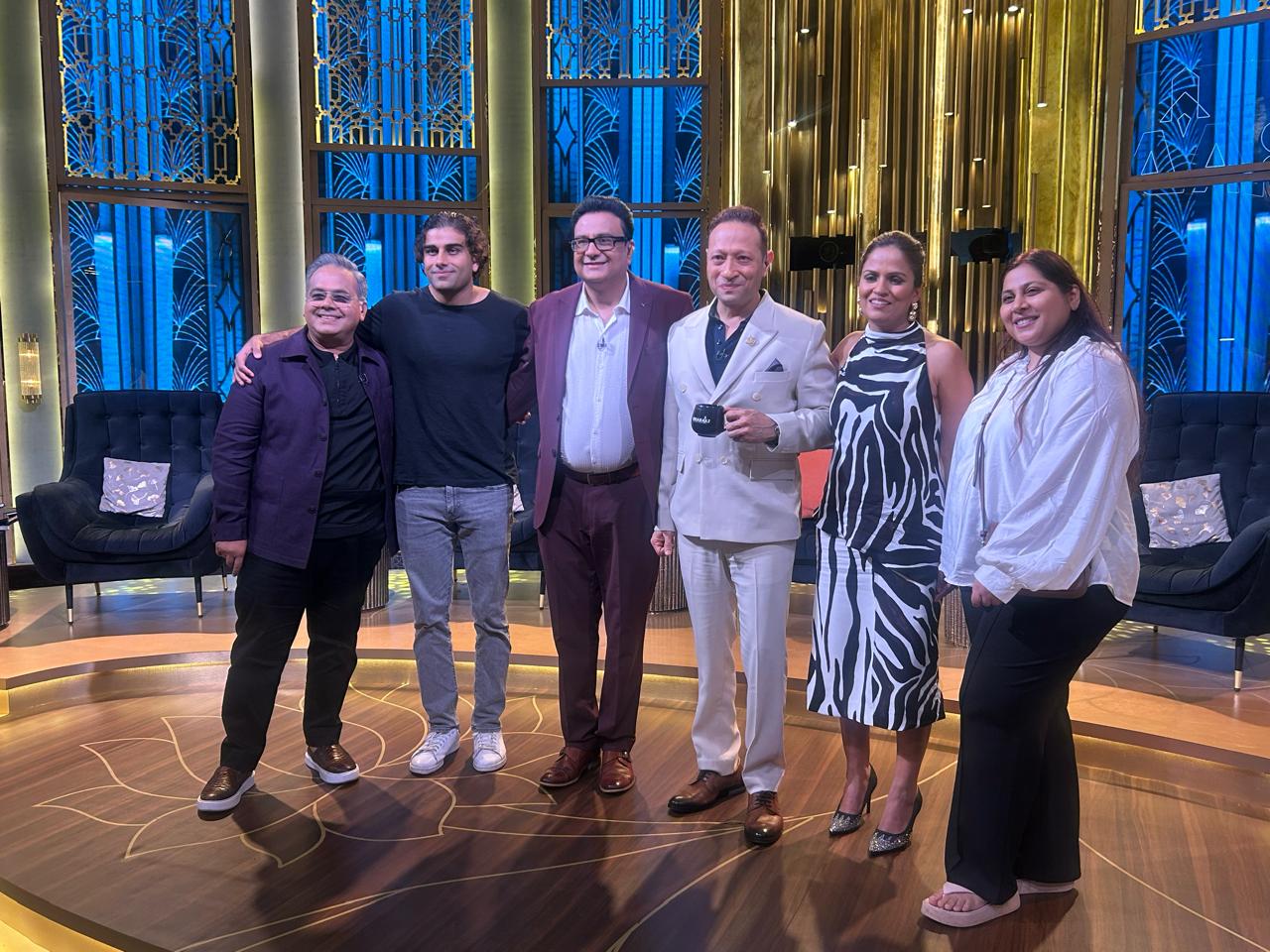
Sandesh Sharda: My entire experience was very positive. I met some great entrepreneurs and startup owners who have the passion and burning desire to succeed. On the set, my co-judges were very complimentary. Each of us brought certain skill sets to the table, and we worked very well together.
We were not fighting with each other; we were encouraging and guiding each other. Even if I was not investing, or they were not investing in the firms I thought had potential, nobody tried to convince the other not to do it. We respected each other’s perspectives and decisions, which made the process even more constructive and enjoyable.
We worked in a very collaborative way, and that’s how it should be. If a startup wins, the nation wins. One startup can create hundreds or thousands of jobs. Today it may be an idea; tomorrow it could be a unicorn. You don’t know what will click in this market.
So overall, the experience was very positive. I’m very motivated and already looking forward to the next season.
The American Bazaar: Without giving any spoilers, which startups did you find most interesting or convincing?
Sandesh Sharda: The show airs tomorrow, so I can mention a few startups from the first and second episodes that I funded. One was a company installing printing kiosks. Some co-judges said, “India is going digital,” but I feel there’s still a lot of printing — for bank accounts, Aadhaar cards, property papers, and university admissions. The concept appealed to me because these kiosks can be placed in universities, courts, passport offices, or near ATMs. You just scan a QR code, pay, and print.
Ideabaaz is about finding such simple, everyday solutions to big problems.
Another was Timbuktu, a Bangalore-based startup helping gig workers like college students who can work part-time in logistics, delivery, or quick commerce like Blinkit or Rapido. I believe the gig economy is the future, so I invested in Timbuktu. I also backed Blip, an app offering valet parking. In places like Bombay’s Phoenix Mall, parking can take 45 minutes. With Blip, you notify through the app, and a valet picks up and returns your car.
I focus on startups solving real, everyday problems with simple, practical solutions.
The American Bazaar: What would you say makes Ideabaaz special or worth watching?
Sandesh Sharda: Ideabaaz is a positive platform for startups, recorded in eight languages. Entrepreneurs can pitch in any language, with translators ensuring smooth communication.
We welcome people from all walks of life and ensure no one is dehumanized. Unlike Shark Tank, which I find a negative name because sharks bite, our show is about ideas. No idea is good or bad until you pitch. Even if it’s not workable, we offer advice to improve or redirect your energy.
At Ideabaaz, you get positivity, encouragement, and genuine interaction. Many college students in the audience feel inspired seeing respectful and constructive discussions.
The show is completely unscripted. Judges don’t know which startups are coming until 30 minutes before. Each discussion lasts about an hour, though only 15-20 minutes are shown, ensuring every startup leaves with guidance and motivation.
The American Bazaar: Did you notice any major trends among the startups that came on the show?
Sandesh Sharda: Yes, I saw a lot of focus on the wellness sector: chemical-free cosmetics, products without sugar, and healthier food alternatives. Wellness-based products and healthier snacks were strong themes among the founders who came to the show.