



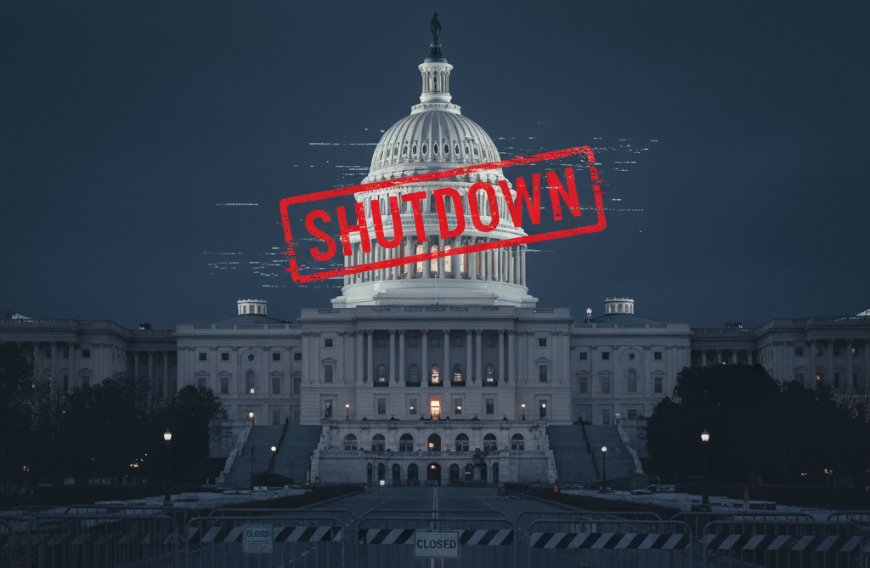
The U.S. Senate has passed a crucial funding bill that could bring the longest government shutdown in history to an end within days.
“We are going to reopen government, we are going to ensure that federal employees… will now receive compensation that they’re earned and deserve,” Senator Susan Collins, a Republican who played a key role in authoring the bill, said after it passed.
The bill passed in a 60-40 vote late on Monday, with nearly all Republicans joining eight Democrats who splintered from the party to approve it, with the deal funding the government until the end of January.
The 2025 U.S. government shutdown began on Oct. 1, 2025, after Congress failed to pass a federal budget or stopgap funding bill for fiscal year 2026. The deadlock stems from deep partisan divisions over spending priorities — particularly disagreements on extending Affordable Care Act (ACA) subsidies, social program funding, and proposed cuts to federal agencies.
As a result, large portions of the government have been forced to close, with around 900,000 federal employees furloughed or working without pay. It has become the longest shutdown in U.S. history, surpassing previous records and intensifying public frustration.
READ: Senate’s bipartisan vote offers hope to end record-long government shutdown (
The deal came to fruition over the weekend, after some Democrats joined Republicans and negotiated an agreement to get federal employees back to work and essential services restarted.
The economic fallout has been significant. Delayed paychecks, suspended federal services, and disruptions in air travel and national parks have rippled through communities nationwide.
Republicans — who hold a 53-47 majority in the Senate — needed the measure to clear the 60-vote minimum threshold.
Economists estimate billions in lost output, with the White House projecting around $15 billion in GDP lost per week of closure. As of Nov. 10, the Senate has passed a temporary funding deal to keep the government running through late January 2026, but the House vote remains pending — leaving uncertainty over when the shutdown will finally end and whether deeper policy compromises can be reached.
The Senate’s passage of the funding bill marks a potential turning point in what has been the longest government shutdown in U.S. history. If the House follows suit, it would allow hundreds of thousands of federal employees to return to work, restore critical government services, and provide temporary relief to an economy strained by weeks of inactivity.
However, the deal is only a short-term fix, funding operations through late January 2026. This means that unless lawmakers can agree on a broader budget and address the deeper policy divisions, particularly over health care and social spending, the country could face another fiscal standoff early next year.
READ: US orders 10% cut in flights at 40 airports as government shutdown enters 36th day (
Still, the bipartisan cooperation that broke the deadlock offers a glimmer of hope that compromise is possible. The episode underscores both the fragility of political consensus in Washington D.C. and the enormous human and economic costs of prolonged gridlock.
President Donald Trump, meanwhile, signaled earlier on Monday that he would be willing to sign the funding bill into effect if it passes the House.
“We’ll be opening up our country very quickly,” he told reporters in the Oval Office, adding: “the deal is very good.”
The coming days will be critical as attention shifts to the House of Representatives, where political divisions remain sharp. Lawmakers face pressure from both the public and business leaders to end the shutdown swiftly and prevent further economic strain.
Even if the House approves the bill, the temporary nature of the measure highlights the fragility of Washington’s budgeting process. The 2025 shutdown has revealed deep structural issues in how the government funds itself and how partisan conflict can stall even basic governance.
For many Americans, the episode has eroded confidence in Congress’s ability to cooperate, yet it also serves as a reminder of the necessity of compromise to keep essential services running. Whether this short-term breakthrough can pave the way for lasting fiscal stability will depend on how both parties navigate the months ahead.