



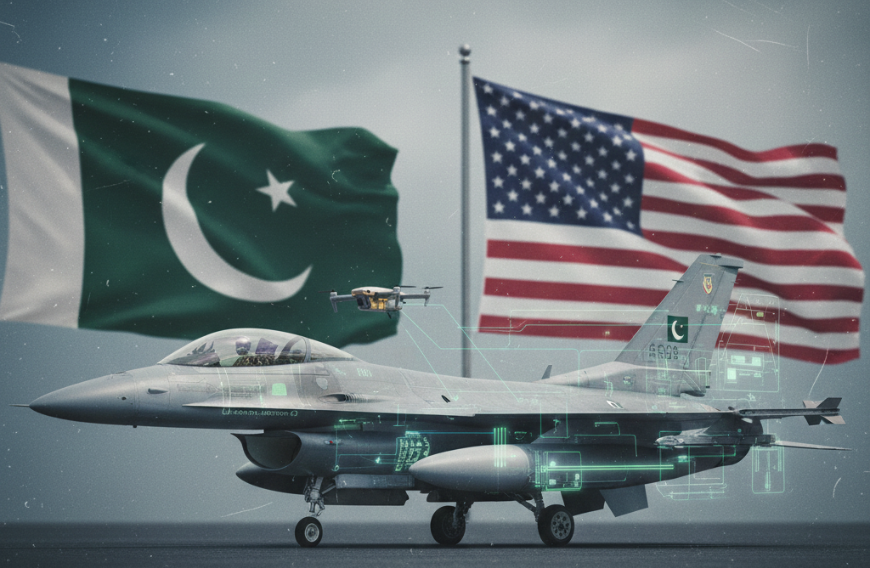
President Donald Trump is seemingly trying to bait India. Pakistani media reported on Wednesday that the Trump administration has informed Congress of a $686 million proposal to upgrade Pakistan’s F-16 fighter jets, triggering a 30-day review period and expected scrutiny from lawmakers, with India keeping a close watch.
The package, approved by the U.S. Defense Security Cooperation Agency (DSCA), included advanced avionics, Link-16 tactical data links, cryptographic equipment, training, and full logistical support.
The notification initiates a mandatory 30-day congressional review, allowing lawmakers to assess potential implications and raise concerns. The deal focuses on modernizing Pakistan’s existing Block‑52 and Mid-Life Upgrade (MLU) F‑16 fleet rather than providing the latest F‑16V or next-generation aircraft.
Key components of the upgrade include 92 Link-16 tactical data-links for secure, jam-resistant communications, enhanced avionics, cryptographic systems, identification friend-or-foe (IFF) devices, mission planning tools, and training and logistical support. The package also provides limited inert bomb bodies for integration testing. The U.S. emphasizes that these upgrades are aimed at extending the operational life of Pakistan’s F‑16s through around 2040 while ensuring interoperability with U.S. and allied forces, particularly for counterterrorism operations.
READ: Airbus claims recalled A320 jets have now been fixed? (
The announcement has prompted regional attention. India, which closely monitors Pakistan’s military capabilities, may view the deal with concern, although the sale is positioned as sustaining rather than significantly enhancing Pakistan’s air power. For the U.S., the move aligns with longstanding security and strategic interests in South Asia, maintaining ties with Pakistan while supporting ongoing counterterrorism efforts.
The administration stressed that the sale “will not alter the basic military balance in the region,” a line aimed at addressing longstanding Indian concerns.
Pakistan operates a fleet of U.S.-made F‑16 Fighting Falcons, primarily Block‑52 and Mid-Life Upgrade (MLU) variants, acquired under multiple contracts since the 1980s. These multirole fighter jets are capable of air-to-air combat, precision strikes, and reconnaissance missions, forming a key part of Pakistan’s air force. The aircraft feature advanced avionics, radar systems, and weapons integration, allowing interoperability with Western equipment and supporting modern operational requirements.
READ: Boeing delivers 55 Jets, up from 33 last year, but still trails Airbus (
Pakistan has invested in upgrades and maintenance programs to extend the service life of its F‑16s, including initiatives to integrate Link-16 tactical data-links, improved communications, and secure identification systems. The jets have been deployed in counterterrorism operations, air defense missions, and regional security scenarios.
The proposed F‑16 upgrade for Pakistan illustrates the broader dynamics of military cooperation and strategic planning in South Asia. Beyond the technical enhancements, the deal reflects how arms sales can serve as tools of diplomacy, signaling ongoing engagement between nations while balancing regional security concerns.
The upgrade serves as an example of how defense initiatives intersect with geopolitical considerations, shaping perceptions, alliances, and strategic calculations in the region. While the direct impact on the regional balance may be limited, the move reinforces the enduring role of military support and modernization in shaping national defense readiness and broader security policies.