


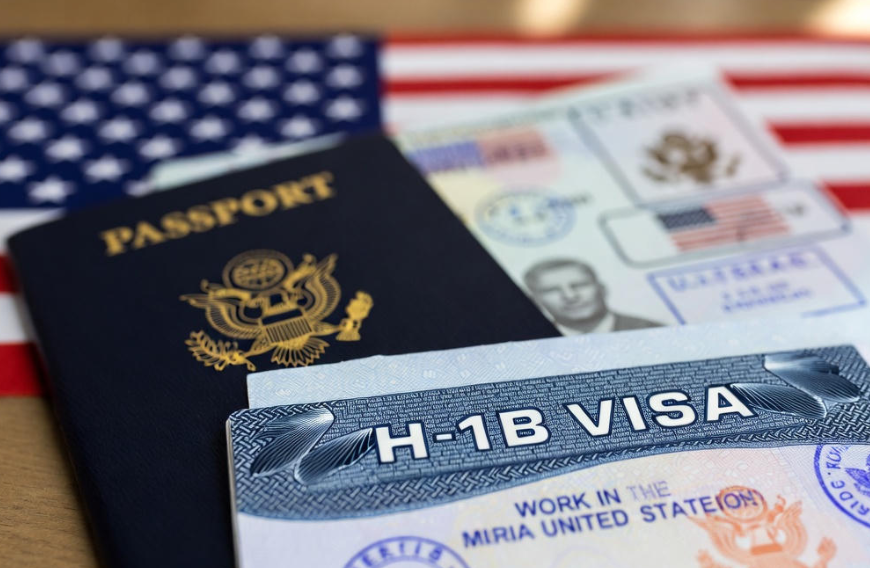
Despite emergency requests and persistent follow-ups, many H-1B holders stuck in India are unable to secure interview slots. With anxious professionals navigating a constantly shifting process, legal experts urge swift action to prevent further financial and emotional hardship for skilled workers caught in limbo.
Rahul, a senior executive at a global corporation currently in India, has found himself caught in the U.S. visa scheduling quagmire. Rahul traveled to India with his wife and a school-going kid on what the family thought would be a short trip to visit family and get their visa appointments.
Things looked smooth until they got their biometrics, but a sudden email threw their plans out of the window—their interview was postponed to March 2026. Rahul acted fast, as he knew that a gap of four months would have serious consequences on the family’s financial liabilities as well as the school routine for his kid. He received approval for an emergency U.S. visa request but is still struggling to secure an appointment slot. His days in India are spent making repeated calls to helplines and constantly refreshing embassy portals.
“It seems like there are some technical glitches on the visa scheduling system, and I am unable to view or book interview slots,” he says.
Rahul admits he is not alone. (Like others quoted in this story, he is using a pseudonym to protect his identity.) “There are dozens of us who have been waiting for a positive confirmation even after raising multiple support tickets, calling helplines, and sending follow-ups,” he says.
READ: H-1B visa delays push Indian applicants from January to September 2026 (
Amid a growing number of such cases, on Monday, the U.S. Embassy in India issued a “Worldwide Alert” for H-1B and H-4 applicants.
The statement, dated Dec. 22, said, “Beginning December 15, the Department of State expanded online presence reviews to ALL H-1B and H-4 applicants as part of standard visa screening. This vetting is being conducted globally for ALL applicants of ALL nationalities for H1-B and H-4 visas. It is an effort to address abuse of the H-1B program while still permitting companies to hire the best of the best temporary foreign workers. U.S. embassies and consulates continue to accept and process H-1B and H-4 nonimmigrant visa applications. We encourage applicants to apply as early as they can and anticipate additional processing time for these visa classifications.”
For Indians left waiting in India for new visa appointment dates, the challenges extend beyond pleading with employers for extended time off. Many, like Vinod, a fintech professional who finds himself in a similar situation, are facing personal and financial anxieties as well. He shared, “I am worried about my house and mortgage back in the U.S. I have called my neighbors to just periodically check if the house is secure, but I am worried about leaving the house unattended for so long.”
Those who just escaped this tumultuous turn of events consider themselves lucky and say that in the future they would keep all parameters in mind before planning a visit out of the U.S.
READ: H-1B challenges push Indian professionals to EB-1A (
Sneha, a young legal-tech professional on an H-4 visa, is based in California but was recently in India for her visa stamping. She admits that the past few weeks in India were a whirlwind of anxious moments. Even though Sneha considers herself extremely lucky, as she was able to escape the new H-1B and H-4 visa mass cancellations by just two days, she admits that the constantly changing rules have kept her on edge during her entire four-week-long India trip.
Talking to The American Bazaar over phone, Sneha says, “I had a fairly easy interview, where the consular officer asked me expected questions like ‘what I do’ and ‘where I am based,’ and after my answers, I was told that I would get my visa stamped in a week. But it looks like for many others, things just got worse from there. I was definitely anxious and counting every hour until I actually got my visa in my hand.”
Were there any specific preparation that she may have done that ensured there were no additional questions? Sneha says, “From my end I kept everything very honest and transparent. I had submitted all my social media handles, including the ones I may have made during school years, which I haven’t used since then. I kept the profiles public, and I also carried all my documents with me, just in case.”
While Sneha flew out of India after a smooth and positive visa experience, the struggle continues for many others. Legal experts are now calling for swift action by authorities to ensure that working professionals are not subjected to unnecessary hardship—one that takes a toll both financially and emotionally.