


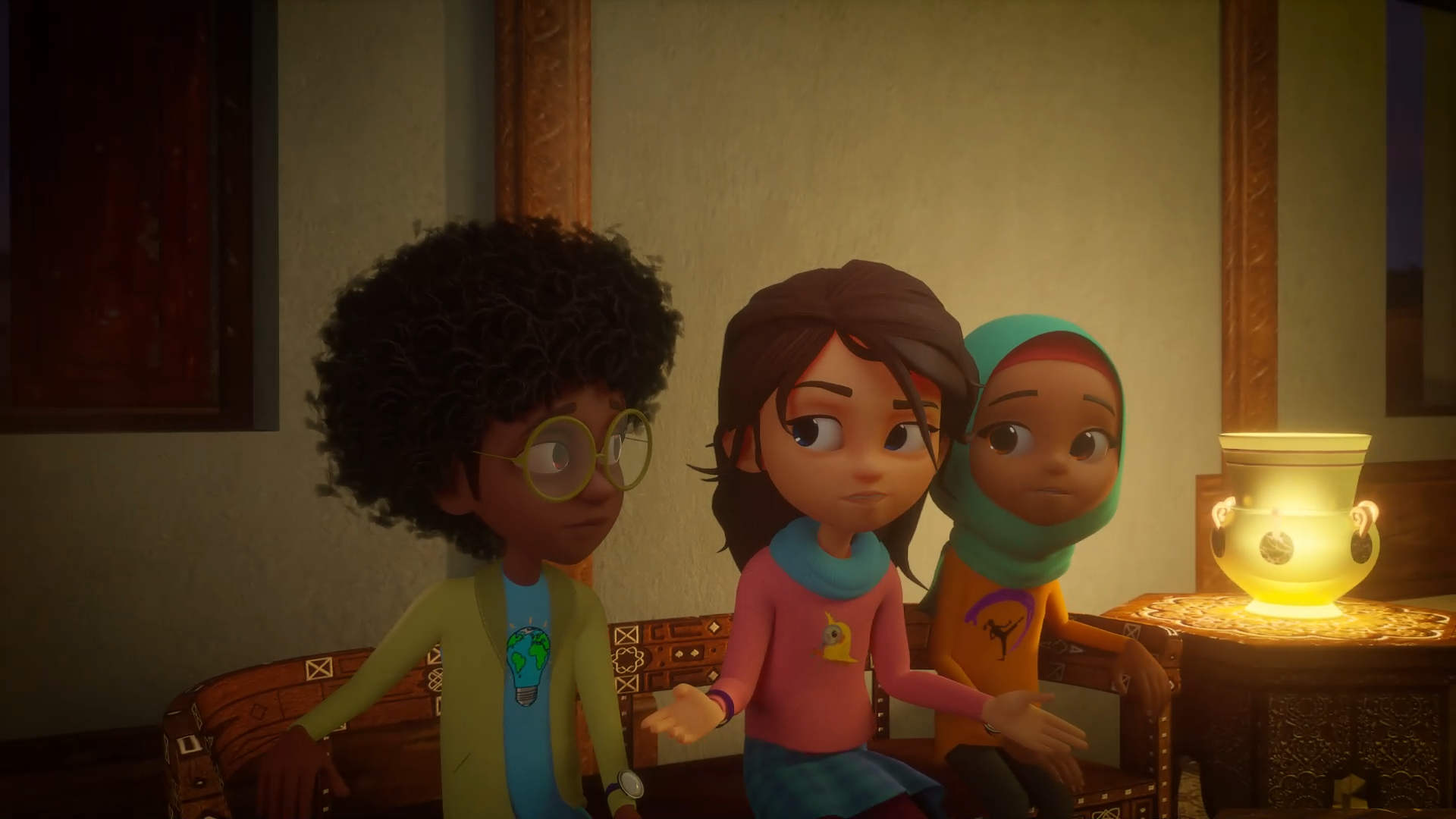
“With more than $1M in U.S. theatrical box office revenues on opening weekend, ‘Time Hoppers’ blew past expectations. … When you put quality content in front of an audience that’s been waiting for it, they show up.” — Ray Nutt, CEO, Fathom Entertainment
It’s not every day that a children’s animated film adapted from a mobile game offers more than entertainment. Yet, “Time Hoppers—The Silk Road,” now playing in theaters across the U.S., does exactly that. The feature film spotlights the extraordinary contributions of Muslim thinkers across disciplines from algebra to astronomy. And while doing so, it effectively opens a dialogue on representation and empowerment, particularly for BIPOC children.
Created by Milo Productions Inc. — the team behind Muslim Kids TV — “Time Hoppers” is also the first-ever Muslim animated feature to get a theatrical release in America. The film opens in 2050 and follows the journey of four gifted kids who time travel into the Golden Age of Islam. Their mission: to save legends like Al-Khwarizmi, the father of algebra; Ibn Al-Haytham, the pioneer of optics; Maryam Al-Astrolabi, the trailblazing astronomer; and Mansa Musa, the science and arts vanguard—from an evil alchemist.
What originally began as an animation series on Muslim Kids TV was then adapted into a popular mobile game, downloaded over 100,000 times in the first three months—pointing towards a huge demand in a largely untapped Muslim market.
The feature is directed and co-written by Flordeliza Dayrit, who is also the CCO and co-founder of Muslim Kids TV. On the response she received, Dayrit said, “The film was ranked in the top 10 in the U.S. on the weekend of its release. We ranked first in per-screen averages. Initially released for two days, the theaters began adding additional shows when they saw a huge demand.”
The film currently holds an 8.5 rating on IMDb and was selected for the Doha International Film Festival’s outdoor and educational programs.
“The ‘Time Hoppers’ rollout over the last couple of months is the result of nearly ten years of hard work within our company to bring this film to life. From the very beginning, our goal was simple: we wanted Muslim children and families to see themselves represented on the big screen,” said Mohammed Hezam, business development manager at Muslim Kids TV.
The entertainment industry is built around big budgets, marketing prowess, and commercial viability. In an industry so entrenched in profit margins, independent films often lose to theater economics and distribution challenges. Did the makers encounter any of this? Michael Milo, Producer of Time Hoppers and CEO and co-founder Muslim Kids TV, said, “The biggest challenge we faced was finding a distributor who believed in the project. There were a lot of factors going against us. Big studios have huge marketing budgets and brand partnerships, and no distributor would want to take a chance on an indie project with miniscule marketing budget.” But Fathom Entertainment showed interest.
Milo added, “Fathom has long been working with very specialized types of theatrical releases and events, including The Metropolitan Opera’s award-winning series Live in HD and last year’s Fathom Fan Favorites for the first four Harry Potter films. They also had a lot of success with Christian movies, and they wanted to understand our project.” The partnership followed a due diligence process with months of studying detailed marketing plans and strategies.
Ray Nutt, CEO of Fathom Entertainment, told The American Bazaar. “We are always looking to partner with filmmakers whose content resonates with passionate fanbases and communities. When we connected with Gabriel (COO, Milo Productions) and his team, we were intrigued, as they had a family-friendly project with a wide range of appeal to a large and underserved audience hungry for content that reflected their heritage and customs.”
READ: Ex-Meta employees launch entertainment platform to connect creators and audiences (August 8, 2025)
He added, “The heart of the story and strength of the community behind it made this an easy decision.” The faith paid off. Dayrit said, “The response exceeded all of our expectations. When we started, we had heard that independent movies get only 50 screens. We were hoping that we could get 200 screens, but we were ecstatic to find that we ended up with 660 theaters across the U.S. Many of them, being multiplexes, are running the film in more than one auditorium with many showtimes.”
Michael adds, “Before this, we were only in one cinema in Canada, but after the success in the U.S., the largest cinema chain in Canada approached us.”
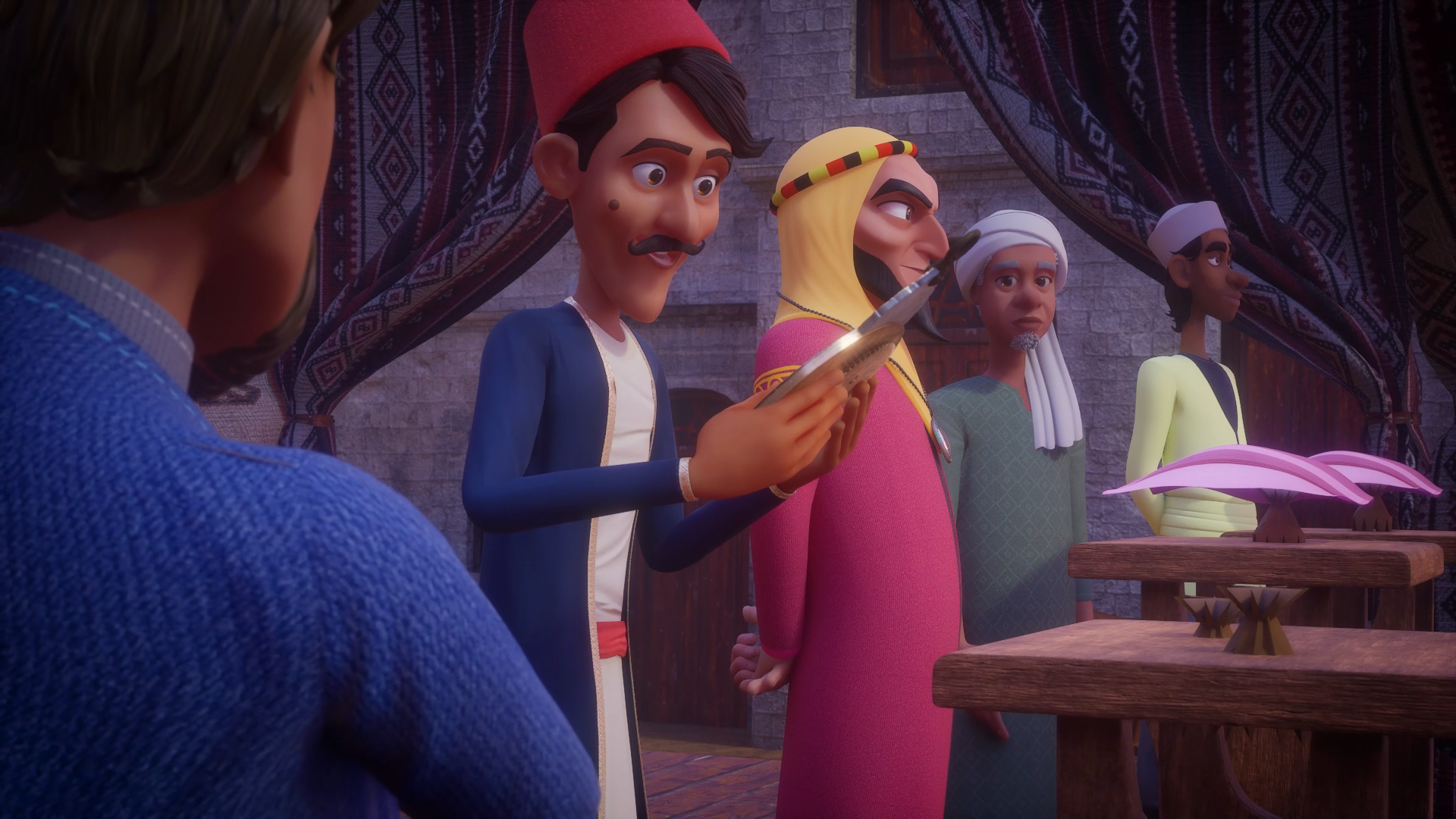
The experience has been as enriching for the artists involved too. Houston, Texas-based mother-son duo Aliyah and Ahmad Harris play the voice-over artists for the characters of Hafsa and Mansa Musa, respectively. Dean Hafsa is an academy administrator just like Aliyah Harris herself in real life, who is a director of education. Her favorite dialogue in the movie: “My students are problem solvers, and they will help us achieve our goals.” In a serendipitous way, Aliyah has been saying the same to the kids at her school for years.
For Ahmad, doing the voice-over for Mansa Musa came with an additional challenge—that of adopting a West African accent. “I was familiar with the story of Mansa Musa, so it helped,” he said. Ahmad, a surveillance epidemiologist by profession, also feels fortunate that his mom convinced him to do the project. “From the time we recorded at individual booths in a Houston studio to the time we walked inside a theater full of kids clapping and cheering for my mom, it has been so gratifying that I got to share a historic moment with her.”
There have been episodes of emotional relatability too. As Ahmad said, “Some incidents in the movie were situated in Syria. For me those parts felt more meaningful and personal, as my wife is from Syria.”
While the positive response for the movie suggests that it resonated meaningfully across culture and faith lines, why could it have taken this long for positive Muslim stories to be told on screen? Dayrit said, “We have been afraid to tell our own story. When we were releasing the movie in the Middle East, I was told multiple times that no one would want to watch a story about Muslim legends. I think the movie gives this message—to be brave and not give up. We hope it creates more opportunities for such stories to be told.”
Milo added, “There has been so much Islamophobia. Also, there haven’t been many Muslims in the industry. But certainly, this movie is a case study that if we produce quality content, it becomes self-sustaining.”
The filmmakers also believe that the movie is for everyone. People from all faiths and backgrounds can relate to it. Milo said, “If you look at the schools in America, they are no longer dominated by just white kids, so it is much more reflective of the current times. The streaming services have enabled us to consume universal stories that connect us—whether they are a Korean, Chinese, or Turkish sitcom—so we are more open-minded to stories from around the world now.”
With Ramadan around the corner, the filmmakers are hoping for an Eid re-release. And as for future, Ray Nutt said, “This film is proof that there is real demand for stories that celebrate diverse perspectives and bring families together in the theatre. We are looking forward to seeing where this story goes from here — for the film, for the franchise potential, and for the community it represents.”