



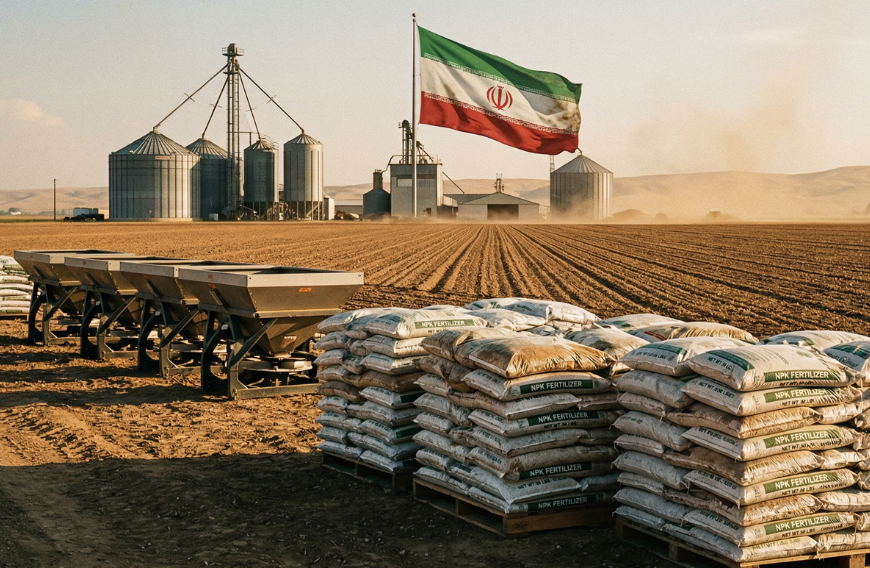
The war in Iran is causing trouble for farmers on U.S. shores. The war in Iran is pushing up prices for already-strained farmers, with higher costs for fertilizer and energy on top of last year’s tariffs.
“When farmers face supply shortages or major price increases, those impacts ripple through the entire food chain,” said Zippy Duvall, president of the American Farm Bureau Federation, at a press conference two weeks ago.
“The writing was on the wall that there was probably going to be an increase in fertilizer prices heading into the spring,” said Josh Boxell, who grows corn and soybeans 50 miles north of Indianapolis.
As per CNN, even as farmers earn less for their crops, consumers find themselves paying more for groceries — a trend that many economists attribute to America’s food supply chain, and with the war in Iran, Americans could see higher prices for produce, meat and dairy aisles because of surging fuel costs.
“The farmer’s really not seeing an increase in our goods sold, but everybody’s seeing the increase at the grocery stores,” Boxell said.
READ: Impact of the Iran War on the global economy — an energy scarcity (March 17, 2026)
“The joke was that the check barely hit the farm before it went out the door to the fertilizer dealer,” said Aaron Lehman, who grows a variety of cereals and serves as the president of the Iowa Farmers Union.
Agriculture, which depends heavily on global supply chains for inputs and transportation, becomes especially vulnerable when disruptions occur far beyond national borders. These pressures can strain not only producers but also the broader systems that support food distribution and pricing.
The evolving conditions may also prompt a reassessment of how resilient current agricultural models are to sudden global disruptions. Farmers, policymakers, and industry stakeholders could increasingly look toward diversification of supply sources, alternative inputs, and more localized production strategies to reduce exposure to international volatility. At the same time, governments may face growing pressure to intervene more actively, whether through policy adjustments, subsidies, or trade flexibility, to stabilize critical sectors.
As per CNN, when asked about the rising cost of fertilizer, the White House said it would allow Venezuelan fertilizer to be imported to the United States. The regulation went into effect this month, but it’s unclear how much fertilizer Venezuela can produce or how much of it would come to the U.S.
READ: India faces energy risks as Hormuz closure disrupts global oil flows (
There is also a longer-term implication for consumers and markets. Persistent instability can contribute to uneven price transmission, where cost increases are felt more sharply at later stages of the supply chain, though the extent of this effect may vary. This dynamic may fuel broader concerns about affordability and food security, particularly if disruptions become prolonged or recurrent.
The situation reflects a broader reality: in an interconnected global economy, localized conflicts can generate far-reaching economic consequences. Addressing these challenges will likely require not only short-term responses, but also more durable strategies aimed at improving resilience, adaptability, and coordination across the entire food system, the effectiveness of which may differ depending on policy execution and global conditions.
As uncertainties persist, decision-makers may need to weigh short-term relief measures against longer-term structural reforms aimed at reducing vulnerability to external shocks. This could include investments in sustainable farming practices, technological innovation, and more efficient resource management. However, the pace and effectiveness of such changes will likely vary across regions and depend on economic, political, and environmental factors, making outcomes difficult to predict with certainty.