



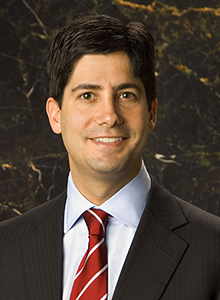
It looks like Federal Reserve Chair nominee Kevin Warsh may have quite a few lucrative holdings in various businesses. As per Reuters, holdings in Elon Musk’s SpaceX company and predictions platform Polymarket are among dozens of future-oriented assets that Warsh lists on a newly filed financial disclosure that shows dozens of apparently small bets on a wide array of emerging and almost science fiction-sounding ventures.
Who is Kevin Warsh?
Kevin Warsh is an American economist and former Federal Reserve governor who has been nominated in 2026 as a candidate for Chair of the U.S. Federal Reserve. He previously served on the Federal Reserve Board of Governors from 2006 to 2011, where he worked during the global financial crisis and focused on financial stability and monetary policy operations. Before his Fed role, he worked in the private sector at Morgan Stanley and also served as a White House economic adviser under President George W. Bush.
READ: Trump threatens to sue Federal Reserve Chair Jerome Powell for incompetence (December 30, 2025)
Warsh is widely regarded as a “monetary hawk,” meaning he generally supports tighter monetary policy to control inflation, even if it comes at the cost of slower short-term economic growth. This position has made him a prominent voice in debates over interest rates and inflation control. After leaving the Fed, he became involved in academia and policy research, including work at the Hoover Institution at Stanford University.
His nomination for Federal Reserve Chair has drawn significant attention because the Fed plays a central role in setting U.S. interest rates and managing inflation. Supporters argue that his experience in both markets and policy makes him well qualified, while critics question whether his policy stance is too restrictive for current economic conditions. His appointment outcome is expected to have major implications for global financial markets, interest rate expectations, and economic policy direction in the United States.
As per Reuters, Warsh’s major holdings put his assets at well over $100 million, including two $50-million-plus holdings in the Juggernaut Fund LP, apparently part of Warsh’s work advising for the Duquesne Family Office, the private investment firm of Stanley Druckenmiller.
The disclosure of Kevin Warsh’s extensive financial interests highlights the broader issue of how senior economic policymakers often maintain deep ties to private markets even while being considered for top public roles. Such holdings are not unusual among individuals with long careers in finance and investment, but they can raise questions about potential conflicts of interest, especially in positions that directly influence monetary policy, regulation, and financial stability. In Warsh’s case, the presence of investments linked to emerging technologies and high-growth sectors reflects the increasingly interconnected nature of modern finance, where venture capital, private equity, and innovation-driven assets play a growing role in wealth creation.
Financial disclosures serve an important transparency function, allowing lawmakers, regulators, and the public to assess whether appropriate safeguards are in place. If confirmed, a nominee in such a position would typically be required to divest certain holdings or place assets into blind trusts to avoid any perception of undue influence or policy bias.
READ: Central banks rally behind Fed chair Jerome Powell amid clash with Trump (
The debate surrounding Warsh’s financial profile also reflects a larger tension in economic governance: balancing expertise drawn from private-sector experience with the need for impartial decision-making in public office. As financial markets evolve and new asset classes emerge, this tension is likely to become more pronounced in future nominations.
The focus of the confirmation process will extend beyond individual investments to broader questions of credibility, independence, and judgment in managing the U.S. central bank. The outcome will be closely watched by markets, as leadership at the Federal Reserve has significant implications for interest rates, inflation expectations, and global financial stability.