



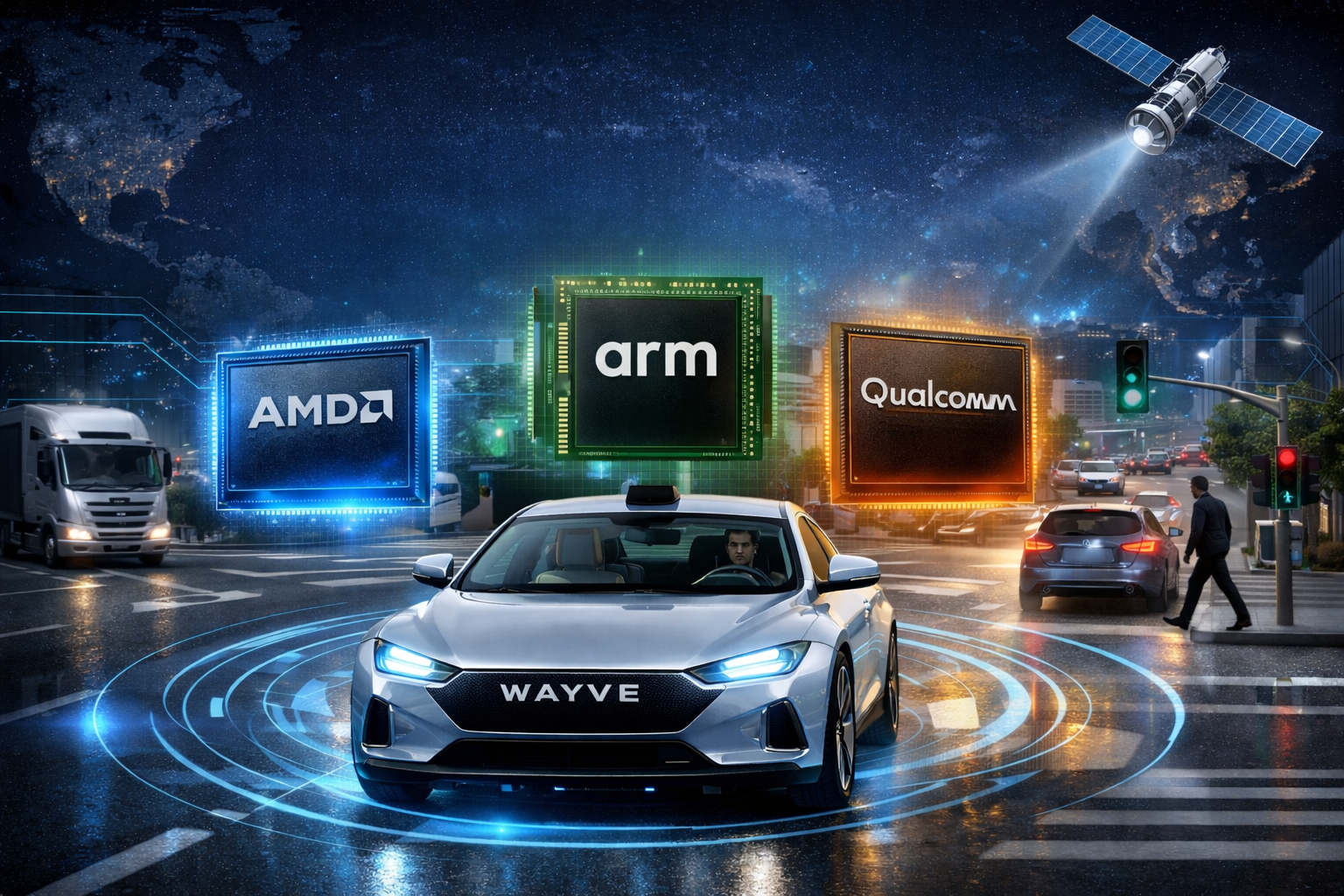
A high-profile alliance of chipmakers is accelerating the race toward autonomous driving, as Advanced Micro Devices, Arm Holdings, and Qualcomm invest millions into U.K.-based startup Wayve, underscoring growing momentum behind AI-powered mobility.
According to TechCrunch, the companies have collectively invested $60 million into Wayve as part of an extension to its $1.2 billion Series D funding round, a move that signals deepening confidence in advanced driver-assistance systems (ADAS) and automated driving platforms.
This investment highlights how semiconductor firms are increasingly shaping the future of transportation. By backing Wayve, these companies are positioning themselves at the core of AI-driven vehicle systems, where computing power and efficient chip design are critical to enabling real-time decision-making in autonomous environments.
READ: Allbirds stock swings as firm eyes AI Pivot (April 15, 2026)
Wayve has attracted attention for its unique approach to automated driving, relying heavily on embodied AI and machine learning rather than traditional rule-based systems. Its platform is designed to scale across vehicle types while improving through continuous data learning, a capability that aligns closely with next-generation ADAS development.
The involvement of AMD, Arm, and Qualcomm reflects a strategic convergence of hardware and software ecosystems. AMD brings high-performance computing strength, Arm contributes energy-efficient chip architectures widely used in automotive systems, and Qualcomm adds expertise in AI, connectivity, and in-vehicle platforms.
Beyond capital, the partnership suggests broader strategic implications. Industry analysts see the move as a precursor to deeper collaboration or even future merger activity, as chipmakers seek tighter integration with autonomous driving software providers.
READ: United and American Airlines merger could reshape US aviation (April 15, 2026)
The timing is notable. Automakers are rapidly transitioning toward software-defined vehicles, increasing demand for scalable, AI-driven solutions. Investments like this one could help bridge the gap between today’s ADAS capabilities and fully autonomous driving.
Wayve’s growing backing also places it among a new generation of startups challenging established players in the autonomy space. As competition intensifies, alliances between chipmakers and AI startups may determine which platforms emerge as industry standards.
In the evolving mobility landscape, this investment signals a clear shift: the future of driving will be defined as much by silicon and software as by the vehicles themselves.