



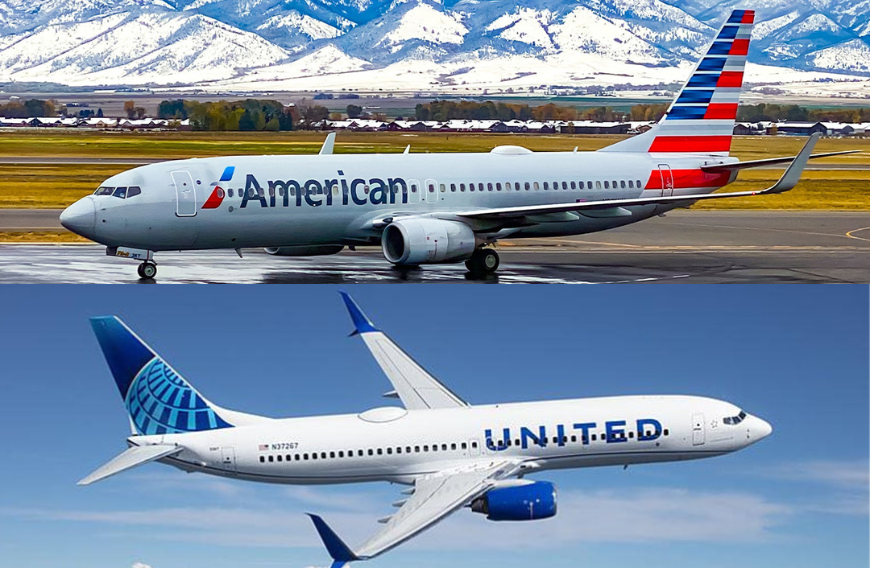
A potential merger between United Airlines and American Airlines is intensifying scrutiny across the U.S. aviation sector, as policymakers and analysts warn that such a deal could dramatically reshape competition and pricing for air travel.
The proposal—reportedly floated to the White House earlier this year—would combine two of the nation’s largest carriers into a single dominant entity. Analysts estimate the merged airline could control close to 40% of the American aviation industry, raising serious concerns about a “market monopoly” and reduced competition.
Critics argue the implications for travelers could be significant. One expert told CNN, “Fewer choices mean higher ticket prices, more fees, and fewer options for anyone who wants to get from point A to point B.” This highlights a core concern that reduced competition often leads to higher fares and diminished service quality, especially on routes where airlines already overlap heavily.
READ: Major airlines call for shutdown end as 4,000+ flights canceled across nation (March 17, 2026)
Others have been even more blunt about the scale of the potential consolidation. “The fact that we would even be having a serious discussion about a single US carrier controlling nearly 40% of the market is beyond absurd.” This underscores how unprecedented such a merger would be, signaling a level of market concentration never seen before in U.S. aviation history.
Supporters of consolidation, however, point to mounting economic pressures. A significant rise in fuel costs is one of the justifications. The recent surge in jet fuel prices tied to geopolitical tensions has squeezed airline margins and increased the appeal of cost-sharing through mergers. Larger, consolidated airlines could better absorb such shocks, streamline operations, and compete more effectively with international carriers.
READ: Massive IndiGo meltdown brings India’s aviation system to its knees (December 5, 2025)
Yet, the impact on smaller aviation companies could be severe. Regional and low-cost carriers rely on competitive gaps left by major airlines. A United-American merger could close those gaps, making it harder for smaller players to secure routes or maintain pricing advantages. In some cases, it could force consolidation or exit from the market altogether.
Regulators are expected to scrutinize any deal intensely. Past attempts at airline consolidation have faced opposition over fears of higher prices and reduced consumer choice. Given the scale of this proposal, approval is far from certain.
For now, the idea remains speculative. But even the prospect of such a merger signals a pivotal moment for the industry that could redefine competition, reshape the market, and determine how Americans fly for years to come.