



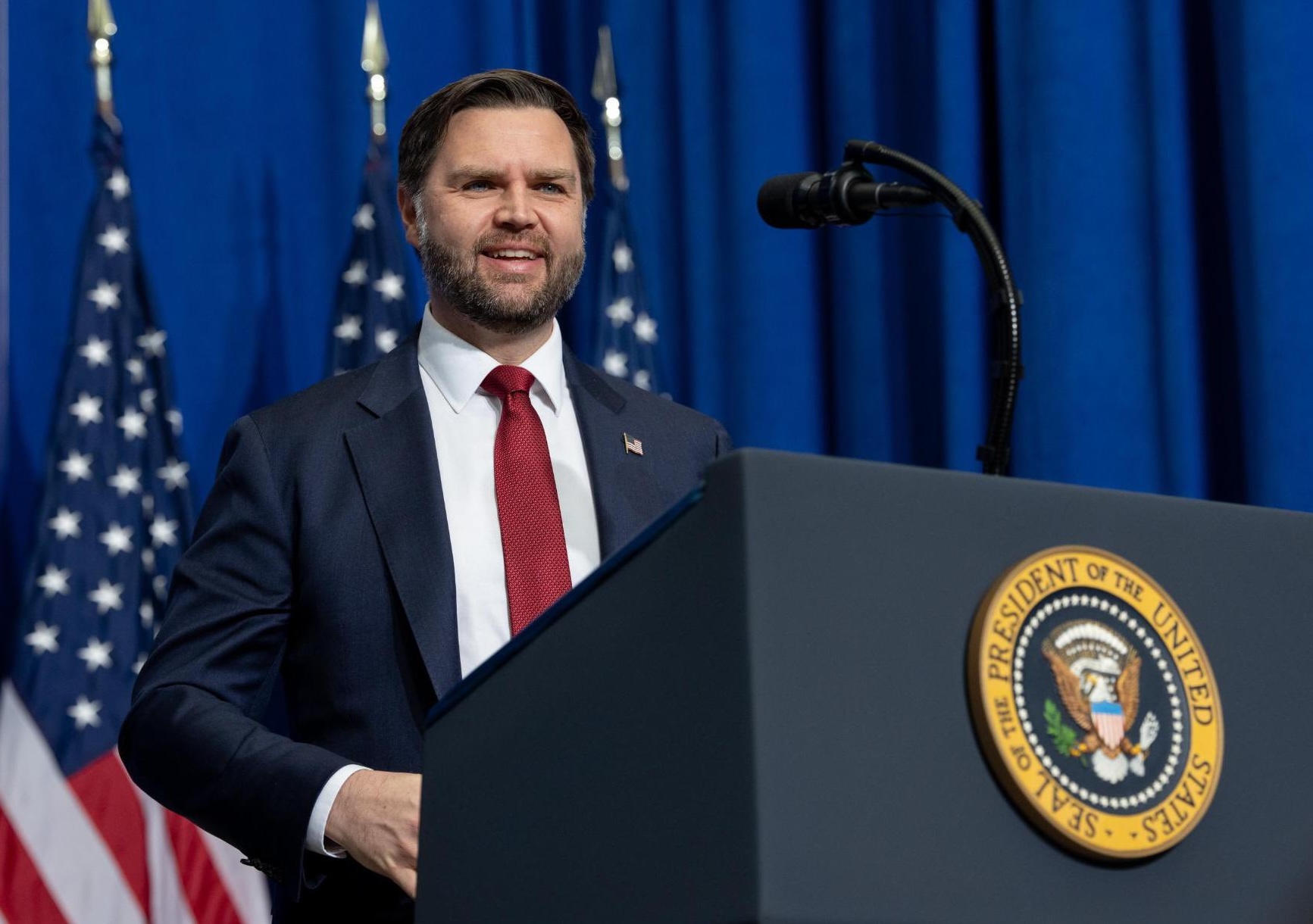
Vice President JD Vance on Wednesday emphasized a dual message on immigration, praising the contributions of immigrant families while calling for stricter expectations around national loyalty and visa oversight.
“I am married to the daughter of immigrants from India, and I love my in-laws. They’re great people and have been great contributors to the USA,” he said at Turning Point USA event in Athens, Georgia on Tuesday.
In remarks that circulated widely online, Vance pointed to his own family ties, noting that he is married to the daughter of Indian immigrants. He described his in-laws as valued contributors to American society, underscoring what he framed as the positive impact many immigrants have had on the country.
“But I also think when you become an American citizen, whether your family is nine generations of lineage, or whether your family has fewer generations of lineage in the United States, one responsibility we must expect of citizens is you have to think about the best interests of the country and not the one you came from beforehand […] you have got to think of yourself as an American. The system only works if everyone thinks of themselves as Americans,” he said.
“My father-in-law moved to the United States, got an education, and became an American citizen. Never once in my life did he say you have to do this or that because it is in the best interests of the country I came from. To the extent that attitude dominates among the new generation of Americans, it makes people feel more welcoming—whether your family has been here for 300 years or one second. Being American means putting America first. That is what we have to fix in our immigration policy,” Vance added.
At the same time, Vance said concerns about abuse within the H-1B visa program should not be dismissed. The program allows U.S. employers to hire foreign workers in specialized fields, particularly in technology and engineering. Critics have long argued it can be misused, while supporters say it helps fill critical labor gaps.
“You can believe that there’s a lot of H-1B fraud, while also believing people have come to the US who have enriched this country,” Vance said.
Vance said both realities can coexist, that flaws in the system may exist even as immigrants continue to strengthen the country economically and culturally.
His comments also turned to the responsibilities of citizenship. Vance argued that individuals who live in the United States, particularly citizens, should prioritize the country’s interests above those of their nations of origin.
The remarks reflect an ongoing debate in Washington over how to balance immigration enforcement with recognition of the role immigrants play in the U.S. economy. Lawmakers from both parties have raised concerns about visa integrity, even as businesses continue to rely on foreign talent.
Vance did not outline specific policy changes in his comments but reiterated the need for what he described as a clearer alignment between immigration policy and national interest.
The statements quickly gained traction on social media, drawing a mix of support and criticism. Supporters highlighted his acknowledgment of immigrant success stories, while critics questioned how his views might shape future immigration policy.
As immigration remains a central political issue, Vance’s remarks illustrate the challenge of addressing enforcement concerns without dismissing the contributions of immigrant communities across the United States.