



By Pragya Raj Singh
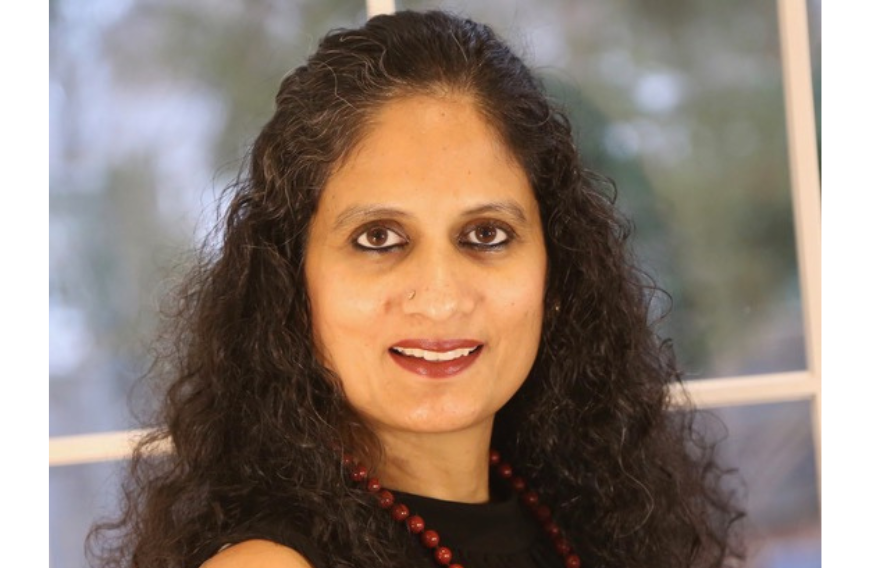
On a crisp fall morning in Brookline, MA, I sat down with Tara Ollapally over coffee and a Bruegger bagel to talk about something most of us try to avoid: conflict. What unfolded was not just a conversation about law or policy, but about people, relationships, and the quiet ways in which justice is experienced in everyday life.
In a country where millions of disputes move slowly through overburdened courts, the question is not only how justice is delivered, but how it feels. For Ollapally, co-founder of the Centre for Advanced Mediation Practice (CAMP), the answer lies in shifting how people engage with conflict itself, moving from adversarial systems toward dialogue, dignity, and resolution.
Trained in human rights law in the United States and a graduate of Columbia Law School, Ollapally returned to India at a time when mediation was still emerging. What began as a professional pivot evolved into a deeper commitment to building mediation as a credible, accessible, and people-centered alternative.
Since co-founding CAMP in 2015, she has worked across family, commercial, and community disputes, helping shape both the practice and the broader imagination of mediation in India. Today, as the Mediation Act, 2023 opens new pathways for institutional and community-led models, her work is focused on ensuring justice is not only efficient, but humane and grounded in lived realities.
In this conversation, Ollapally reflects on her journey, the evolution of mediation in India, and what it will take to build a culture where dialogue becomes the first step, not the last resort.
Pragya Raj Singh: You began your career in human rights law in the United States and later chose to invest deeply in mediation work in India. Was there an early experience or moment that made you feel mediation could play a meaningful role in how disputes are resolved here?
Tara Ollapally: I moved back to India in 2011 after nearly a decade in the United States, and quite honestly, I stumbled into mediation. My mother, a litigating lawyer, had been involved in setting up one of India’s earliest court-annexed mediation programs, and was beginning to think about how to professionalize the field and take it beyond the courts. She invited me to help build what would eventually become a private mediation center. At that stage, with three young children, flexibility mattered, and in true mediator fashion, she created the space for me to step in. The rest followed.
READ: Stecs Founder Habeeb Gbenle on building ethical fintech for underserved communities (April 16, 2026)
But my deeper conviction came from an earlier experience. During law school, I spent time in my mother’s office and remember a case involving a young widow whose husband had died due to municipal negligence. Years later, after I had returned to India, she walked into our office again, this time having finally won her case in the Supreme Court after 15 years.
She brought sweets, but she did not feel like a “winner.” The years of litigation had taken a deep toll, and the compensation came too late to meaningfully change her life. That stayed with me. As someone trained in human rights law, I believed in rights deeply, but this experience revealed the limits of the system in delivering timely, humane outcomes. It opened my mind to the possibility of resolving disputes earlier, in ways that feel more responsive to people’s lived realities.
When you co-founded CAMP, mediation in India was still relatively unstructured outside court-annexed systems. What gaps did you notice at the time, and how have you seen the practice and ecosystem mature over the years?
When we co-founded CAMP in 2015, mediation in India was still largely unknown outside a few court-annexed systems. People would walk into our center with meditation mats, thinking we offered meditation classes. Beyond awareness, there were gaps in institutional frameworks, trained professionals, and a shared understanding of mediation as a credible, standalone process.
Since then, the ecosystem has evolved rapidly. The Mediation Act, 2023 is a pivotal milestone, giving mediated settlements the status of court decrees and recognizing institutional, community, and online mediation. Infrastructure has expanded across courts and private institutions, and since 2018, an estimated 2 to 2.5 million cases have been mediated.
Most importantly, there has been a shift in mindset. Mediation is no longer experimental. There is growing confidence that it can work across a wide spectrum, from commercial and family disputes to workplace and community conflicts.
With the Mediation Act, 2023, India is entering a new chapter. What gives you optimism about this moment, and what steps do you believe are critical for the Act to translate into meaningful change on the ground?
With the Mediation Act, 2023, India is entering a new chapter, and what gives me optimism is how deeply mediation already resonates with our people. While we are often described as a hierarchical and authority-oriented society with strong faith in the judiciary, my experience suggests that when people are given a genuine opportunity to participate in shaping their own outcomes, they step into that role with surprising ownership.
Mediation also aligns naturally with a culture that prefers to keep conflict private, values relationships—even in commercial settings—and seeks dignity in how those relationships evolve or end. At the same time, the sheer pressure on the justice system, with millions of pending cases and long delays, creates an urgent demand for effective alternatives. Importantly, the idea of facilitated dialogue is not new to us; it is rooted in longstanding community practices of respected elders helping resolve disputes.
For the Act to translate into meaningful change, however, a few steps are critical: building trust in the process through consistent quality and ethical standards; investing in the training of mediators, lawyers, and judges so they understand not just the process but its potential; creating awareness among users so mediation is seen as a first, not last, resort; and ensuring institutional support so that mediation is accessible, credible, and seamlessly integrated into the broader justice system.
A significant part of your work now focuses on community-rooted mediation. Why does justice need to be embedded in everyday spaces, and what makes community-led mediation models especially important in the Indian context?
Justice becomes meaningful only when it is accessible in the everyday spaces where people live and work, rather than confined to distant courts that remain slow, costly, and intimidating for many communities, an enduring reality across much of India. Community-rooted mediation represents a systems change opportunity – shifting dispute resolution from adversarial, institution-centred processes towards participatory, locally-owned mechanisms that are useful and meaningful to the people they are meant to serve.
READ: In conversation with Ray Wang: ‘You have to decide what not to do’ in the AI era (March 27, 2026)
In India, where structural exclusion and an overburdened judiciary leave millions without meaningful legal recourse, community-led mediation offers a credible and inclusive alternative. The Mediation Act 2023 marks a pivotal inflection point, providing legal legitimacy and enforceability to mediated outcomes whilst creating enabling conditions for community-based models to flourish. Prime Minister Modi’s public endorsement of mediation as a people-centred mechanism, alongside growing recognition from lawyers associations, signals genuine systemic appetite for this shift.
By resolving disputes at the community level, this approach strengthens social trust, reduces escalation and builds community cohesion from the ground up. Crucially, community mediation complements rather than supplants formal systems, ensuring appropriate safeguards remain in place for complex or high stakes matters. The time is right to invest significantly into building this muscle in India – there is a rare confluence of policy readiness, grassroots demand, and structural opportunity to resource a durable shift in how justice is experienced across India.
Power imbalance remains a persistent challenge, particularly for women, Dalit and Adivasi communities, and informal workers. How can mediators actively safeguard fairness and dignity when structural inequality exists at the mediation table?
Power imbalance is not incidental to conflict in India especially in communities shaped by caste, gender, and class inequality – it is often the very substrate of it. When someone from a marginalised community sits across the table from a landlord, an employer, or an upper-caste neighbour, the asymmetry they carry into that room is centuries old. Addressing it requires mediators to move well beyond procedural neutrality. Our approach prioritises the empowerment of each party and genuine mutual recognition ; not merely securing a settlement at any cost. We work closely with the parties to shape the process in a manner that feels safe for them – this is particularly relevant when one party has historically been silenced or conditioned to defer.
We also recognise that advocacy and legal awareness must often precede mediation where power is deeply unbalanced. Women, Dalits, Adivasis, and informal workers need to understand their rights before they can meaningfully exercise them at a mediation table. Pre-mediation coaching and caucus sessions, where we meet each party separately, allow less powerful participants to articulate their concerns safely, without social pressure or intimidation shaping what they say. When power imbalances are not actively designed for, mediation risks being ineffective or producing unsustainable settlements.
Mediators trained in gender and caste sensitivity can reframe disputes from positional bargaining towards shared interests, shifting the dynamic from coercion to genuine dialogue. Agreements that are vountarily arrived at and are legally enforceable under the Mediation Act 2023 further strengthen weaker parties, converting that dialogue into durable, binding commitments rather than promises that dissolve under pressure. Representation also matters deeply with mediators drawn from or closely connected to the communities they serve bringing cultural competence and contextual trust that external facilitators rarely can replicate.
Having worked across family, commercial, and community disputes, and having engaged with mediation practices globally, what have you learned about mediation as a way of thinking rather than only a legal tool? What shifts are needed for mediation to be seen as an early option rather than a last resort in India?
I’ve come to see that conflict is inevitable—but how we engage with it makes all the difference. Mediation is not just a process; it is a way of thinking. It shifts us from positions to understanding, from reacting to listening, and from winning to resolving.
When that mindset takes hold, it shows up everywhere—in families having difficult conversations instead of avoiding them, in workplaces addressing issues early rather than letting them escalate, and in communities learning to hold differences without breaking relationships.
For mediation to be seen as an early option in India, the shift has to be cultural as much as institutional. We need to normalize addressing conflict early. Lawyers and advisors play a key role in framing mediation as a thoughtful first step. And people need to experience quality mediation to build trust in the process.
Ultimately, the goal is to create a culture where choosing dialogue early is seen as a sign of strength—not a last resort.
(Pragya Raj Singh is a next-generation global social entrepreneur dedicated to innovation and grassroots impact.)