



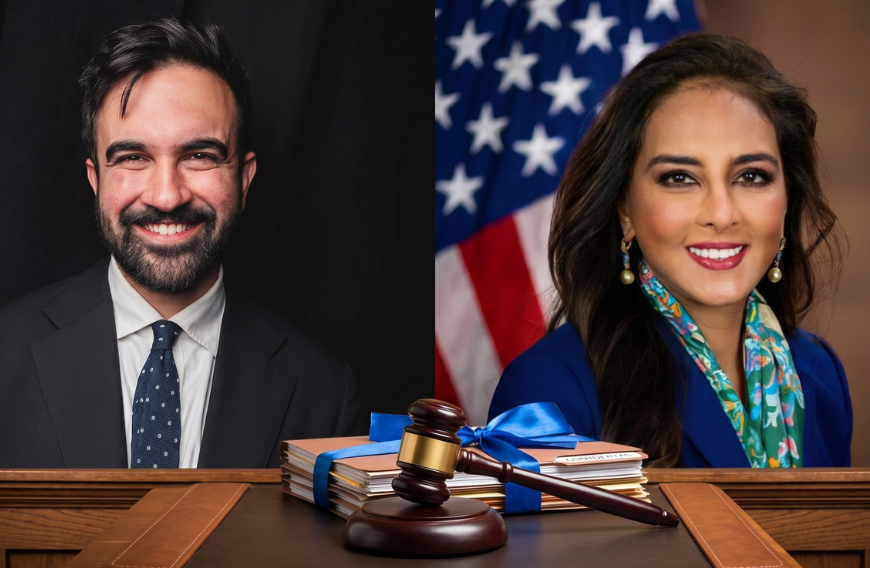
A potential legal clash is emerging after Harmeet Dhillon, the Assistant Attorney General for Civil Rights, publicly warned she may pursue a case against New York mayoral candidate Zohran Mamdani over a controversial policy remark tied to race in 2025.
In a post shared on X, Dhillon indicated that Mamdani’s past comments, linked to a June 2025 opinion piece discussing a race-based tax proposal, could violate civil rights protections. The statement signals a rare instance of a federal civil rights official directly calling out a local political figure, raising the stakes in an already polarized policy debate.
The controversy centers on Mamdani’s association with a proposal discussed in a New York Post opinion article, which outlined a tax approach critics described as explicitly tied to racial categories. Dhillon suggested such ideas, if implemented, could face legal scrutiny under federal anti-discrimination laws designed to ensure equal treatment regardless of race.
READ: Harmeet Dhillon questions NYC’s new mental health unit for inmates (April 7, 2026)
Legal experts note that while political rhetoric often pushes boundaries, translating such proposals into policy can trigger constitutional challenges. Civil rights law in the United States generally prohibits government actions that treat individuals differently based on race unless they meet strict judicial standards. Dhillon’s warning underscores how quickly campaign ideas can become legal flashpoints.
Mamdani, a progressive figure in New York politics, has previously advocated redistributive economic policies to address inequality. Supporters argue that such proposals reflect broader efforts to tackle systemic disparities, particularly in cities with deep socioeconomic divides. Critics, however, contend that explicitly race-based measures risk violating both legal norms and public trust.
The dispute also reflects a broader cultural and political divide in the U.S., where debates over equity, taxation, and identity increasingly intersect with legal frameworks. Similar tensions have surfaced in discussions around policing, detention practices, and deportation policies, where civil rights considerations frequently collide with government authority.
READ: Obama meets Mamdani in Bronx childcare visit (April 19, 2026)
While Dhillon has not formally filed a case, her public statement signals that federal scrutiny could intensify if the issue advances beyond rhetoric. Any legal action would likely test the boundaries between policy innovation and constitutional limits.
As the situation develops, the clash highlights a central question in American governance: how far policymakers can go in addressing inequality before crossing into legally prohibited territory.