



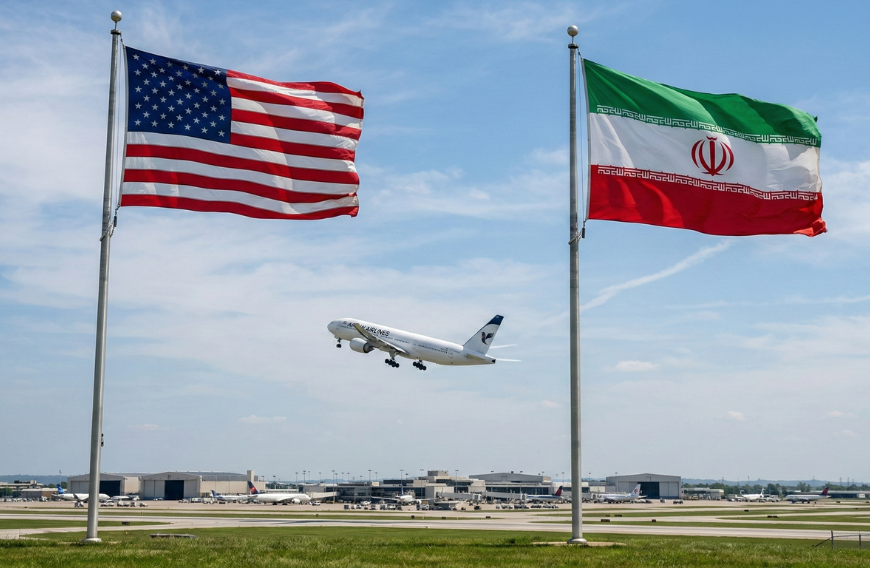
The ripple effects of a potential U.S.–Iran conflict are beginning to show up far beyond the battlefield, and American travelers could soon feel the impact in their wallets.
Disruptions to global oil supply tied to tensions involving Iran have pushed crude prices higher, and that surge is now feeding directly into the cost of flying. According to Transport & Environment (T&E), rising jet fuel prices have added roughly €88 (about $104) to the fuel cost per passenger on long-haul flights departing Europe. While that data is Europe-focused, it has clear implications for U.S. travelers, especially on transatlantic routes where fuel costs are a major component of ticket prices.
Airlines typically operate on thin margins, and fuel remains one of their biggest expenses. As oil prices climb in response to geopolitical instability, carriers have limited ability to absorb the increase. For Americans planning international trips this summer, that likely means higher airfares, particularly for long-haul flights.
The disruption is already measurable. An analysis by T&E, as cited by Reuters, compared fuel prices on April 16 with levels just before tensions escalated on Feb. 28, when the U.S. and Israel moved against Iran. The gap underscores how quickly geopolitical shocks can ripple through global aviation costs.
READ: Iran and US to negotiate amid Strait of Hormuz blockade (April 14, 2026)
On shorter European routes such as Barcelona to Berlin, fuel costs have risen by about €26 (about $30) per passenger. But the impact is far more pronounced on long-haul travel. A flight from Paris to New York now carries an additional €129 (about $152) in fuel cost per passenger, a direct signal of what U.S.-bound travelers could face as airlines adjust pricing.
European carriers are bracing for a difficult spring and summer, and that pressure is unlikely to stay contained within the region. Jet fuel prices have climbed well above $100 a barrel since the conflict began, raising concerns not just about higher fares but also about possible supply constraints. If disruptions persist, airlines could cut capacity, leading to fewer available seats, delays, or cancellations that would affect global travel networks, including routes to and from the United States.
A closer look at airline economics shows how these costs are calculated. T&E based its estimates on the average fuel burn across flights departing Europe and divided that by passenger numbers to determine the added cost per traveler. The takeaway is straightforward: higher oil prices are quickly translating into higher per-person travel costs.
READ: Trump threatens countries helping Iran with 50% tariffs (April 9, 2026)
Airline executives are already signaling that passengers will bear the brunt. Leaders from major carriers such as Lufthansa, Ryanair, and Air France-KLM said as early as March that if disruptions continue, especially if the Strait of Hormuz remains constrained, they will have little choice but to pass on higher fuel costs.
Notably, T&E’s analysis suggests that the spike in fuel costs linked to the conflict is far greater than the financial burden airlines face from complying with European Union climate policies. For American travelers, that distinction matters. It suggests that current fare increases are being driven less by regulation and more by geopolitical risk.
The broader implication is difficult to ignore. A conflict centered around one of the world’s most critical oil transit routes is no longer just a foreign policy issue. It is becoming a direct economic concern for U.S. consumers, with airline ticket prices emerging as one of the most immediate and visible consequences.