



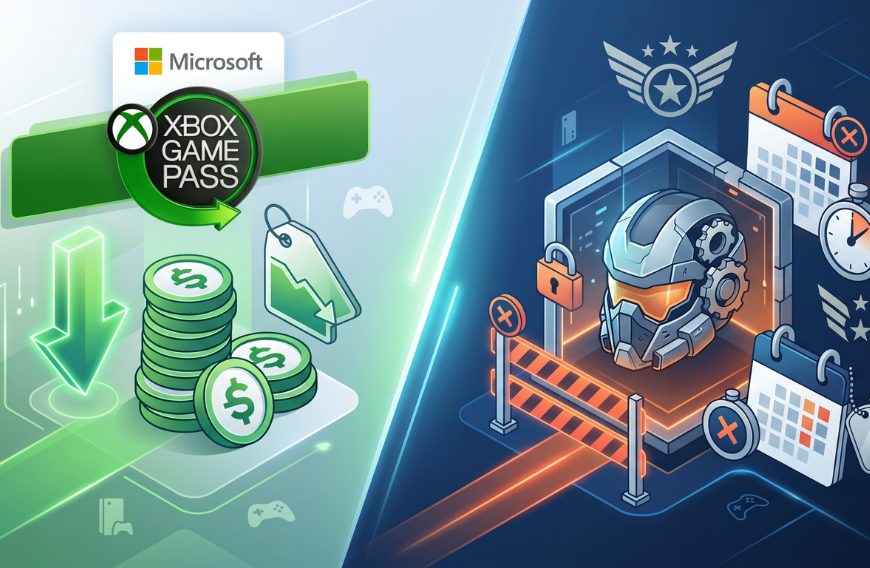
Microsoft is making major changes to its Xbox division, cutting the price of its Game Pass subscription service and dropping day-one releases of “Call of Duty,” the company said Tuesday. The moves mark the first major strategy shift under new gaming chief Asha Sharma.
As per Reuters, starting Tuesday, Xbox Game Pass Ultimate will now cost $22.99 a month from $29.99 while PC Game Pass is priced at $13.99 from $16.49 monthly, the software firm said in a blog.
The competition between Microsoft’s Xbox ecosystem and rivals like Sony and Nintendo has increasingly centered on services rather than just hardware. Xbox’s flagship offering, Xbox Game Pass, was launched to disrupt the traditional model by giving players access to a large library of games—including some new releases—for a monthly fee. This strategy helped Microsoft position itself as a value-driven alternative, especially as console hardware performance between Xbox and PlayStation reached near parity by 2026.
READ: Stellantis, Microsoft collaborate for AI in cars (April 16, 2026)
However, recent developments suggest that Xbox and Game Pass are facing growing challenges in keeping pace with competitors. Sony continues to rely on a strong lineup of exclusive, high-quality titles and a more curated subscription model through PlayStation Plus, while Nintendo maintains a distinct market position with its unique hardware and iconic franchises. These differing strategies have made it harder for Xbox’s “all-you-can-play” approach to stand out as clearly as it once did.
Removing launch inclusions of “Call of Duty” from the service could mean undoing a decision made just a few years ago, according to Reuters, after Microsoft bought the game’s developer Activision Blizzard for a mammoth $69 billion, hoping that the game’s heft would attract users to Game Pass.
As a result, while Xbox remains a major player, its strategy is evolving amid competitive and financial pressures that are still being interpreted in different ways, highlighting the difficulty of balancing affordability, content quality, and long-term profitability in the modern gaming industry.
Microsoft’s recent adjustments to Xbox Game Pass and its broader gaming strategy reflect a significant recalibration of how the company approaches competition in the video game industry.
READ: Microsoft considers legal action over $50 billion Amazon-OpenAI deal (March 18, 2026)
By lowering subscription prices while also removing guaranteed day-one access to major releases like “Call of Duty,” Microsoft appears to be balancing two competing priorities: making the service more financially sustainable while preserving its long-term appeal to subscribers. This shift suggests that the earlier aggressive expansion strategy, which aimed to rapidly grow Game Pass through high-profile releases, may have proven more costly than initially expected.
For Microsoft, the challenge now is to maintain Game Pass as a compelling value proposition without undermining game profitability or developer relationships. The removal of guaranteed day-one blockbuster access could reduce some of the service’s original appeal, but lower pricing may help offset that loss by attracting a wider audience.