



For decades, a diagnosis of pancreatic cancer has been met with grim statistics and few treatment options beyond invasive surgery. However, new clinical research from Memorial Sloan Kettering Cancer Center (MSK) is humanizing the fight against this disease, proving that the same messenger RNA (mRNA) technology used to combat COVID-19 can be reprogrammed to train the body to hunt its own cancer cells.
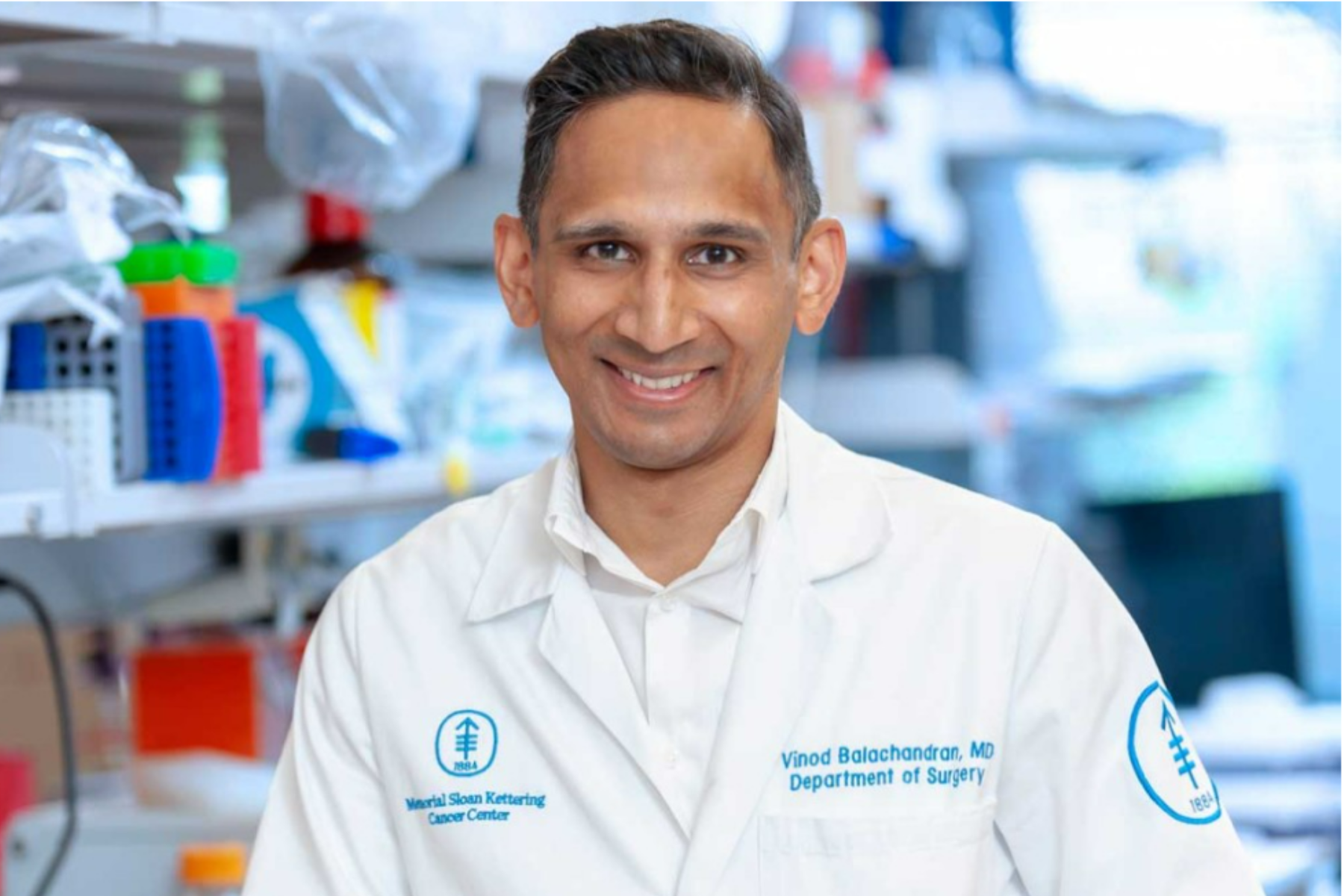
The study, led by Indian American surgeon-scientist Dr. Vinod Balachandran, provides a glimmer of hope for a subset of patients who previously had very little.
Dr. Balachandran, the Director of the Olayan Center for Cancer Vaccines, has dedicated his career to understanding why some “exceptional survivors” manage to beat the odds. His team discovered that these rare individuals carry tumors with unique protein markers, neoantigens, that naturally alert the immune system.
“We are essentially trying to replicate that natural immune success in every patient,” said Dr. Balachandran. The surgeon-scientist, who completed his undergraduate work at Cornell and his medical degree at SUNY Stony Brook, has been hailed for his pioneering spirit in precision oncology.
Read: Indian American scientist targets clinical ‘innovation gap’ with AI
The personalized approach involves sequencing a patient’s tumor immediately after surgery to identify these specific markers. Within weeks, a custom mRNA vaccine is manufactured and administered, instructing the body’s “killer” T cells to recognize and destroy any lingering microscopic cancer cells.
The results of the Phase 1 trial, recently updated at the 2026 American Association for Cancer Research (AACR) annual meeting, are striking. Of the 16 patients who received the custom-made vaccine, eight showed a robust immune response. Six years later, nearly 90% of those responders remain alive and cancer-free. This stands in sharp contrast to the typical 13% five-year survival rate for the disease.
The vaccine, known as autogene cevumeran, acts as a high-tech “wanted poster.” By teaching T cells exactly what the enemy looks like, the treatment creates a lasting internal surveillance system. Remarkably, researchers found these vaccine-stimulated cells remained active and detectable even after patients underwent follow-up chemotherapy.
While the study is small, its success has paved the way for a global Phase 2 trial. For the medical community and the families affected by this lethal malignancy, the research represents a shift from general chemotherapy to a precision-engineered future where a patient’s own biology becomes the strongest weapon in their recovery.