



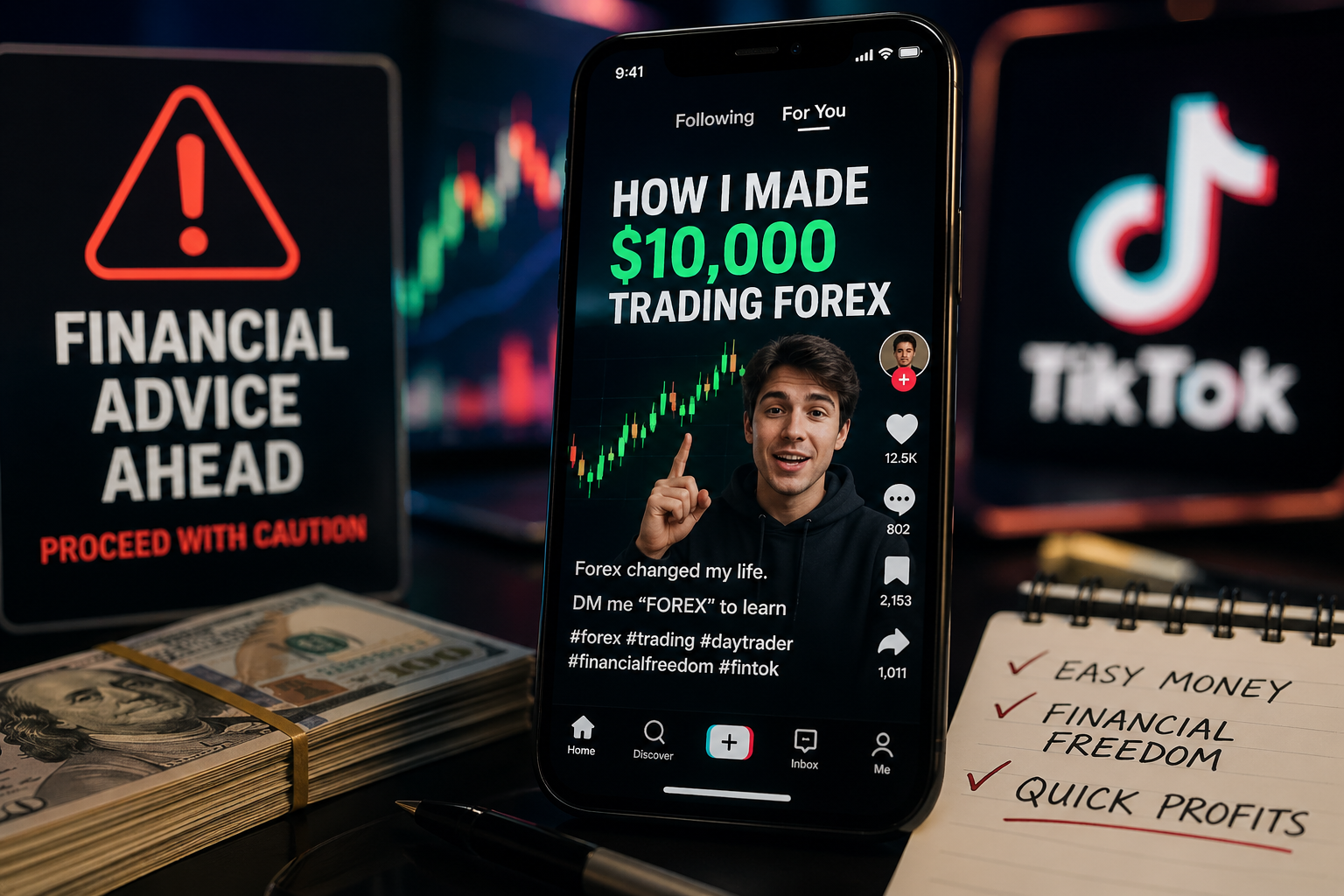
A rapid rise in financial content on TikTok is raising concerns among experts, as new data shows Americans are spending hundreds of hours engaging with advice that may be misleading. In 2025, the average U.S. “FinTok” user logged 416 hours scrolling through finance-related videos, according to a recent survey, highlighting the platform’s growing influence on personal financial decisions.
The trend is particularly pronounced among younger Americans. About 44% of younger users say they trust financial advice from social media, compared to just 24% of older adults. However, that trust often comes at a cost. Nearly 64% of users aged 25 to 45 report making financial decisions they later regret after following online advice.
A separate analysis by BrokerChooser highlights the risks behind this digital trend. After reviewing 100 of the most popular trading-related TikTok videos, researchers found that 93% contained potentially misleading or harmful content. Only 2% included basic disclaimers such as warnings about financial risk or market volatility.
Adam Nasli, Head Analyst at BrokerChooser, warned about the implications of this lack of transparency.” Without these warnings, even leveraged trading can be portrayed as a low-risk and straightforward route to profit, without any explanation around volatility or the possibility of losing money. This raises serious concerns around the level of protection being afforded to social media users, especially given the speed and scale at which online financial content is consumed.” This statement reflects a broader regulatory gap in the digital finance ecosystem. In contrast to traditional financial advisors, many content creators lack oversight and tend to condense complex strategies into brief, engaging videos. In today’s fast-paced content economy, users may mistake confidence and presentation for credibility, increasing the likelihood of uninformed decisions.
READ: Trump and Bondi sued over TikTok Law, alleging Chinese influence concerns ( March 6, 2026)
The BrokerChooser study also found that 58% of videos actively promoted financial products or services, such as trading courses or proprietary “systems.” Meanwhile, 40% of videos featured creators showcasing wealth or luxury lifestyles without explaining how those results were achieved. Only 10% provided meaningful context.
Even more concerning, just 15% of videos included any real trading information. The rest focused on motivational messaging, lifestyle imagery, or promises of quick wealth, often without evidence or credentials.
Nasli further emphasized the limitations of social media as an educational tool.“Nearly 80% of young people in the UK now trust advice from finfluencers, with #FinTok generating around 155K posts on TikTok and #MoneyTok amassing over 3.2M posts. But the reality is that 15 to 30-second videos are rarely enough to equip people with the knowledge needed to make informed financial decisions.
Research shows that a staggering proportion of trading content on TikTok fails to include basic risk disclaimers and frequently showcases wealth supposedly earned through trading without any meaningful explanation of how those results were achieved. This creates a distorted view, framing it as a quick and easy route to financial freedom rather than the complex, high-risk activity it is in reality.
READ: O-1 visas, influencers, and OnlyFans: USCIS isn’t lowering the bar — the field has evolved (January 7, 2026)
At scale, this kind of content could mislead novice investors and normalize unrealistic expectations, ultimately encouraging people to take on financial risks they don’t fully understand.
“If you’re serious about learning to trade, TikTok is not the place to start. Seek reliable information from verified sources, rather than unverified influencers trying to sell you a dream. Always practice due diligence: question the source, verify credentials, and never take financial advice at face value.” This perspective aligns with growing calls from financial experts and regulators urging stronger oversight of online financial content. As social media continues to shape how Americans learn about money, the gap between entertainment and expertise remains a critical challenge.
Simultaneously, experts stress the importance of skepticism and research. While platforms like TikTok have democratized access to financial information, they have also blurred the line between education and promotion, leaving many users vulnerable to costly mistakes.