



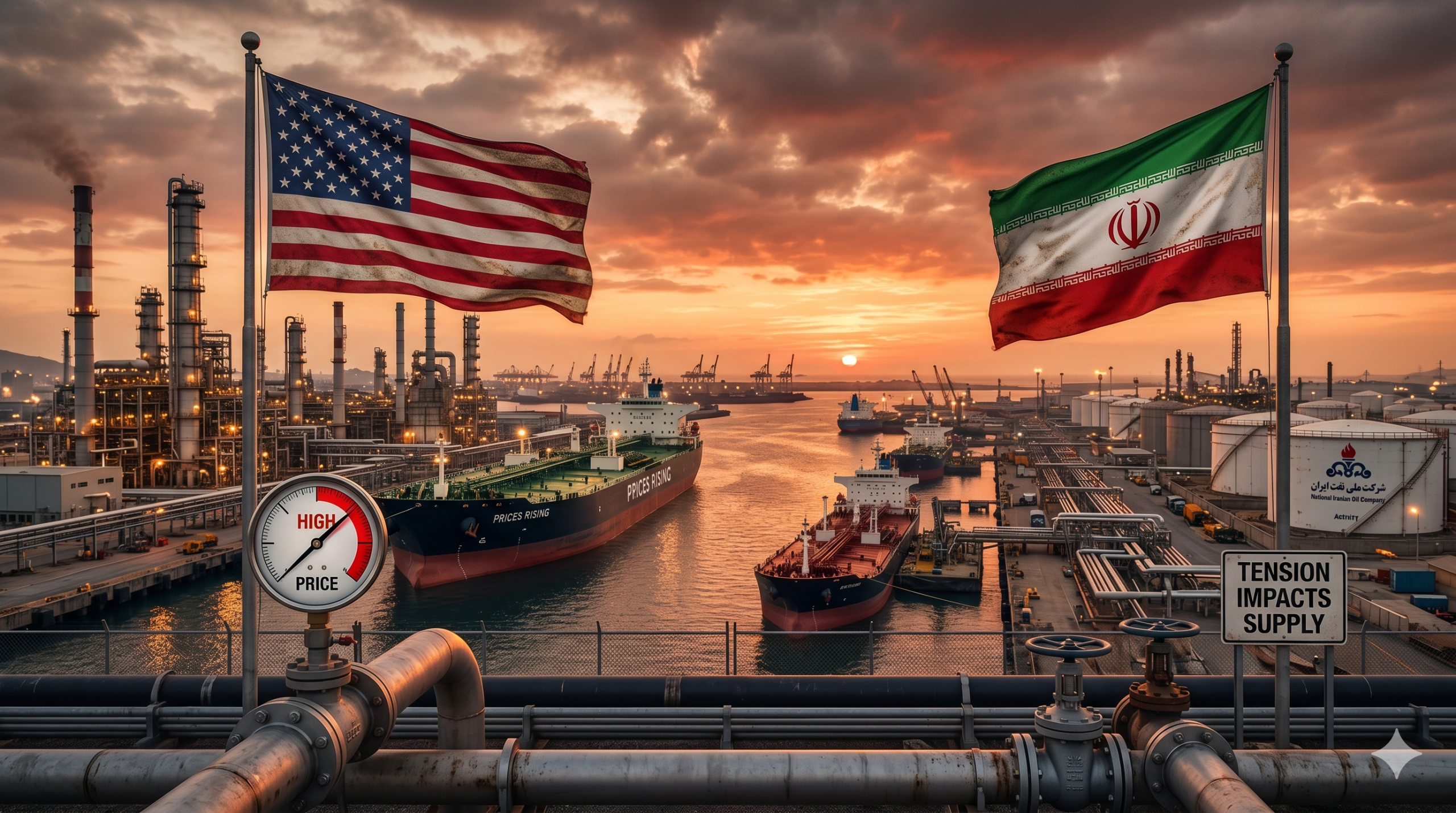
Global oil prices seem to be rising again amid the deadlock between the U.S. and Iran. After surging even higher overnight, Brent and West Texas Intermediate crude futures were trading about 6% and 5% higher each as of 7:30 a.m. ET, at around $95.10 and $87.70, respectively.
“My Representatives are going to Islamabad, Pakistan — They will be there tomorrow evening, for Negotiations,” Trump wrote in a Truth Social post on Sunday.
“We’re offering a very fair and reasonable DEAL, and I hope they take it, because if they don’t, the United States is going to knock out every single Power Plant, and every single Bridge, in Iran.”
However, Iran said hours later that it would not participate in the second round of negotiations with the U.S.
“Iran stated that its absence from the second round of talks stems from what it called Washington’s excessive demands, unrealistic expectations, constant shifts in stance, repeated contradictions, and the ongoing naval blockade, which it considers a breach of the ceasefire,” IRNA, the country’s official news agency, posted in an X post on Sunday.
READ: Global oil prices surge past $115 per barrel (March 30, 2026)
Global oil prices in 2026 have risen sharply due to the ongoing war between the United States and Iran, which began escalating in early 2026 after failed diplomatic negotiations over nuclear and regional security issues. The conflict quickly spread into maritime and energy trade disruption, with the most important impact concentrated on the Strait of Hormuz, one of the world’s most critical oil chokepoints. This narrow waterway normally carries around one-fifth of global crude oil shipments, so even partial disruption has immediate effects on global supply.
As tensions increased, shipping through the region became more risky due to naval activity, missile threats, and insurance withdrawals. This led to delays, rerouting of tankers, and in some cases temporary suspension of shipments. While the strait was not permanently closed, its efficiency as a trade route was significantly reduced at various points, creating uncertainty about global supply continuity. This disruption caused a classic supply shock: less oil was reaching international markets at a time when global demand remained relatively stable.
Oil prices responded rapidly. Brent crude rose from pre-conflict levels in the mid-$60 per barrel range to above $100 within weeks of escalation, with peaks exceeding $110–$120 during periods of intense conflict and shipping disruption. West Texas Intermediate followed a similar pattern, rising from the $60–$70 range to near or above $100 depending on supply conditions and market sentiment. These movements were among the fastest oil price increases in recent years, driven primarily by supply constraints rather than demand growth.
READ: Middle East conflict fears send oil prices up, could hit US gas prices (March 20, 2026)
A major factor sustaining high prices has been the geopolitical risk premium. Even when physical oil flows partially recover, traders continue to price in the possibility of renewed disruption. This keeps prices elevated because markets react not only to actual shortages but also to uncertainty about future supply stability. As a result, oil prices have become highly sensitive to political and military developments, with even small incidents in the region causing immediate price spikes or drops.
Attempts at diplomatic resolution between Washington and Tehran have repeatedly stalled, preventing any long-term stabilization of the situation. Temporary improvements in shipping conditions have occasionally led to short-lived price declines, but these have not consistently reversed the overall upward trend. The market remains volatile, with rapid shifts depending on news about negotiations, military activity, or shipping security.
The effects of higher oil prices have spread globally. Fuel costs such as gasoline, diesel, and aviation fuel have increased, raising transportation and logistics expenses. This has contributed to inflationary pressure in many importing economies across Europe, Asia, and other regions dependent on Middle Eastern energy supplies. Governments have partially responded by releasing strategic reserves and seeking alternative suppliers, but these measures have limited impact compared to the scale of disruption.