



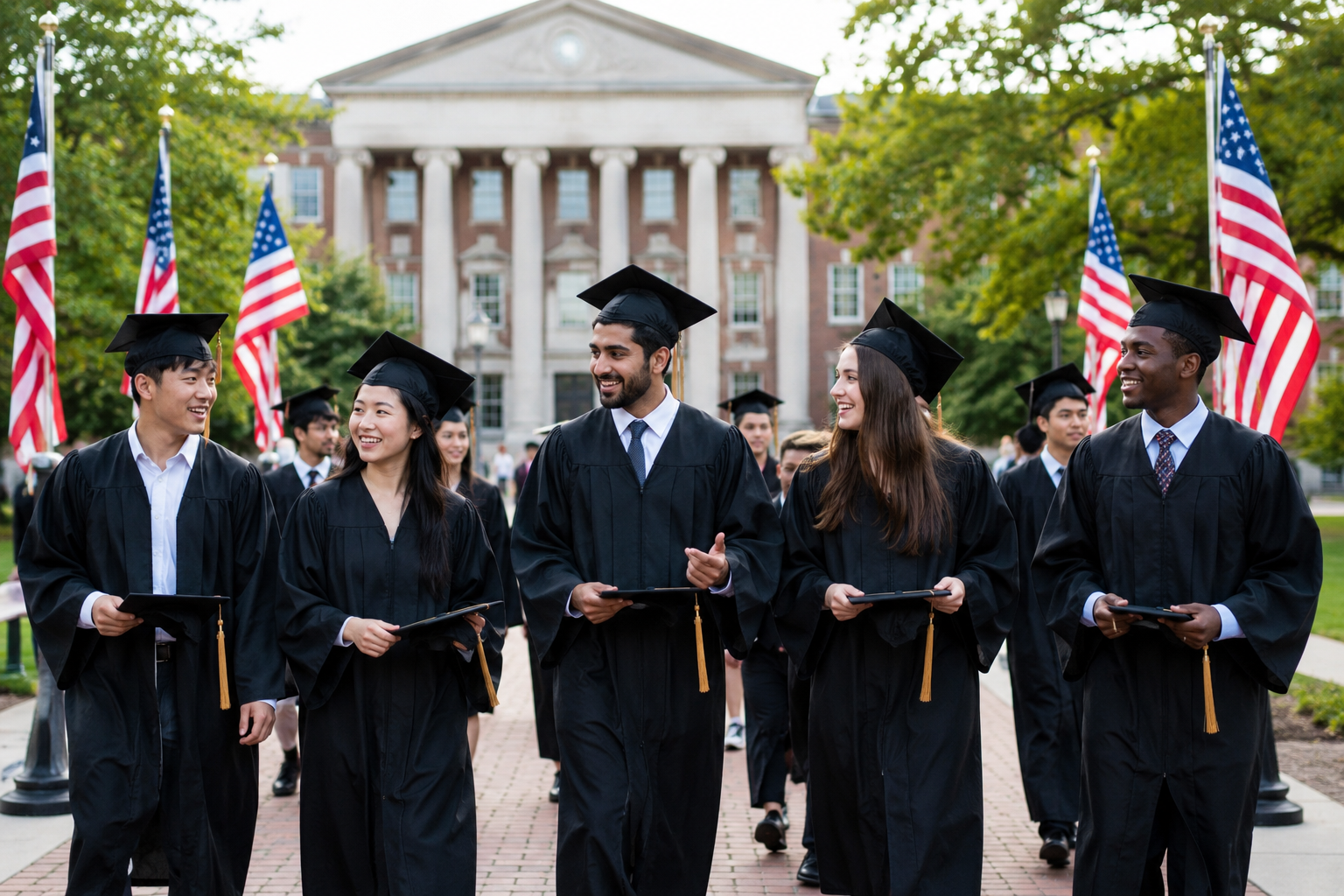
International students graduating from U.S. universities with science and technology degrees could receive expanded work opportunities under new legislation introduced by Democratic Rep. Valerie Foushee. The proposal arrives as debate over high-skilled immigration and foreign worker programs intensifies ahead of the 2026 election cycle.
The legislation, titled the “Stop the Brain Drain Act,” was introduced on Thursday, May 7, and seeks to extend work authorization periods for international students on F-1 visas through the Optional Practical Training, or OPT, program. Supporters say the measure is designed to prevent foreign graduates trained in the United States from being forced to leave shortly after earning degrees in high-demand STEM fields.
READ: Companies under fire over hiring Indians amid H1-B backlash (January 15, 2026)
While announcing the bill, Foushee argued that many international students contribute years of research and innovation at American universities only to face restrictive visa deadlines after graduation. She said the U.S. is effectively educating top talent and then “sending them elsewhere” because existing immigration rules do not provide enough time or flexibility for graduates to remain in the workforce.
The North Carolina Democrat framed the proposal as both an economic and national competitiveness issue. In public remarks and social media posts, Foushee said countries competing with the United States are actively recruiting highly educated workers. At the same time, the U.S. risks losing scientists, engineers, and technology professionals it has already trained.
READ: ‘Benefit India and H1Bs’: Row erupts over Ramaswamy’s education vision (March 28, 2026)
Under current rules, many international graduates can temporarily work in the U.S. through the OPT program, with STEM degree holders eligible for additional extensions. The new legislation would broaden those opportunities and create a longer runway for graduates seeking employment and potential long-term residency pathways.
Business groups, immigration advocates, and several higher education organizations have long argued that the U.S. economy depends heavily on foreign-born STEM talent. Supporters of the bill say industries ranging from artificial intelligence to biomedical research face persistent labor shortages and benefit from retaining graduates educated at American institutions.
Critics, however, argue that expanding visa opportunities could increase competition for jobs and wages for domestic workers. Immigration restriction groups have also questioned whether programs like OPT give employers incentives to favor temporary foreign workers over American graduates.
The legislation now heads to congressional committees, where it faces an uncertain path in a divided Congress. While Democratic lawmakers have increasingly backed high-skilled immigration reforms, broader visa expansion proposals have repeatedly stalled amid partisan disagreements over immigration policy.