



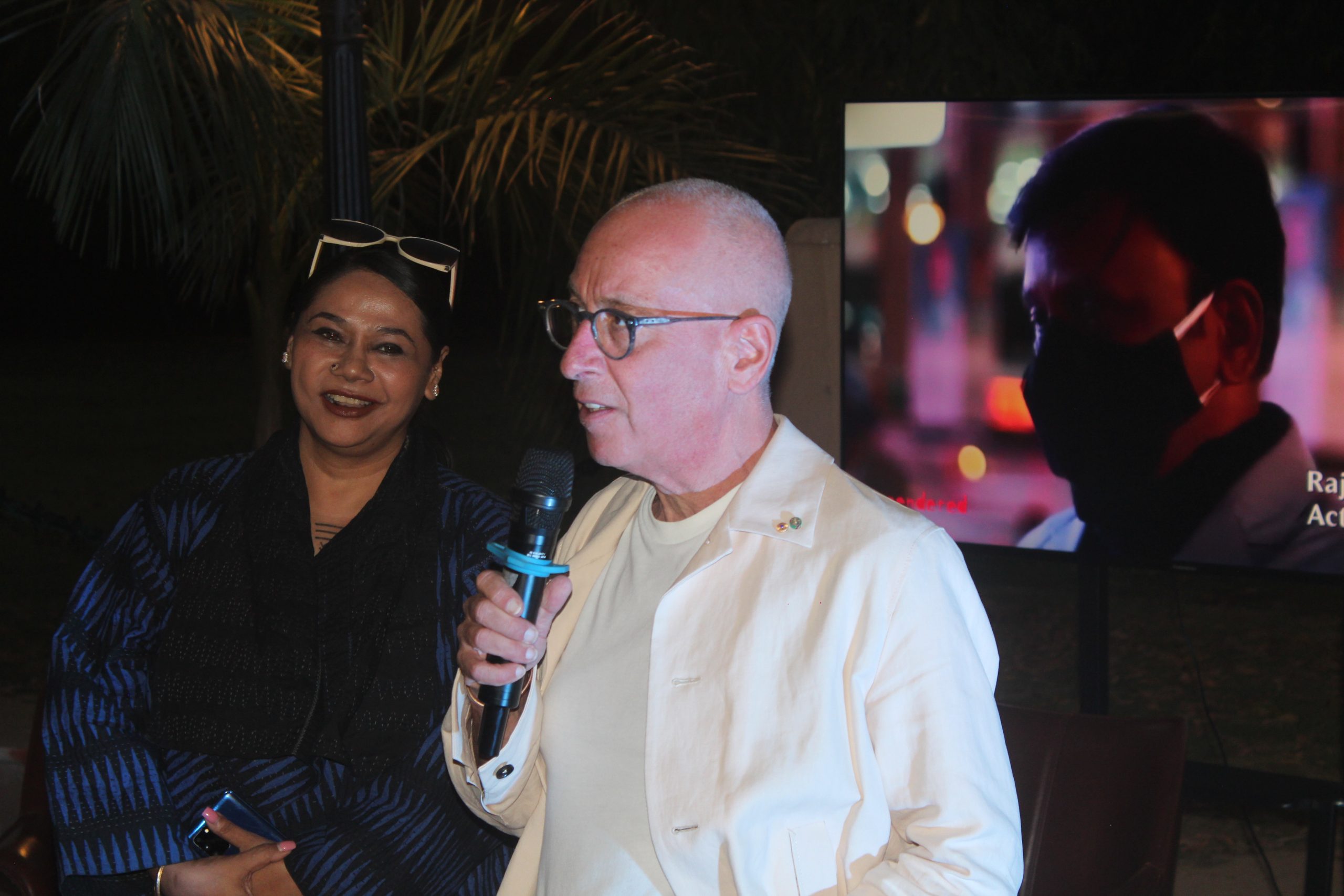
As the Venice Biennale opens to the public this week, questions surrounding India’s national pavilion have quietly continued to circulate within the art world. The debate began several months earlier at a public discussion during the India Art Fair, where a Canadian member of the audience posed a pointed question: why was India’s national pavilion being curated by someone who is not Indian, has never worked within India, and has had little prior engagement with Indian artists or local practices?
It was not a xenophobic question. It was a structural one.
The curator, Amin Jaffer, known for his work with the Al Thani Collection, which focuses significantly on historic jewellery and decorative arts, and for his earlier career as an auctioneer and specialist in furniture and jewellery at Christie’s, is unquestionably accomplished within the world of luxury objects and decorative heritage. But a national pavilion is not a jewellery exhibition. It is a contemporary cultural statement. It demands embeddedness within a living artistic ecosystem.
The question, then, is not about credentials. It is about context. About authorship. About lineage.
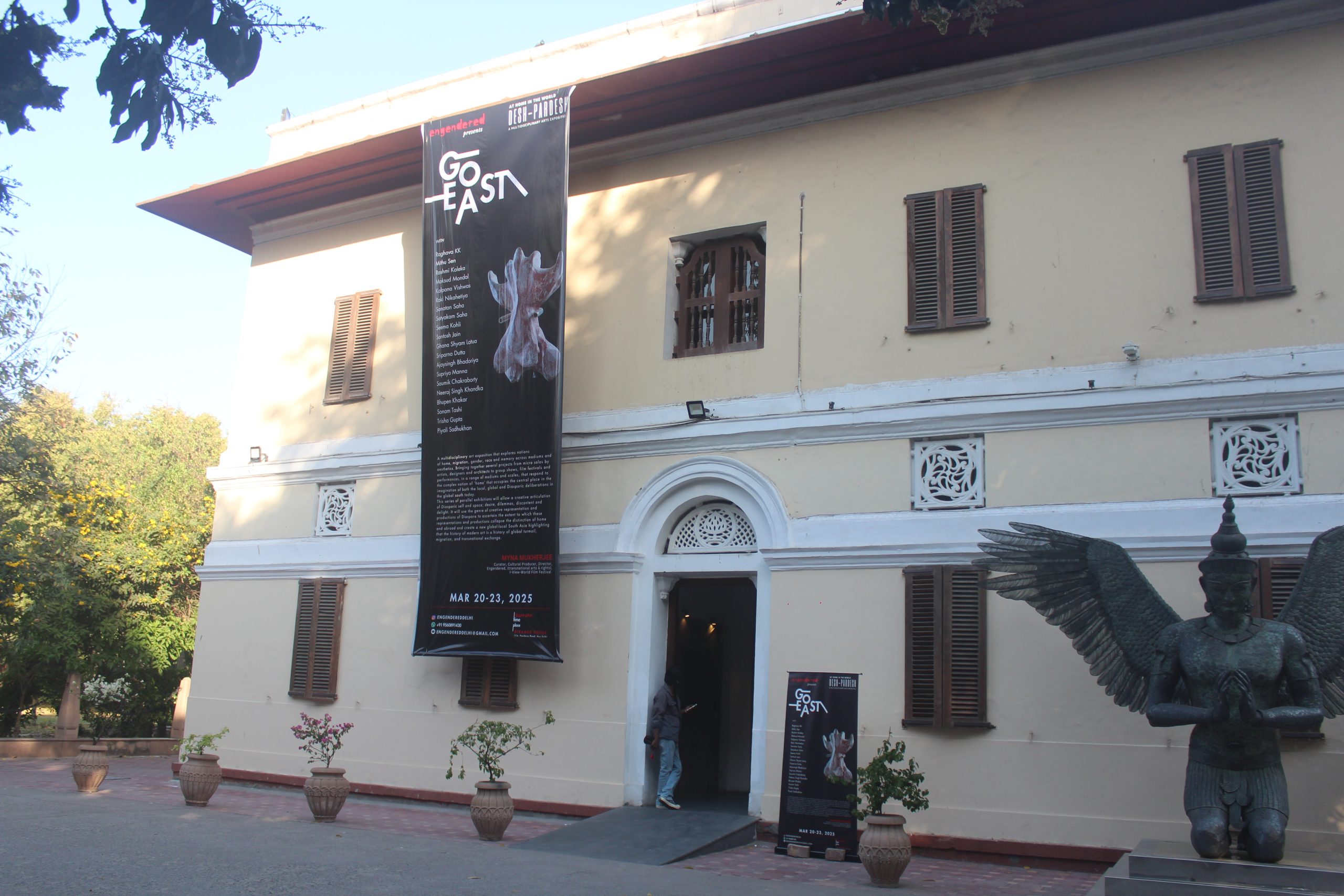
In March 2025, independent curator, cultural producer Myna Mukherjee curated “Home In The World: Desh Pardesh,” a major interdisciplinary exhibition foregrounding diaspora, migration, memory and contested notions of belonging. Crucially, the exhibition approached “home” not simply through the lens of the Indian diaspora abroad, but as a universal and shifting condition across contemporary India itself, between rural and urban migration, labor mobility, displacement, economic aspiration, internal movement across cities and states, and the psychological condition of living between worlds. The project expanded the idea of migration beyond nationality into a broader social and emotional reality shaping contemporary South Asia.
Presented for senior leadership associated with Museum of Modern Art, including the Chair of the Board of MoMA PS1, Simon Mordant, who also serves as a Global Ambassador for the Venice Biennale for Australia, whose pavilion won the Golden Lion for Best National Participation at the last Biennale, the exhibition directly engaged global museum leadership and international cultural stakeholders. “Home In The World: Desh Pardesh” insisted that “home” was not a fixed geography but a layered, migratory condition shaped by diaspora, memory, movement and precarity.
READ: Can Indian art become America’s next investment story? (October 3, 2025)
Following that, Mukherjee curated “Inheritance of Light, Geographies of Loss” for a Dutch delegation that included directors of the Mauritshuis and the Drents Museum. The exhibition explored Indo-Dutch connections, framing light as cultural inheritance — a sensibility traveling across continents and centuries, shaping how artists imagine the self, society and the sacred. Again, the emphasis was on geographies, migration, diaspora and historical entanglement.
This trajectory did not emerge overnight. In 2021, “HUB INDIA,” co-curated by Mukherjee at Artissima in Turin, one of Europe’s leading art fairs, brought together 63 artists and over 300 works, marking India’s largest exposition to the West at the time. Extending into three major Turin museums, the project positioned Indian contemporary practice within institutional dialogue rather than spectacle, articulating an early and ambitious transnational and diasporic framework for Indian art.
Another question has also quietly shadowed the pavilion’s evolution. Before Jaffer’s appointment, the Ministry of Culture had publicly articulated a very different curatorial direction for India’s return to Venice, one centered on tribal and Indigenous practices, and on reframing these traditions as fully contemporary and central to India’s artistic ecosystem rather than peripheral ethnographic categories. Yet, after the curatorial shift, not a single Indigenous or tribal artist appeared in the final pavilion selection. The earlier framework disappeared almost entirely from public conversation, raising further questions about how institutional priorities were altered, and whose cultural narratives were ultimately deemed worthy of global representation.
Four months later, as the Venice Biennale opened to international audiences, the similarities between these frameworks became harder to ignore. Key terms from Mukherjee’s recent projects like “home,” “geographies,” “migration,” “memory” and “diasporic belonging,” appeared prominently within the curatorial framing of India’s pavilion.
Is that a coincidence? Perhaps. Ideas circulate. Concepts recur. But in a field where intellectual labour is often uncredited, resonance without acknowledgment can feel less like dialogue and more like displacement.
The questions deepened further because of the institutional networks surrounding the pavilion itself. According to conversations relayed to Mukherjee by senior government figures, the strategic communications and positioning around the pavilion were significantly shaped through Reliance’s cultural ecosystem and associated communications teams, including the PR agency involved in circulating and shaping the pavilion’s media narrative.
The suggestion that individuals familiar with Mukherjee’s earlier frameworks may also have informed or advised aspects of the pavilion’s positioning has only intensified concerns already circulating within sections of the art community: how ideas travel upward through networks of influence, and how authorship becomes obscured once institutional power enters the picture.
The irony sharpened at the India Art Fair panel itself. Two of the five artists selected for the pavilion were present. Skarma Sonam Tashi — one of the participating artists — was part of “Home In The World: Desh Pardesh,” one of his earliest major exhibitions. Sumakshi Singh, also on the panel, was first shown internationally at Lincoln Center, New York, in a project curated by Mukherjee. In other words, some of the very artistic trajectories now representing India at Venice were shaped within the ecosystems being publicly sidelined.
During the discussion, Mukherjee congratulated the pavilion team and artists, affirming the importance of India’s return to Venice. Her intervention was measured. Rather than accuse, she asked a precise question: how does Jaffer think about authorship? How does he situate his curatorial vision within existing lineages? How does he build on prior frameworks rather than appearing to inaugurate them?
READ: Small brands, big burden: How US tariffs on India are squeezing small businesses (September 16, 2025)
It was a question about intellectual responsibility.
If this were academia, failure to acknowledge conceptual precedents would raise concerns about plagiarism. The art world operates more ambiguously. Ideas migrate through panels, catalogues and conversations. Institutional authority often determines who gets credited for articulating them.
This is not an argument against international collaboration. Transnational exchange is vital. But collaboration differs from substitution. When a national pavilion is entrusted to a curator whose primary experience lies in decorative arts and auction markets, and who has not worked within India’s contemporary ecosystem, the responsibility to recognize existing intellectual labour becomes even greater.
Public discourse matters because it is where cultural memory is formed. Panels are not neutral platforms; they codify recognition. Those closest to powerful institutions gain amplified legitimacy, while those who develop frameworks independently often risk becoming invisible precisely at the moment their ideas achieve institutional value.
The Canadian question at the India Art Fair therefore cut to the heart of representation.
Who curates the nation? And who gets recognized for shaping the ideas that define it?
At Venice, nations perform themselves before the world. But that performance is built on recent, visible and very real intellectual labour. Recognition is not a courtesy. It is the foundation of cultural integrity.
And ideas, like nations, have genealogies.