



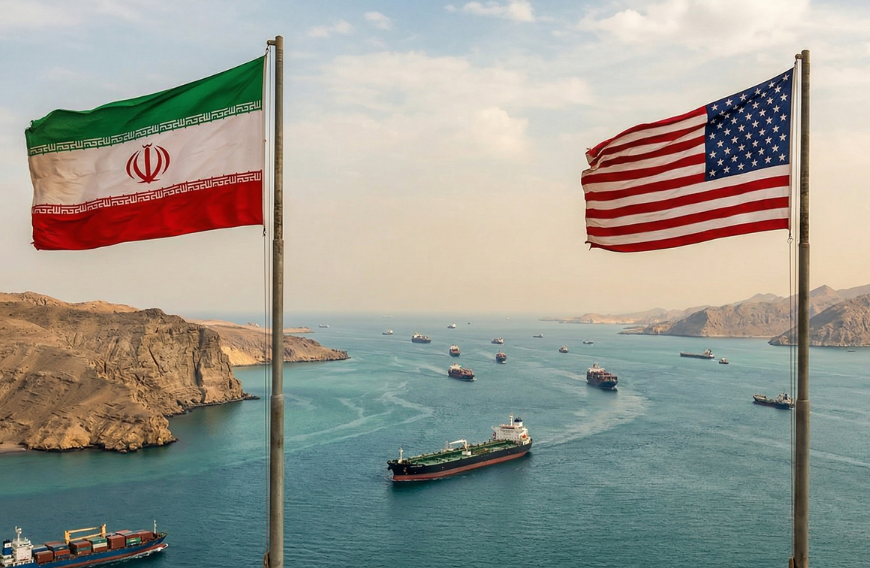
Iran’s foreign ministry spokesperson said on Monday that conclusions have been reached on many topics discussed in a potential memorandum of understanding with the U.S., but this does not mean Tehran is close to signing a report, according to a Reuters report.
Spokesperson Esmaeil Baghaei added that Iran is negotiating an end to the war and is not currently discussing nuclear issues, and repeated that changes in the positions of U.S. officials create problems for any agreement.
“It is correct to say that we have reached a conclusion on a large portion of the issues under discussion,” Baghaei said in Tehran on Monday. “But to say that this means the signing of an agreement is imminent — no-one can make such a claim.”
READ: Google, Amazon, Meta could be charged by Iran for using Hormuz internet cables (May 18, 2026)
Meanwhile, President Donald Trump had said an agreement with Iran has been “largely negotiated” and details will be announced soon. He said on Saturday that the deal would include the reopening of the Strait of Hormuz, but he did not give any further details.
Trump had written on social media that had a “very good call” with the leaders of Saudi Arabia, the United Arab Emirates, Qatar and others about a “Memorandum of Understanding pertaining to PEACE.”
“An agreement has been largely negotiated, subject to finalisation between the United States of America, the Islamic Republic of Iran, and the various other Countries, as listed,” he said.
“Final aspects and details of the deal are currently being discussed, and will be announced shortly.”
READ: US appeals to other countries to help reopen Strait of Hormuz (April 30, 2026)
Trump had said he also had a call on Saturday with Israeli Prime Minister Benjamin Netanyahu, which “went very well.” While he didn’t give more details on the deal, he insisted that any agreement would “absolutely” prevent Iran from obtaining a nuclear weapon.
A report by CBS news said that that U.S. intelligence believes Iran’s Supreme Leader Mojtaba Khamenei — who was injured in an Israeli strike on the first day of the war which killed his father and predecessor — is holed up in an undisclosed location, making communication with his envoys difficult and therefore delaying pace of talks with the U.S.
The war in Iran began with the U.S. and Israeli airstrikes on the nation in February this year. Iran retaliated by striking Israel, and allied gulf states, and closing the Strait of Hormuz. Since then, Hormuz — through which 20% of global oil and liquified natural gas passes through — has become a focal point of the conflict.