



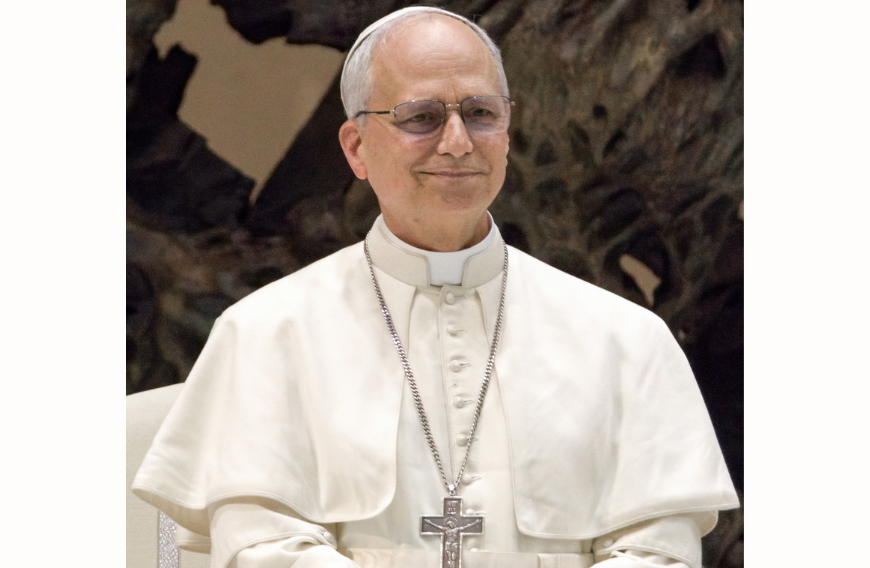
Pope Leo XIV on Monday issued his strongest warning yet on artificial intelligence, urging governments and technology companies to slow the rapid development of AI systems that he said could push the world toward “unending war” and deepen global inequality if left unchecked.
Speaking at the Vatican during what officials described as his first major manifesto on emerging technologies, Leo said humanity risked surrendering moral judgment to machines designed primarily around economic and military competition. Reuters reported that the pope called for urgent international cooperation to establish ethical guardrails before AI systems become too deeply integrated into warfare, governance, and daily life.
“Human dignity cannot be reduced to algorithms,” the pope said, according to Reuters. He warned that the accelerating race among nations and corporations to dominate artificial intelligence carried consequences that extended beyond economics and national security.
READ: The Vatican rejects Trump’s ‘Board of Peace’ in place of UN (February 18, 2026)
The pope’s remarks come as governments worldwide increase investment in AI technologies for defense, surveillance, cybersecurity, and automation. Analysts have increasingly warned that advanced AI systems could intensify geopolitical rivalries, spread misinformation on an unprecedented scale, and lower the threshold for military escalation through autonomous weapons and decision-making systems.
Leo framed the issue not only as a technological challenge but also as a moral and historical one. During the address, he apologized for the Catholic Church’s role in the transatlantic slave trade, linking past institutional failures to modern debates about exploitation and inequality driven by technology.
According to Reuters, Leo said the Church must acknowledge moments “when human beings were treated as instruments of profit and power.” The apology marked one of the clearest statements yet from the Vatican connecting historical injustices with contemporary concerns about data exploitation, labor displacement, and the concentration of technological power.
READ: Trump unveils his Board of Peace at Davos (January 22, 2026)
Leo did not call for a halt to AI development but urged political leaders to resist what he described as a culture of technological inevitability. Reuters reported that he encouraged governments to prioritize transparency, accountability, and human-centered oversight rather than allowing market pressures alone to shape the future of artificial intelligence.
The Vatican said additional consultations with scientists, ethicists, and policymakers are expected later this year as the Church expands its engagement with AI governance. Leo’s remarks position the Vatican as an increasingly active voice in one of the defining global policy debates of the decade, where ethical concerns are rapidly converging with questions of security, economics, and human rights.