



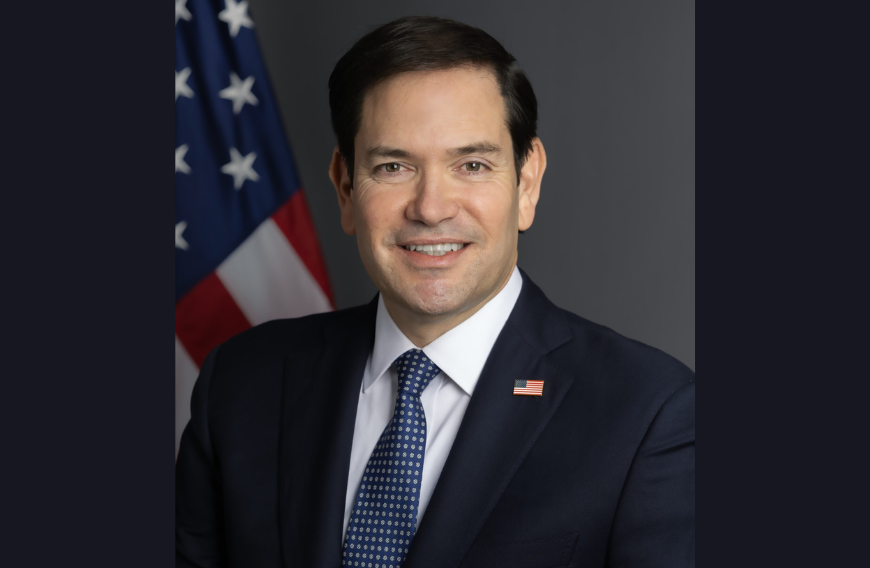
U.S. Secretary of State Marco Rubio pushed back against concerns over anti-India rhetoric in the United States during a visit to New Delhi, saying President Donald Trump remains “a big fan of India” and maintains a strong personal relationship with Indian Prime Minister Narendra Modi.
Speaking to reporters in Delhi, Rubio addressed questions surrounding racist remarks targeting Indian Americans and growing unease among sections of the Indian diaspora over immigration rhetoric and H-1B visa uncertainty. According to ANI, Rubio sought to distance the Trump administration from inflammatory online commentary.
“The President loves India. The President is a big fan of India, a big fan of Prime Minister Modi,” Rubio said. “I wouldn’t be here if the President didn’t want me to be here.”
READ: Laura Loomer calls India ‘beautiful,’ reacts to Marco Rubio’s visit photos on X (May 25, 2026)
Rubio also dismissed online rhetoric as part of a broader social media environment where “people say stupid stuff all the time on social media and in every country in the world, unfortunately.”
His remarks come at a sensitive moment for Indian Americans, particularly skilled workers navigating stricter visa scrutiny and ongoing uncertainty around employment-based immigration programs. Indian nationals continue to dominate the H-1 B visa pipeline, especially in the technology and engineering sectors, making U.S. immigration policy a closely watched issue within the diaspora.
Rubio attempted to reassure Indian audiences by highlighting the appointment of Sergio Gor, a close Trump ally, as U.S. ambassador to India. “He wouldn’t have sent someone like Sergio to be our ambassador, someone who’s very close to the President,” Rubio said, according to ANI.
However, reactions online suggested lingering skepticism among some Indians and Indian Americans regarding Washington’s broader posture toward India and immigrants. One social media user responding to Rubio’s comments wrote that the administration’s explanation “only exposes the underlying truth they are desperately trying to cover up.” Another user questioned whether U.S. policy actions aligned with its public messaging on India.
READ: Welcome to India, Mr. Rubio. The Taj is that way (May 24, 2026)
While social media reactions remain fragmented and unofficial, they reflect broader anxieties among diaspora communities about rising nationalist rhetoric, immigration restrictions, and workplace uncertainty in the United States. Immigration lawyers and policy analysts have noted that many Indian professionals continue to face long green card backlogs and shifting visa rules despite the strategic importance of U.S.-India relations.
Rubio’s comments also arrive as Washington and New Delhi deepen cooperation in trade, defense, artificial intelligence, and semiconductor manufacturing. Both governments have increasingly emphasized people-to-people ties as a cornerstone of the bilateral relationship.
For Indian Americans, however, political messaging often intersects directly with lived concerns over immigration security, discrimination, and long-term residency pathways. Rubio’s effort to reaffirm Trump’s support for India appears aimed at easing those concerns while reinforcing the administration’s broader diplomatic outreach to New Delhi.